


Bitcoin faces 7.75M-coin overhang as holders sit on losses
BTC supply at a loss has returned to levels typical of a bear market. As of May 2025, 7.75M coins are held at a loss, testing the patience of investors.
BTC traded just above $77,000, leaving a larger part of the supply at a loss. The coins at a loss varied between 7.64M and 7.75M, depending on the exact metrics.
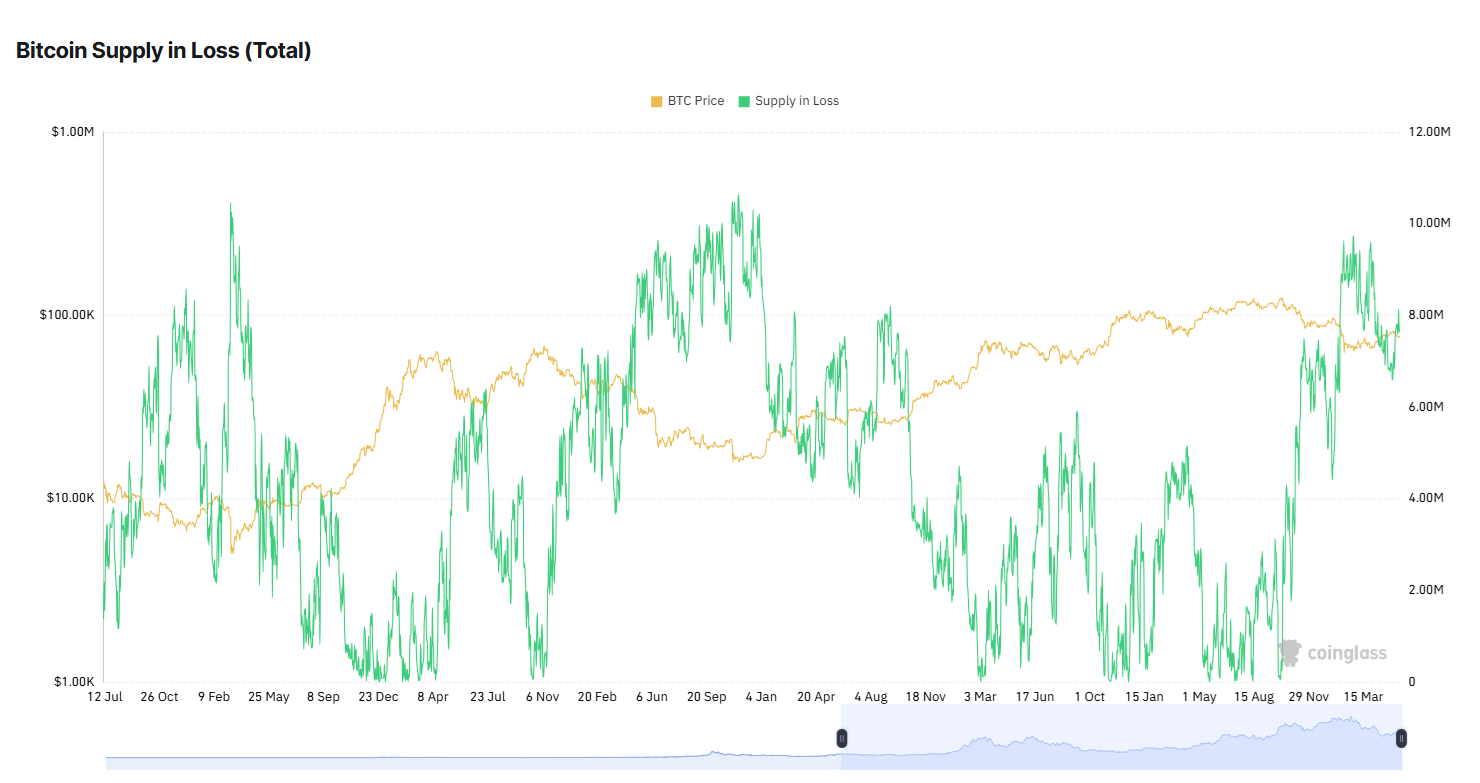
The overhang of coins held with unrealized losses is a direct danger for an eventual capitulation. If other factors do not boost the price of BTC, the overhang may be a factor for capitulation.
Only around 53% of the BTC supply is held with unrealized gains, based on BGeometrics data.
Will the new BTC holders remain steady?
In 2026, BTC switched holders, with accumulation coming from strategic whales. As Cryptopolitan reported earlier, old whales with a low cost basis were among the top sellers.
Currently, the supply in loss is still lower than February’s peak of 9.7M coins. However, in 2026, there was a rollover of ownership, with new whales buying at a new price range.
ETF holders are among the first to shed BTC, while former reliable buyers from treasury companies are almost inactive.
BTC is now trading in another tight range, with whale accumulation at lower prices and distribution above $78,000. This setup benefits strategic whales that have adapted to the new sideways trading and volatility.
BTC volatility has been down to 1% in the past month, but this tight range can still lead to liquidations and speculative trading.
Will BTC holders support or crash the market?
Almost all types of wallets moved BTC in some form. However, the panic-selling or strategic distribution affected different periods.
In total, the largest ‘humpback whale’ wallets shed 8.5% of their holdings in the past 12 months. Smaller whale wallets decreased by 3.72%.
In the past 30 days, wallets with 10-100 BTC decreased by a total of 41, while shark wallets mostly held their BTC.
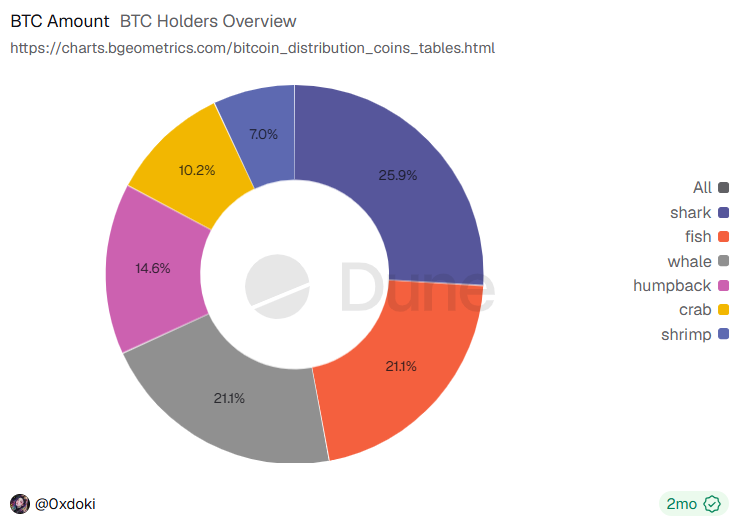
The biggest panic capitulation was in shrimp wallets with under 1 BTC, where over 42,000 wallets were emptied out in a mass retail capitulation.
BTC is highly dependent on the readiness of whales to hold for the long term. Despite the recent market slide, the recent market cycle has not seen a really deep capitulation of over 70%.
Since February, BTC has been accumulated even with a rising cost basis. Accumulation started at around $72,000 per BTC, recently rising to a cost basis of $78,000. As of May 25, the average cost basis is at $77,253, exposing holders to a relatively small unrealized loss on average.
The past month showed retail shrimp wallets were more likely to capitulate, while other wallet cohorts mostly retained their holdings. The spot supply overhang is thus still safe from a panic-selling capitulation, though some whales may decide on strategic distribution and prevent the BTC price from rallying in the short term.
If you're reading this, you’re already ahead. Stay there with our newsletter.
Recommended Articles


