


Tesla Faces Waymo. Musk Delivers on Promise, Tesla Cybercab Enters Mass Production
TradingKey - On Friday, March 24, Eastern Time, Tesla CEO Elon Musk stated in a post on X that Tesla (TSLA) has begun production of its Robotaxi model, the highly anticipated fully autonomous taxi known as "Cybercab."
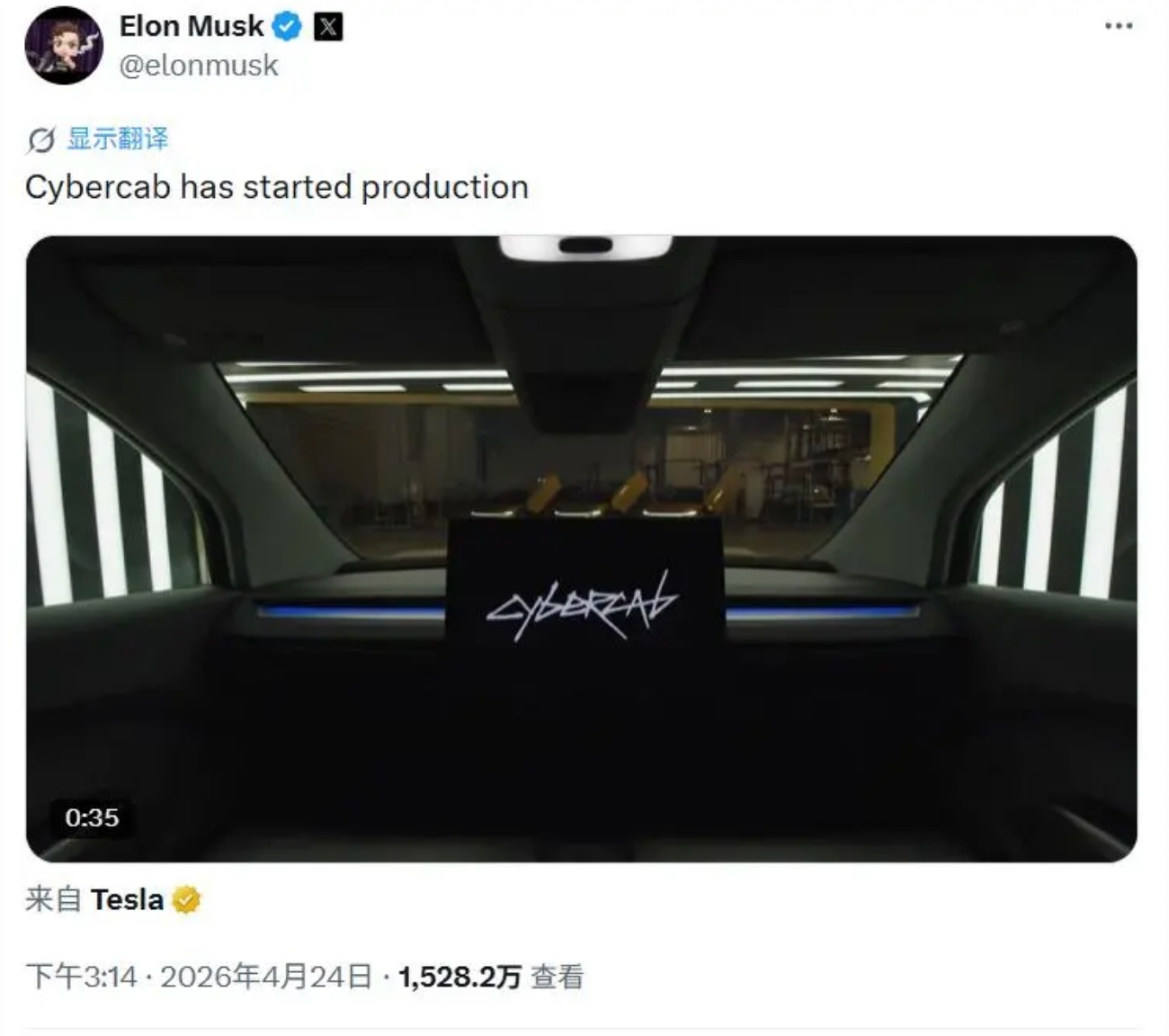
The Cybercab is a fully autonomous taxi with no steering wheel or pedals, positioned for commercial operation within a Robotaxi network. This model serves as a key vehicle for Tesla's transformation from an "electric vehicle manufacturer" into an "AI and mobility platform," representing a significant step in Musk's push for a "physical AI" strategy.
From a business model perspective, the Cybercab does not rely on hardware sales for profitability. Instead, it accesses an autonomous driving network through a "Vehicle-as-a-Service" (VaaS) model to maximize asset utilization, with a long-term goal of capturing portions of the ride-hailing and taxi markets.
For the investment market, Musk has delivered on his 2025 commitment to the Robotaxi mass production plan, signaling that Tesla is accelerating its transformation into a technology platform company. Furthermore, it marks the progression of Tesla's Robotaxi from a conceptual stage toward commercial execution.
If the Cybercab achieves smooth mass production and large-scale deployment, it is expected to shift the company's valuation logic from that of a traditional automaker to a technology platform.
However, short-term challenges remain. Autonomous driving regulatory policies are not yet unified globally, and the level of openness to L4/L5 technology varies by country. The safety and stability of the FSD system still require continuous verification, which will directly impact the pace of Cybercab's commercialization.
In addition, large-scale production will drive up capital expenditures. During a previous earnings call, Tesla raised its spending plan for this year to $25 billion, significantly increasing investment in autonomous taxis, trucks, robots, and new chip factories.
Against the backdrop of slowing electric vehicle sales growth, this approach of large-scale mass production could exert temporary pressure on cash flow.
From a competitive perspective, the launch of the Cybercab will intensify the rivalry within the autonomous driving sector. Previously, players such as Alphabet's Waymo have led the exploration of Robotaxi commercialization; Tesla hopes to overtake competitors by leveraging data scale, hardware-software integration, and cost advantages.
Investors should remain focused on whether the Cybercab faces regulatory risks and execution difficulties on its path to commercialization. From a long-term perspective, it will be particularly important to re-evaluate Tesla's potential value within the AI ecosystem.
Recommended Articles


