


Warren Buffett Went Out With a Bang by Selling 50% of His Bank of America Stake and Piling Into One of the Hottest Oil Stocks on Wall Street
Key Points
Billionaire Warren Buffett retired on Dec. 31 after spending more than half a century as Berkshire Hathaway's CEO.
Form 13Fs show Buffett was active in the quarters leading up to his retirement, including persistently selling shares of money-center titan Bank of America.
In his final quarter as CEO, Buffett purchased approximately $1.2 billion of an integrated oil and gas giant that has soared 36% since 2026 began.
- 10 stocks we like better than Chevron ›
For the first time in well over half a century, trillion-dollar conglomerate Berkshire Hathaway (NYSE: BRKA)(NYSE: BRKB) is steaming ahead without Warren Buffett at the helm. The famed Oracle of Omaha retired as CEO on Dec. 31, but remains director of the board.
Although Buffett telegraphed his departure roughly eight months in advance, it doesn't mean he stopped positioning the company that he and his late right-hand man, Charlie Munger, helped build for future success. This is especially true of Berkshire Hathaway's $312 billion investment portfolio, where Buffett remained active until his retirement as CEO.
Will AI create the world's first trillionaire? Our team just released a report on the one little-known company, called an "Indispensable Monopoly" providing the critical technology Nvidia and Intel both need. Continue »
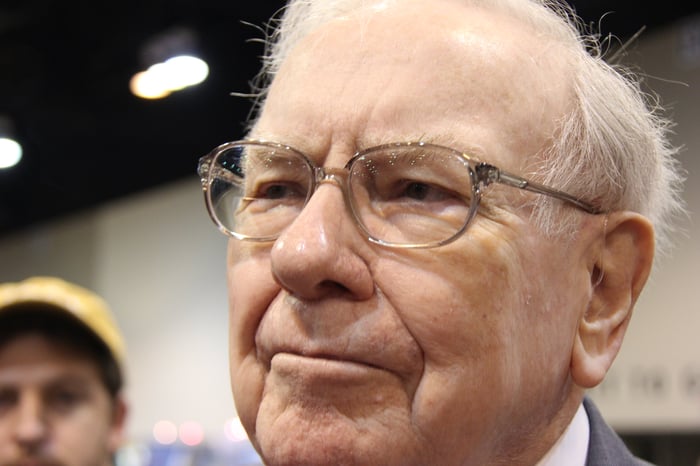
Warren Buffett retired as CEO of Berkshire Hathaway on Dec. 31. Image source: The Motley Fool.
Even though it's been three months without Buffett steering the company's day-to-day operations, his impact is still being felt, as evidenced by Berkshire's latest Form 13F filing. A 13F is a required filing for institutional investors with at least $100 million in assets under management that details which stocks Wall Street's preeminent money managers purchased and sold in the latest quarter.
Instead of riding off quietly into the sunset, Warren Buffett went out with a bang. In the quarters leading up to his retirement, he persistently dumped shares of money-center titan Bank of America (NYSE: BAC) and ended his tenure as CEO by piling approximately $1.2 billion into one of Wall Street's hottest oil stocks.
The Oracle of Omaha slashed his previously gigantic stake in Bank of America by 50%
As of the midpoint of 2024, BofA, as Bank of America is commonly known, was fully entrenched as one of Berkshire's core holdings. The more than 1.03 billion shares Buffett's company held were valued at north of $41 billion.
But between July 2024 and the retirement of Berkshire's billionaire boss, shares of BofA were sold each quarter. In aggregate, 515,556,072 shares were sent to the chopping block, representing roughly half of Berkshire's peak stake.
To be objective, Bank of America wasn't the only stock the Oracle of Omaha was paring down prior to his retirement. Buffett was a net seller of equities for 13 consecutive quarters (Oct. 1, 2022 – Dec. 31, 2025), totaling approximately $187 billion.
During Berkshire Hathaway's annual shareholder meeting in May 2024, he opined that corporate income tax rates were likely to climb in the coming years. This expectation served as the basis for dumping shares of Apple, and may have been the catalyst that fueled the aforementioned persistent selling in Bank of America stock.
But profit-taking probably isn't the full story.
Warren Buffett's aggressive selling of BofA stock spanning 18 months leading up to his retirement likely had to do with the company's valuation and its interest-sensitive nature.
While we've witnessed Buffett break and bend some of his unwritten investing rules over several decades, the one rule he was unwavering about was his desire to get a good deal. Value took precedent above all else.
When Buffett initially purchased preferred shares of BofA in August 2011, its common stock was trading at a 62% discount to its book value. Bank of America shares entered 2026 at a 43% premium to book value. The eye-popping bargain that enticed Berkshire's now-former boss to pounce is no longer evident.
The other possible catalyst is BofA's interest rate sensitivity. When the Federal Reserve rapidly increased interest rates from March 2022 through July 2023, no bank benefited more, in terms of interest income, than Bank of America. But with the central bank in a rate-easing cycle, there's the potential for BofA's net interest income to be adversely impacted, compared to other money-center banks.
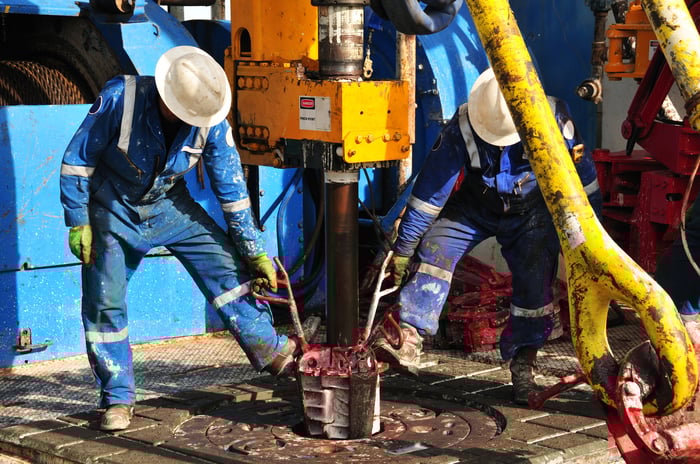
Image source: Getty Images.
Warren Buffett made a timely buy of one of Wall Street's leading oil stocks
While a lot of attention was paid to the final new addition in Buffett's last quarter as CEO, The New York Times Co., it's his purchase of approximately $1.2 billion worth of integrated oil and gas behemoth Chevron (NYSE: CVX) that's making waves.
Chevron has consistently been a top-five holding for Berkshire Hathaway over the last four years. During the fourth quarter, the Oracle of Omaha green-lit the purchase of 8,091,570 shares. Though we don't know the average purchase price of these shares, we do know that Chevron spent much of the fourth quarter hovering in the low $150s.
Shares of Chevron have soared by 36% since the year began, through the closing bell on March 26. This outsize gain has been fueled by a historic energy supply chain disruption caused by the Iran war.
On Feb. 28, U.S. and Israeli forces commenced military operations against Iran, which in turn led to the latter closing the Strait of Hormuz to virtually all oil exports. Approximately 20% of the world's liquid petroleum travels through the Strait of Hormuz daily.
The law of supply and demand states that when demand for a good or service outstrips its supply, its price will climb until demand tapers. In the wake of the Iran war, crude oil prices skyrocketed, which bodes well for Chevron's high-margin drilling segment.
However, Warren Buffett added to Berkshire Hathaway's stake in Chevron long before attacks began on Iran. His optimism likely had to do with Chevron's integrated operating model, as well as its hearty capital-return program.
Although drilling is where Chevron generates its top-tier operating margin, it also oversees transmission pipelines, chemical plants, and refineries. These midstream and downstream assets act as hedges in the event that crude oil prices decline. These assets also generate predictable operating cash flow.
Furthermore, Warren Buffett was always a fan of outsize capital-return programs. Chevron has increased its dividend for 39 consecutive years and has used share buybacks to reduce its outstanding share count by nearly 12%. Companies with steady or growing net income and a declining share count can expect an earnings-per-share boost.
Should you buy stock in Chevron right now?
Before you buy stock in Chevron, consider this:
The Motley Fool Stock Advisor analyst team just identified what they believe are the 10 best stocks for investors to buy now… and Chevron wasn’t one of them. The 10 stocks that made the cut could produce monster returns in the coming years.
Consider when Netflix made this list on December 17, 2004... if you invested $1,000 at the time of our recommendation, you’d have $501,381!* Or when Nvidia made this list on April 15, 2005... if you invested $1,000 at the time of our recommendation, you’d have $1,012,581!*
Now, it’s worth noting Stock Advisor’s total average return is 880% — a market-crushing outperformance compared to 178% for the S&P 500. Don't miss the latest top 10 list, available with Stock Advisor, and join an investing community built by individual investors for individual investors.
See the 10 stocks »
*Stock Advisor returns as of April 1, 2026.
Bank of America is an advertising partner of Motley Fool Money. Sean Williams has positions in Bank of America. The Motley Fool has positions in and recommends Apple, Berkshire Hathaway, Chevron, and The New York Times Co. and is short shares of Apple. The Motley Fool has a disclosure policy.
Recommended Articles


