


Retirees on Social Security Just Got Worse News on Benefit Cuts
Key Points
Social Security is facing a funding shortfall in the coming years.
If lawmakers don't act, benefit cuts could happen soon.
While there's a good chance Social Security won't have to slash benefits, it's best to prepare for that to happen.
- The $23,760 Social Security bonus most retirees completely overlook ›
If you read up on Social Security lately, the news might scare you quite a bit. Social Security has long been at risk of having to cut benefits. But the timing of potential cuts just got moved up. That means retirees and workers alike have even less time to prepare for benefit cuts in the event they end up happening.
Why Social Security's solvency timeline just got worse
Last year, the Social Security Trustees projected that the program's Old-Age and Survivors Insurance (OASI) Trust Fund will be out of money by 2033. At that point, the program may only have enough resources to pay 77% of scheduled benefits, resulting in a 23% cut.
Will AI create the world's first trillionaire? Our team just released a report on the one little-known company, called an "Indispensable Monopoly" providing the critical technology Nvidia and Intel both need. Continue »
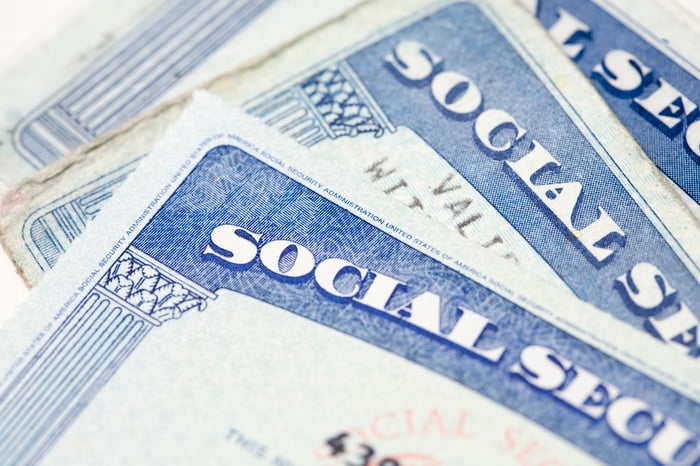
Image source: Getty Images.
But last month, the Congressional Budget Office released its own report, which found that Social Security's OASI Trust Fund is at risk of being depleted by 2032 -- one year earlier than last year's estimate by the Social Security Trustees.
Benefit cuts are a problem for current retirees and future ones alike. So the fact that they could happen sooner isn't good at all.
How to prepare for potential Social Security cuts
It's important to realize that Social Security cuts aren't a given at this stage of the game. Lawmakers have multiple solutions they can implement to prevent cuts from happening.
Plus, it's worth noting that Social Security has faced the possibility of cuts before, but it's never actually had to resort to them. So there's a strong chance Congress will find a last-minute solution.
Still, the smart thing to do is prepare for Social Security cuts. And this holds true whether you're retired already or are still working.
Of course, your approach to preparing for benefit cuts is likely to differ based on whether you're still working or not. If you're still working, the best thing you can do is boost your retirement savings rate.
Let's say you're 37 years old now with a $12,000 IRA balance, and that you've been contributing $200 a month to that account. If you're able to raise your contribution rate to $300 a month, and your IRA gives you a yearly 8% return, which is a bit below the stock market's average, your balance could grow to almost $530,000 by age 67. That gives you a nice cushion.
If you're already retired, don't assume you can't boost your savings. You can try going back to work and banking whatever you earn, or cutting expenses if there's wiggle room in your budget.
You may also need to get creative if you're a retiree who's worried about Social Security cuts and you get most or all of your income from your monthly benefits. Some options may include relocating to a cheaper part of the country or moving in with a grown child for a year or two to build yourself a nest egg you can tap as needed.
Social Security cuts may not happen at all. But it's important to have a backup plan in case they do. And given that the program may be much closer to insolvency than what everyone thought last year, the time to start preparing is now.
The $23,760 Social Security bonus most retirees completely overlook
If you're like most Americans, you're a few years (or more) behind on your retirement savings. But a handful of little-known "Social Security secrets" could help ensure a boost in your retirement income.
One easy trick could pay you as much as $23,760 more... each year! Once you learn how to maximize your Social Security benefits, we think you could retire confidently with the peace of mind we're all after. Join Stock Advisor to learn more about these strategies.
View the "Social Security secrets" »
The Motley Fool has a disclosure policy.
Recommended Articles


