


10 Hedge Fund Giants Bleed as Iran Oil Shock Hits Bonds, Commodities and Crypto
Caxton Associates has seen its flagship $9 billion macro fund lose more than $1.3 billion in March after the Iran conflict sent oil, bond and commodity markets into violent dislocations.
The London-based firm, led by CEO Andrew Law, is one of at least ten major hedge funds caught on the wrong side of the Gulf crisis trade. The losses highlight how a single geopolitical shock can cascade through TradFi and reshape risk sentiment across asset classes, including crypto.
Caxton Leads the Pain, but the Damage Is Widespread
Caxton’s drawdown began with a $600 million loss in the first week of March after US and Israeli strikes on Iran disrupted shipping through the Strait of Hormuz and sent Brent crude past $100 per barrel.
By March 20, losses had more than doubled to $1.3 billion, leaving the flagship fund down 15% for the month, according to the Financial Times.
The firm had entered 2026 positioned for falling UK government bond yields and rising commodity prices, including gold and copper.
Both trades moved against it. Gold declined after the outbreak of hostilities, and copper dropped 7.6% in March, compounding the energy-driven losses.
Caxton is far from alone. At least nine other major funds reported significant losses during the same period.
Diego Megia’s $7.6 billion Taula Capital slid about 4.7% in the first week alone, according to Bloomberg.
Brevan Howard’s Master and Alpha Strategies funds fell 2.4% and 1.7%, respectively, through mid-March.
PIMCO’s Commodity Alpha Fund suffered the steepest hit, falling roughly 17% in March and extending year-to-date losses to approximately 26%.
Among multi-strategy platforms, Millennium Management lost roughly $1.5 billion in a single week. Citadel’s fixed-income and macro trading books shed an estimated $1 billion.
Balyasny Asset Management dropped 3.5%, ExodusPoint surrendered all its 2026 gains, Point72 fell 1.1% and Marshall Wace’s Eureka fund lost 3.7%.
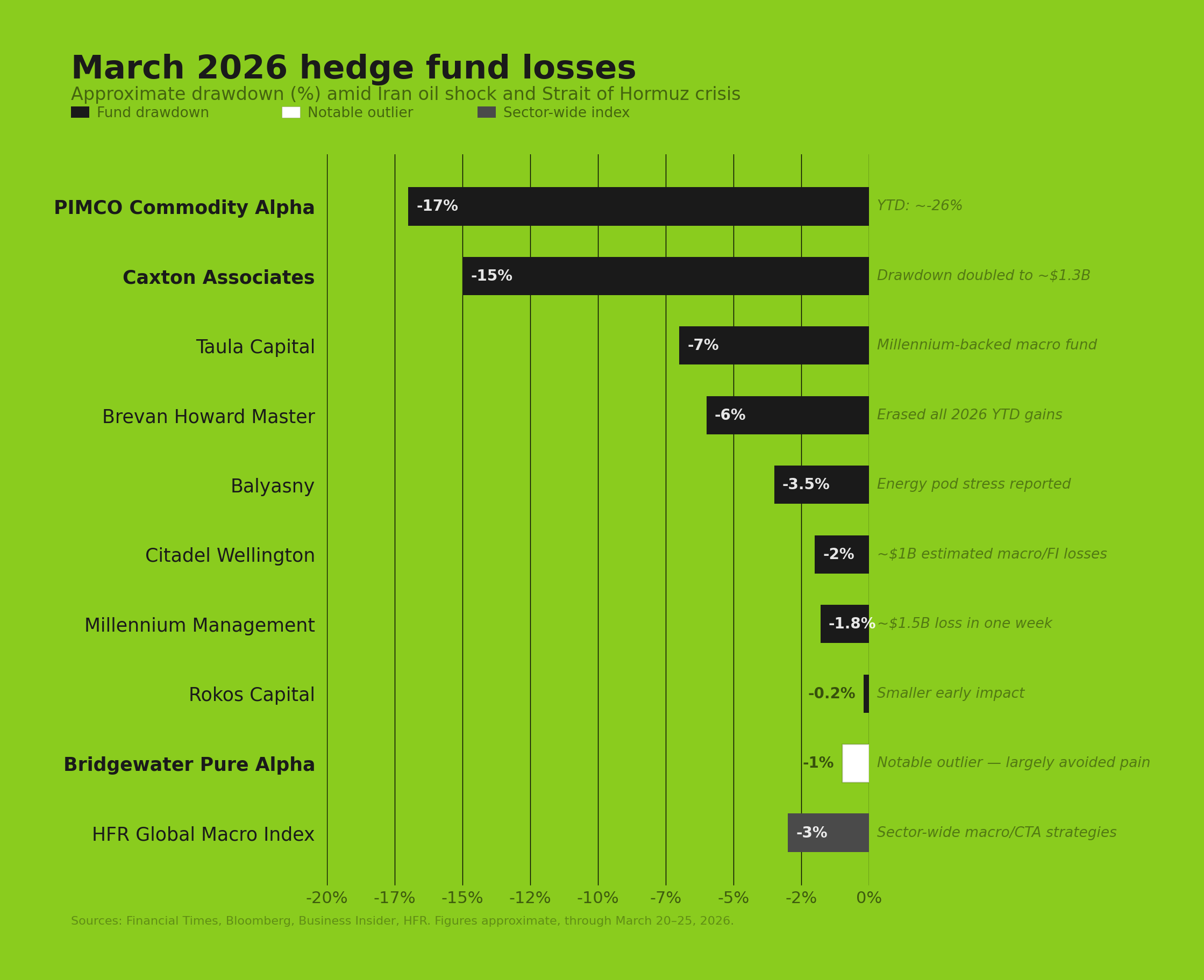 Chart showing March 2026 hedge fund losses by fund name and percentage, Source: BeInCrypto
One Exception Stood Out
Indeed, Bridgewater Associates’ Pure Alpha fund lost less than 1% during the same period, making it a clear outlier. The firm runs a systematic, rules-based strategy that holds 30 to 40 simultaneous positions across bonds, currencies, equities, and commodities globally.
That diversified approach contrasts sharply with the discretionary macro bets that burned funds like Caxton and Brevan Howard.
Bridgewater had also deliberately reduced assets under management in recent years to improve flexibility, a move that may have helped limit its exposure to crowded trades.
Pure Alpha posted a 33% gain in 2025, one of its strongest years in five decades. Co-chief investment officer Greg Jensen warned in January that 2026 would be a “dangerous year for interest rates,” suggesting the firm entered the crisis with a cautious macro posture.
What This Means for Crypto
While TradFi macro giants absorbed billions in losses, Bitcoin (BTC) showed notable resilience. BTC rose roughly 7% from the February 28 escalation through mid-March, outperforming the S&P 500, Nasdaq 100, gold and silver over the same window.
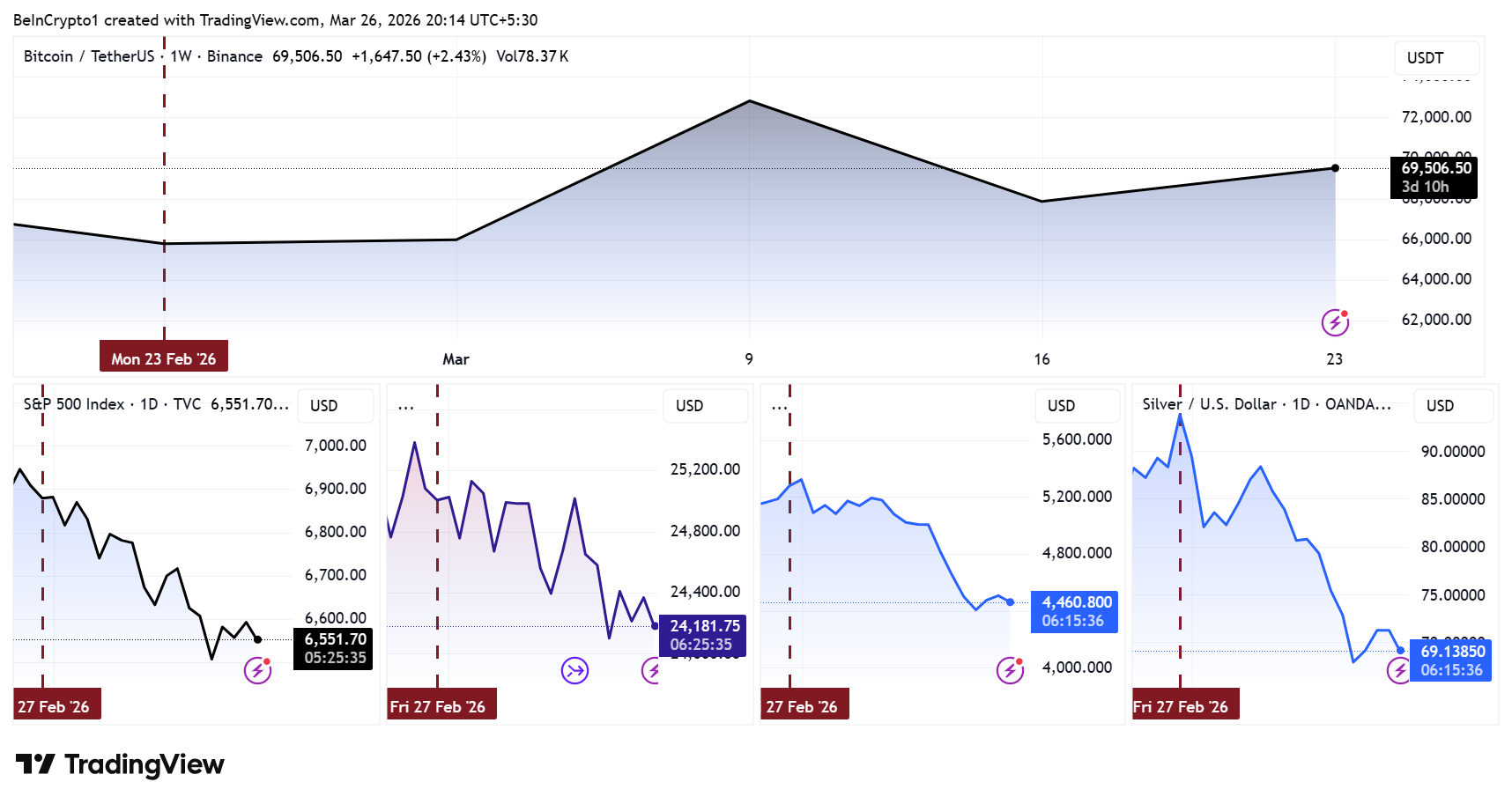 Bitcoin, S&P 500, NASDAQ, Gold, and Silver Price Performance. Source: TradingView
The relationship between oil and BTC played out in real time. When reports of a potential one-month ceasefire surfaced on March 24, Brent crude dropped more than 4% within minutes while BTC bounced back above $70,000.
The inverse also held. When Iran struck Qatar’s Ras Laffan gas facility on March 19, BTC briefly dipped below $69,000 as inflation expectations spiked.
“We’re seeing a double-whammy for risk assets. Crypto isn’t immune to these macro headwinds,” said David Lawant, head of research at Anchorage Digital.
Institutional flows told a more constructive story. US spot Bitcoin ETFs attracted nearly $700 million in net inflows in March, ending a five-week outflow streak totaling $3.8 billion.
On March 3 alone, ETFs drew $458 million in one of the quarter’s strongest single-day inflows. BlackRock’s iShares Bitcoin Trust (IBIT) led the buying consistently.
Over the trailing 30 days, Bitcoin ETFs recorded net positive flows while gold ETFs saw record outflows. That rotation, if sustained, represents a structural shift in how institutional capital treats digital assets during geopolitical stress.
However, sentiment remains fragile. BTC funding rates have been negative since early March and the crypto fear and greed index has persistently signaled extreme fear.
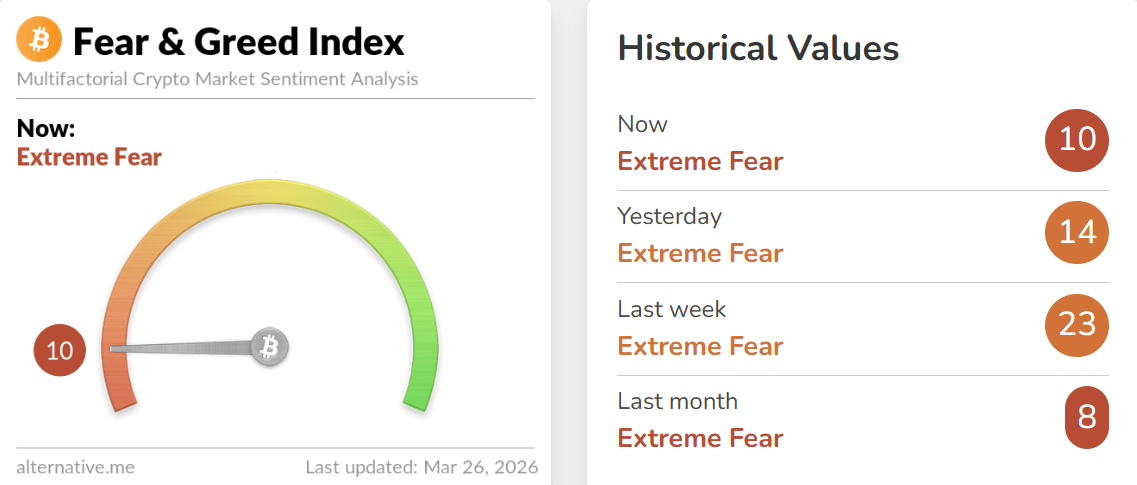 Crypto fear and greed index. Source: Alternative.me
The Fed held rates steady on March 18 but raised its 2026 inflation forecast to 2.7%, triggering $129 million in single-day ETF outflows.
The Gulf crisis has delivered a live stress test for the “digital gold” thesis. Bitcoin did not act as a traditional safe haven in the immediate shock. Instead, it traded as a high-volatility risk asset correlated to oil headlines and rate expectations.
Its relative resilience compared to TradFi macro funds, however, raises a different question for allocators blending traditional and digital strategies.
With ceasefire negotiations reportedly underway and Brent crude retreating from $120 toward $100, the next catalyst for both TradFi and crypto may depend on whether de-escalation holds or the conflict deepens further.
Recommended Articles


