




5 Reasons Intel's CEO Just Made This Stock Worth Buying
Key Points
Intel's CEO is putting real money and capital behind Intel's turnaround.
Intel is finding ways to compete with AI bottlenecks rather than simply spending more.
Early manufacturing progress and major U.S. and Nvidia investments add credibility to the turnaround.
- 10 stocks we like better than Intel ›
Intel (NASDAQ: INTC) stock has climbed nearly 300% over the past year, which is not what anyone expected from a company that spent 2024 looking like it might have to sell itself for parts.
CEO Lip-Bu Tan took the job in March 2025 and has said the turnaround needs at least five years. What follows are five reasons why the case for owning the stock has changed, as well as why it could still go wrong.
Missed Nvidia in 2009? This Rare Signal Is Flashing Again. In 2009, a "Double Down" signal flashed for a little-known chipmaker called Nvidia. For the first time in years, that same "Total Conviction" signal is flashing for a company 1/100th the size of Nvidia. Continue »
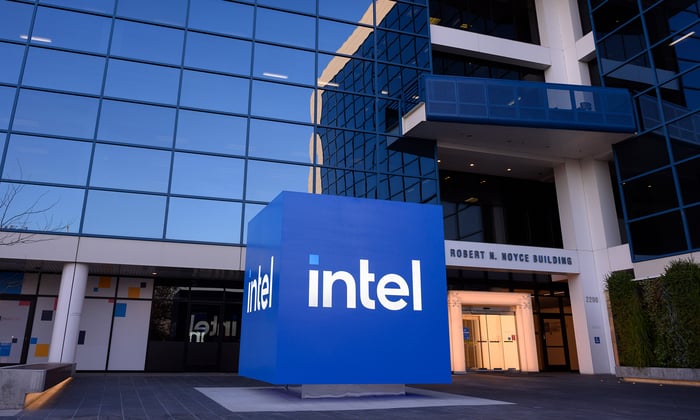
Image source: Intel Corporation.
1. Tan put $10 million of his own money in
On Aug. 11, Tan bought 105,263 shares at $95 apiece, spending almost exactly $10 million and raising his personal stake by 8.7% to roughly 1.3 million shares. He did so around the same time the company sold new stock at that price and raised massive amounts of capital, per TheStreet. Executives get shares handed to them as pay all the time. Writing a check at the same price that outside investors are paying is a different act, one that insiders rarely perform when they expect a rough year ahead.
2. Intel raised $20 billion when it could have raised $15 billion
As mentioned earlier, Intel raised large amounts of capital. In early to mid-August, the company announced a $15 billion stock sale and priced it the next morning at $20 billion, selling 210.5 million shares at $95 for about $19.7 billion in net proceeds. Underwriters then exercised their option to purchase an additional 31.6 million shares in full.
Selling stock dilutes existing owners, meaning each share now represents a slightly smaller slice of the company. Analysts at Bank of America and UBS both trimmed their price targets by roughly 4% to 5% due to dilution, while calling the raise a net positive.
I see Tan's decision to raise the money now as a sign that Intel took advantage of investors' willingness to fund its turnaround. Building chip factories is expensive, and waiting for the perfect time to raise capital could leave Intel trying to fund the same projects when investors are far less willing to provide the money.
3. Intel is designing around the memory shortage instead of into it
At Computex in June, Tan detailed Crescent Island, a data center chip designed to answer AI queries rather than train models. According to TheStreet, Crescent Island deliberately skips the premium stacked memory that everyone is fighting over and uses the cheaper commodity kind found in phones and laptops, in an air-cooled card that fits ordinary servers.
Intel is giving up memory bandwidth, which limits the chip's training performance, in exchange for more memory capacity and reduced reliance on other companies, according to TheStreet. That could matter if customers care more about availability and capacity than peak performance.
I like Intel and Tan's approach here because it focuses on solving internal capacity and availability problems rather than forcing them to spend more to get the performance they need.
4. The manufacturing evidence is starting to arrive
Intel and equipment maker ASML Holding recently said that more than 1 million test wafers have already gone through Intel's newest chipmaking machines, which is a simple way of saying those tools are no longer stuck in the lab. They are running real silicon over and over, and each pass gives engineers another chance to spot problems and tune the process.
Company leadership also says the error rate on Intel's upcoming 14A process is coming down faster than the company expected, which, in plain English, means more of the chips coming off the line are usable rather than scrap.
5. Washington and Nvidia are both on the shareholder list
And lastly, the federal government owns just under 10% of Intel after buying 433.3 million shares at $20.47 in 2025. This shows that Washington has tied a chunk of its industrial policy to Intel and has a strong incentive to see this turnaround succeed rather than watch the company slide backward. Around the same time, Nvidia built a roughly $30 billion equity position in Intel. I think these investments would have happened with or without Tan, but they are still massive nods to Intel's future.
Should you buy stock in Intel right now?
Before you buy stock in Intel, consider this:
The Motley Fool Stock Advisor analyst team just identified what they believe are the 10 best stocks for investors to buy now… and Intel wasn’t one of them. The 10 stocks that made the cut could produce monster returns in the coming years.
Consider when Netflix made this list on December 17, 2004... if you invested $1,000 at the time of our recommendation, you’d have $420,109!* Or when Nvidia made this list on April 15, 2005... if you invested $1,000 at the time of our recommendation, you’d have $1,303,689!*
Now, it’s worth noting Stock Advisor’s total average return is 938% — a market-crushing outperformance compared to 211% for the S&P 500. Don't miss the latest top 10 list, available with Stock Advisor, and join an investing community built by individual investors for individual investors.
See the 10 stocks »
*Stock Advisor returns as of September 16, 2026.
Bank of America is an advertising partner of Motley Fool Money. Micah Zimmerman has no position in any of the stocks mentioned. The Motley Fool has positions in and recommends ASML, Intel, and Nvidia. The Motley Fool has a disclosure policy.
Recommended Articles


