




Why Is USA Rare Earth Stock Suddenly Down (Again) Today?
Key Points
The U.S. White House is maneuvering to wrestle pricing control of key industrial minerals away from China.
The way that's been proposed to do so, however, could present other challenges for the industry in general, and this company in particular.
Mostly though, this week’s headlines likely don’t mean nearly as much as this ticker’s volatile swing suggests.
- 10 stocks we like better than USA Rare Earth ›
Just one day after they soared on good news, USA Rare Earth (NASDAQ: USAR) shares are down again today on news from the very same source.
That source is the White House. Speaking at a gathering of representatives from over 50 countries, United States Vice President J.D. Vance announced on Wednesday that President Trump intends to establish a trading bloc aimed at pushing back against China's control of several critical minerals markets, including rare earth minerals used in electric vehicles and computing technology. These plans include a self-imposed price floor on these materials.
Where to invest $1,000 right now? Our analyst team just revealed what they believe are the 10 best stocks to buy right now, when you join Stock Advisor. See the stocks »
Although it superficially seems to favor Oklahoma-based rare earth miner USA Rare Earth, as of 2:58 p.m. ET Wednesday its stock is down 8.4%, unwinding most of the recent spurred by a separate announcement from the White House.
It's complicated
There are two separate and opposing developments in play here, to be clear.
The first of these is the announcement from President Trump made Monday unveiling "Project Vault," which calls for a national stockpiling of $12 billion worth of critical industrial materials. This development works in favor of USA Rare Earth, of course, which mines and processes some of these important minerals, spurring the stock's surge earlier in the week.
Wednesday's news also superficially seems to favor the company. As Vice President Vance explained, "We will establish reference prices for critical minerals ... and for members of the preferential zone, these reference prices will operate as a floor maintained through adjustable tariffs to uphold pricing integrity."
Investors are far more concerned, however, that this sort of pricing control could backfire, ultimately opening the door to subpar mineral prices and weakening demand-driven pricing power. The establishment of an international trading bloc could also readily introduce USA Rare Earth's domestic customers to foreign competitors.
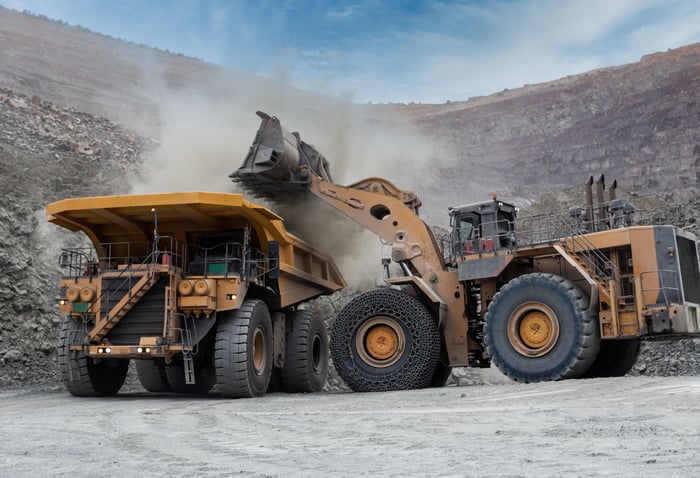
Image source: Getty Images.
It's also possible that investors are now simply second-guessing the net upside of Project Vault.
Don't read too much into any of the volatility
So, today's knee-jerk move is understandable, particularly after Tuesday's surge.
Just keep things in perspective. These are only plans, and are subject to change before they're implemented if they're implemented in a recognizable form at all; they may not be. For now, investors should remain focused on the simpler fact that USA Rare Earth is sitting on a massive pile of these minerals in question, and still expects to begin production of much-needed magnets later this year. That's not changed this week.
Should you buy stock in USA Rare Earth right now?
Before you buy stock in USA Rare Earth, consider this:
The Motley Fool Stock Advisor analyst team just identified what they believe are the 10 best stocks for investors to buy now… and USA Rare Earth wasn’t one of them. The 10 stocks that made the cut could produce monster returns in the coming years.
Consider when Netflix made this list on December 17, 2004... if you invested $1,000 at the time of our recommendation, you’d have $431,111!* Or when Nvidia made this list on April 15, 2005... if you invested $1,000 at the time of our recommendation, you’d have $1,105,521!*
Now, it’s worth noting Stock Advisor’s total average return is 906% — a market-crushing outperformance compared to 195% for the S&P 500. Don't miss the latest top 10 list, available with Stock Advisor, and join an investing community built by individual investors for individual investors.
See the 10 stocks »
*Stock Advisor returns as of February 4, 2026.
James Brumley has no position in any of the stocks mentioned. The Motley Fool has no position in any of the stocks mentioned. The Motley Fool has a disclosure policy.
Recommended Articles


