




UPS in 2026: Near-Term Risk, Long-Term Opportunity
Key Points
UPS is shifting its focus to higher-margin markets and increasing automation to support future growth.
In the near future, UPS faces risks such as weak manufacturing, the effect of tariffs on small and medium businesses, and concerns about free cash flow.
Investing in UPS stock means taking a long-term view, as its best days lie ahead.
- 10 stocks we like better than United Parcel Service ›
UPS (NYSE: UPS) stock presents investors with a classic investment conundrum. What do you do with a stock that looks positioned for long-term growth, but faces near-term risk? Here's why that's the case with UPS stock right now, and what you need to know before buying it.
UPS' long-term growth prospects
Many people think that Amazon's growing delivery business could hurt established companies like UPS, but there's still plenty of delivery work to go around. The real issue for UPS is making its deliveries as profitable as possible.
Where to invest $1,000 right now? Our analyst team just revealed what they believe are the 10 best stocks to buy right now. Continue »
As such, UPS' plan to reduce low-margin and unprofitable deliveries from the e-commerce giant by lowering Amazon's delivery volume by 50% from the start of 2025 to the middle of 2026 makes perfect sense. In addition, management's focus on growing targeted, higher-margin end markets, such as healthcare logistics and small- and medium-sized enterprises (SMEs), will drive margin expansion.
Investors have reason to trust these plans, since UPS has already shown strong growth in these areas. For example, its healthcare revenue grew from $5 billion in 2016 to $10 billion in 2023. The company aims for $20 billion by 2026, helped by its recent $1.6 billion purchase of Andlauer Healthcare Group, a supply chain management company.
Meanwhile, UPS' highly successful Digital Access Program enables SMEs to offer enterprise-level shipping operations and is helping drive an ongoing increase in SME share of UPS U.S. volume (up from 29.4% in the third quarter of 2024 to 32.8% in Q3 2025).

Image source: Getty Images.
The general theme of maximizing productivity across its network continues with UPS' ongoing investments in automation and smart facilities. Improving its delivery network will allow UPS to pursue facility consolidations, boosting profitability.
In addition, the so-called Amazon "glide down" and facility closures are helping the company achieve its target of reducing structural costs by $3.5 billion.
It all adds up to UPS becoming a leaner, more profitable company in the coming years, and income-seeking investors will be delighted to buy into the stock at its current 6% dividend yield.
Near-term risks
The future looks bright for UPS, but there are near-term risks here. While management's operational restructuring makes sense, the company's end markets haven't helped much in recent years. There are three near-term concerns.
First, the U.S. manufacturing sector is not entering 2026 in great shape. The Institute for Supply Management's Purchasing Managers' Index indicates manufacturing contraction for the 10th consecutive month in December. That's not great news for UPS' high-margin business-to-business (B2B) deliveries, with CFO Brian Dykes noting that "B2B average daily volume in the U.S. finished down 4.8% compared to last year due to softness in retail and in manufacturing activity" on the Q3 earnings call.
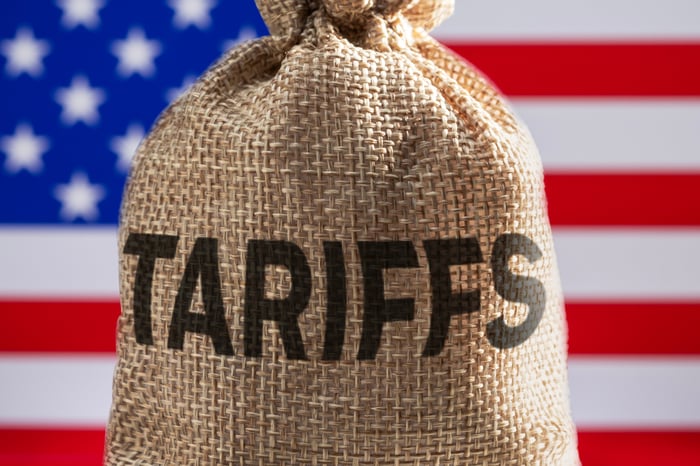
Image source: Getty Images.
Second, SMEs haven't felt the full brunt of the tariffs yet because many were able to run down inventory in 2025, and also shift sourcing to countries that have now had tariffs imposed on them. The SMEs will inevitably need to replace inventory and will likely pay higher prices due to tariffs.
Third, the softness in its end markets in 2026 means UPS is on track to hit $4.6 billion in free cash flow (FCF) in 2025, and according to Wall Street analyst consensus, about $5.3 billion in 2026 and 2027, respectively. None of these figures covers its annual dividend of about $5.5 billion.
Is UPS stock a buy in 2026?
UPS' best days are likely still to come. If you are comfortable with some short-term risk, now might be a good time to buy the stock and hold it for a few years.
On the other hand, the near-term risk can't be ignored. Cautious investors may want to wait and see what management guides for 2026, notably regarding the SME market, before buying in.
Should you buy stock in United Parcel Service right now?
Before you buy stock in United Parcel Service, consider this:
The Motley Fool Stock Advisor analyst team just identified what they believe are the 10 best stocks for investors to buy now… and United Parcel Service wasn’t one of them. The 10 stocks that made the cut could produce monster returns in the coming years.
Consider when Netflix made this list on December 17, 2004... if you invested $1,000 at the time of our recommendation, you’d have $474,578!* Or when Nvidia made this list on April 15, 2005... if you invested $1,000 at the time of our recommendation, you’d have $1,141,628!*
Now, it’s worth noting Stock Advisor’s total average return is 955% — a market-crushing outperformance compared to 196% for the S&P 500. Don't miss the latest top 10 list, available with Stock Advisor, and join an investing community built by individual investors for individual investors.
See the 10 stocks »
*Stock Advisor returns as of January 19, 2026.
Lee Samaha has no position in any of the stocks mentioned. The Motley Fool has positions in and recommends Amazon and United Parcel Service. The Motley Fool has a disclosure policy.
Recommended Articles


