

I Was Right: President Trump Will Legalize Marijuana in 2026
Key Points
President Trump has ordered that marijuana be reclassified as a Schedule III drug.
The move doesn't fully legalize marijuana -- yet -- but it may foreshadow changes to come.
- 10 stocks we like better than Tilray Brands ›
Marijuana isn't legal yet -- but it's getting close.
Back in October, I addressed a repost on Truth Social by President Donald Trump of a video urging that Medicare cover prescriptions for medical marijuana. I explained that the post was essentially a trial balloon -- a way to gauge whether voters would support such a move. Marijuana industry experts agreed the post constituted "the strongest signal yet that movement on cannabis policy may be imminent."
Where to invest $1,000 right now? Our analyst team just revealed what they believe are the 10 best stocks to buy right now. Continue »
I suggested that if marijuana were to be legalized, the most logical time for the president to ask Congress to do this would be at the next State of the Union address in January. And I'm increasingly convinced we're going to see a further push for legalization in a few weeks.
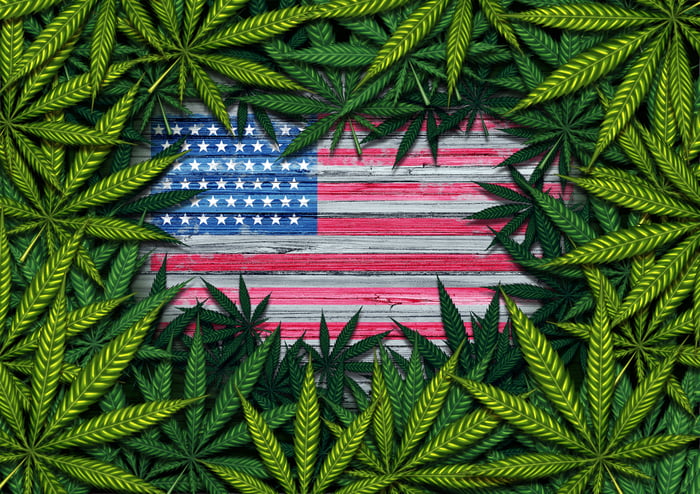
Image source: Getty Images.
Last week's news
Last week the president signed an executive order to reschedule marijuana as a Schedule III drug, downgraded from Schedule I. As The Washington Post points out, this move does not "decriminalize" marijuana, nor does it "legalize" marijuana.
But as the president explained, just as codeine can be helpful as a pain reliever, "marijuana can be legitimate in terms of medical applications." For this reason, he's decided to move marijuana out of the Schedule I class of drugs that includes substances such as LSD and heroin, and into Schedule III instead.
Harking back to the Truth Social video that started this ball rolling, the president also confirmed that Medicare may begin covering the costs of various CBD treatments.
The future for marijuana in 2026
Nationwide, 40 states already allow medical marijuana to be used with a prescription, while two dozen states have gone so far as to legalize recreational marijuana use. Roughly one in five Americans admits to taking the states up on their offer and using either CBD or marijuana, medically or recreationally. At the same time, nearly two in three adults say they support full-scale legalization of the drug.
Clearly, there will be strong voter support if the president continues to move toward legalization next year. Businesses, too, can be expected to firmly back legalization.
Simply downgrading the restrictions on marijuana use from Schedule I to Schedule III will be enough to permit marijuana businesses to take significant tax deductions for ordinary expenses such as rent, utilities, insurance, marketing, and payroll. Banks, sensing that the risk of regulatory action is diminishing, may also become more willing to provide ordinary banking services to marijuana companies, thereby eliminating the need for them to operate as cash businesses.
All of these points will tend to lower the cost of doing business with marijuana, reducing the retail price of cannabis, and therefore -- as we all learned in Economics 101 -- probably lead to an increase in demand for marijuana.
That means more revenue and more profit for marijuana stocks in the future -- perhaps much more, if marijuana rescheduling in 2025 turns into marijuana legalization in 2026.
What it means for marijuana stocks
Marijuana investors are already cheering the president's move, looking forward to full-scale legalization. But what about marijuana stocks?
Tilray Brands (NASDAQ: TLRY) wasted no time hailing the president's move. The company announced last week that it will set up a U.S. subsidiary, Tilray Medical USA, to sell marijuana south of the Canadian border. The subsidiary will sell only medical marijuana for now, of course, but there's the potential for that to change, and the company promises to "adapt swiftly to regulatory developments."
Other leading cannabis companies seem slower out of the gate than Tilray, with neither Aurora Cannabis (NASDAQ: ACB) nor Canopy Growth (NASDAQ: CGC) putting out press releases specifically addressing the president's executive order yet. Still, you have to imagine that discussions are going on in the C-suite, and I'd expect both companies to move to take advantage of the newer, looser regulatory environment in time.
Mind you, none of these three marijuana stocks is yet profitable based on generally accepted accounting principles (GAAP). But analysts polled by S&P Global Market Intelligence say Aurora might become GAAP profitable next year, while Canopy could report at least non-GAAP profit -- and Tilray already is non-GAAP profitable.
With one small boost from the Trump administration this year, and potentially a much bigger announcement in January, 2026 just might be the year the marijuana industry turns the corner in America.
Should you buy stock in Tilray Brands right now?
Before you buy stock in Tilray Brands, consider this:
The Motley Fool Stock Advisor analyst team just identified what they believe are the 10 best stocks for investors to buy now… and Tilray Brands wasn’t one of them. The 10 stocks that made the cut could produce monster returns in the coming years.
Consider when Netflix made this list on December 17, 2004... if you invested $1,000 at the time of our recommendation, you’d have $509,470!* Or when Nvidia made this list on April 15, 2005... if you invested $1,000 at the time of our recommendation, you’d have $1,167,988!*
Now, it’s worth noting Stock Advisor’s total average return is 991% — a market-crushing outperformance compared to 196% for the S&P 500. Don't miss the latest top 10 list, available with Stock Advisor, and join an investing community built by individual investors for individual investors.
See the 10 stocks »
*Stock Advisor returns as of December 28, 2025.
Rich Smith has no position in any of the stocks mentioned. The Motley Fool recommends Tilray Brands. The Motley Fool has a disclosure policy.
Recommended Articles


