

Nike Stock Plummets. Time to Buy?
Key Points
China weakness and tariffs continue to weigh heavily on Nike's profits.
The company's direct-to-consumer sales are still declining.
Fiscal 2026 is shaping up to be a transition year -- not a comeback year.
- 10 stocks we like better than Nike ›
Nike (NYSE: NKE) shares were slammed after the sportswear giant reported its fiscal 2026 second-quarter results on Thursday afternoon. The move lower came as the company delivered shrinking profits and another difficult quarter in China.
Selling everything from running shoes to performance gear under one of the most recognizable brands in the world, Nike still dominates athletic footwear and apparel. And there were some positives in the update, to be sure. Revenue, for instance, grew slightly -- a nice change from the 10% year-over-year revenue decline the company saw in fiscal 2025.
Where to invest $1,000 right now? Our analyst team just revealed what they believe are the 10 best stocks to buy right now. Continue »
Overall, however, the story for Nike remains one of challenges and uncertainty. But the question now is whether shares have fallen enough to reflect those issues.
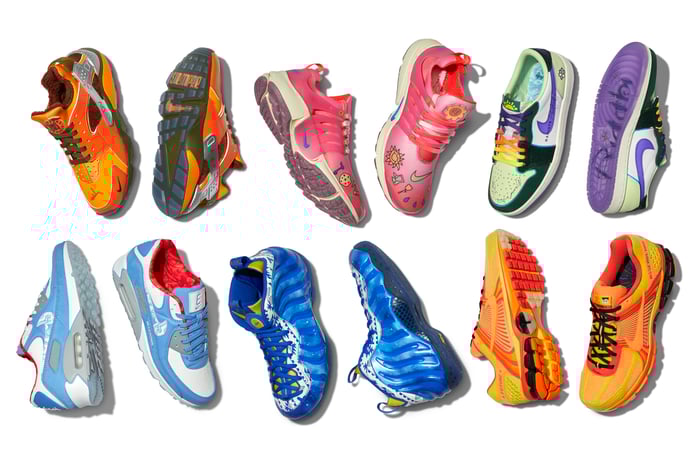
Image source: Nike.
Profit pressure
Nike's second-quarter revenue rose 1% year over year to $12.4 billion. This was a huge improvement from the declines that plagued Nike last fiscal year. In addition, it marks the second quarter in a row the company posted growth, building a case that the company's turnaround efforts are working. Revenue grew 1% in the first quarter of fiscal Q1, too.
But the profit picture looked far worse than the top line. Nike's earnings per share fell 32% year over year as gross margin slid 300 basis points to 40.6%.
There were other factors that dragged on Nike's bottom line. One was Nike's "demand creation" spending, which rose 13% year over year. This was driven primarily by growth in marketing expenses.
Nike CEO Elliott Hill tried to frame the quarter as part of a longer process.
"NIKE is in the middle innings of our comeback," Hill said in the company's fiscal second-quarter earnings release. "We are making progress in the areas we prioritized first and remain confident in the actions we're taking to drive the long-term growth and profitability of our brands."
Difficulties in China
Another drag on Nike's business has been China. Indeed, the stock's sell-off after the earnings report was likely driven, at least in part, by Nike's weakness in the key market. Sales in Greater China fell 17% in the second quarter. This was worse than the region's 9% decline in the prior quarter.
It's easy to see why investors are concerned. There was a time when China was a major tailwind for the company. Now, things seem to be moving backward, even as some competitors, like Lululemon, are experiencing strong sales growth in the market.
Another detail in the report that may have spooked investors is the company's direct-to-consumer sales. Nike Direct revenue fell 8% to $4.6 billion, with digital sales down 14%. Direct-to-consumer sales usually carry higher margins because Nike keeps more of each sale for itself, so this channel shift pushes the profit profile the wrong way.
Unfortunately, management's guidance did not ease concerns. Nike signaled that third-quarter revenue should decline slightly -- and that's a period that includes the key holiday season.
All of this reinforces the idea that fiscal 2026 is still a transition year rather than the start of a clean rebound in growth and profitability.
Overall, tariffs, weak China demand, and a shift away from higher-margin direct sales are challenges investors should take seriously. Sure, earnings could rebound sharply if the company's turnaround efforts work. But with the stock trading at about 30 times earnings, at least moderate success in its turnaround plan is already priced in.
So, are shares a buy on this pullback? I personally don't think so. But if the stock falls far enough to make it a clear bargain, I might consider changing my mind. But we're not there yet.
Should you buy stock in Nike right now?
Before you buy stock in Nike, consider this:
The Motley Fool Stock Advisor analyst team just identified what they believe are the 10 best stocks for investors to buy now… and Nike wasn’t one of them. The 10 stocks that made the cut could produce monster returns in the coming years.
Consider when Netflix made this list on December 17, 2004... if you invested $1,000 at the time of our recommendation, you’d have $511,196!* Or when Nvidia made this list on April 15, 2005... if you invested $1,000 at the time of our recommendation, you’d have $1,047,897!*
Now, it’s worth noting Stock Advisor’s total average return is 951% — a market-crushing outperformance compared to 192% for the S&P 500. Don't miss the latest top 10 list, available with Stock Advisor, and join an investing community built by individual investors for individual investors.
See the 10 stocks »
*Stock Advisor returns as of December 18, 2025.
Daniel Sparks and his clients have no position in any of the stocks mentioned. The Motley Fool has positions in and recommends Lululemon Athletica Inc. and Nike. The Motley Fool has a disclosure policy.
Recommended Articles


