




Spot Gold Returns Above $4,300 as Fed Rate Decision Proves Key
TradingKey - During the Asian trading session on September 16, spot gold (XAUUSD) moved higher rapidly, reclaiming the $4,300/oz mark and touching $4,340/oz intraday.
According to CME FedWatch data, market expectations for a Federal Reserve rate hike have risen to around 92.5%, but this outcome was already largely priced into the US dollar, Treasury yields, and gold prices. As the US dollar pauses after recent gains and some short sellers take profits ahead of the interest rate decision, gold prices have found some room to rebound.
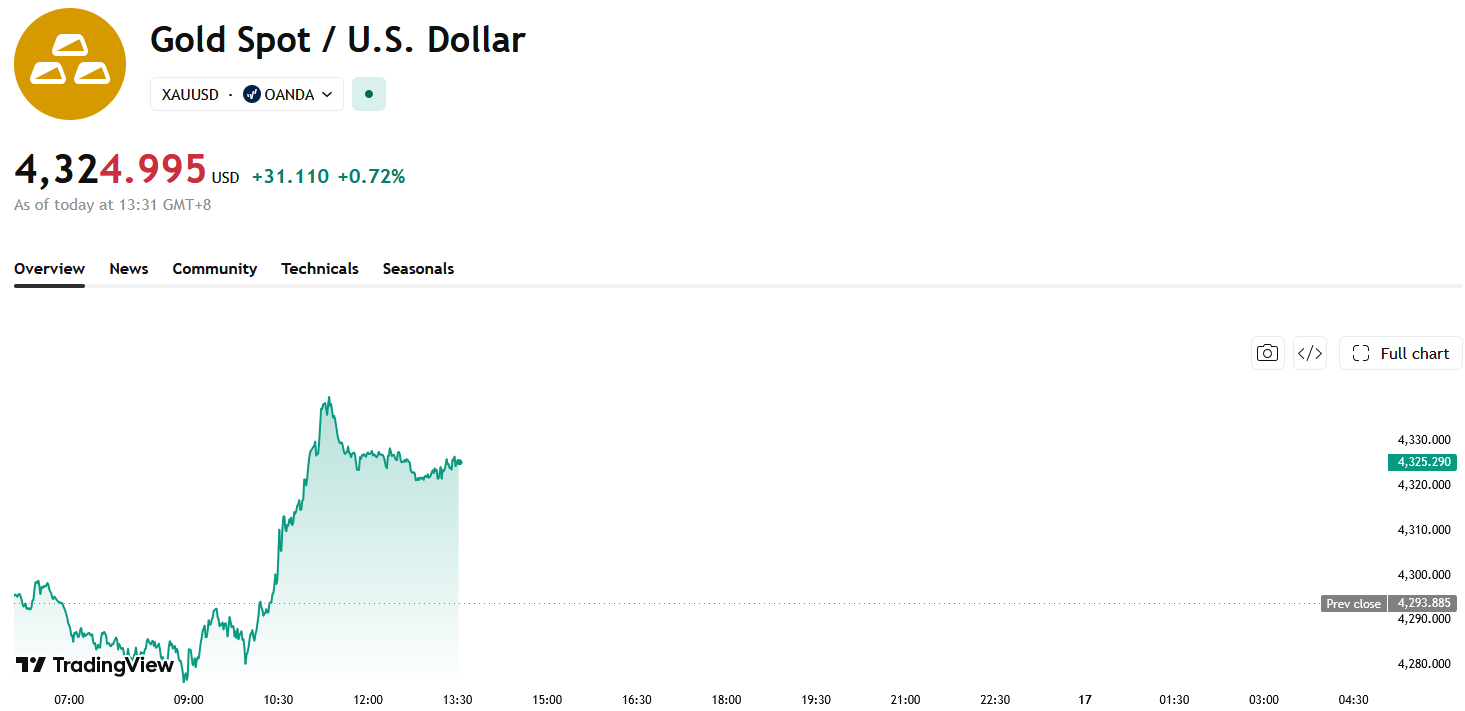
Source: TradingView
Currently, the key to gold's short-term trajectory is no longer just whether rates will be raised, but rather what policy signals the Federal Reserve delivers in its rate decision. If Chair Warsh frames this rate hike as a response to inflationary pressures from rising oil prices, the market may view the impact of this rate hike as limited, and gold prices could stabilize. Conversely, if the policy language signals a further tightening of monetary conditions, the US dollar and Treasury yields could strengthen again, putting pressure on gold prices.
Meanwhile, tensions in the Middle East continue to provide safe-haven support for gold. With operations of Saudi Arabia's East-West pipeline affected and energy transport through the Strait of Hormuz disrupted, the market is concerned on one hand that geopolitical conflict will boost safe-haven demand, and on the other hand that rising energy prices will further feed into inflation. The simultaneous rise in safe-haven sentiment and inflation expectations has added complexity to gold's short-term path, suggesting gold prices may continue to fluctuate in a wide range.
As policy and geopolitical factors continue to pull in opposite directions, gold's long-term thesis remains largely unchanged. Despite amplified price volatility in recent days, multiple institutions remain optimistic about the medium- to long-term allocation demand for gold.
Goldman Sachs recently maintained its baseline forecast of gold reaching $4,900/oz by the end of 2026, noting that there is still room for further upward revisions. Its core rationale includes global central banks continuously increasing their gold reserves and investor demand for gold ETFs gradually recovering.
Recommended Articles


