


The Strait of Hormuz Is Still Closed. Here's What Investors Need to Know Before Summer.
Key Points
Falling petroleum reserves and summer travel could be a recipe for a price shock.
It would likely spike inflation, which is bad for consumers and most stocks.
A look at which types of investments can thrive when inflation rises.
- These 10 stocks could mint the next wave of millionaires ›
Iran closed the Strait of Hormuz in early March 2026 as part of the ongoing war with Israel and the United States.
In normal times, the key waterway provides a passageway for approximately 20% of the world's petroleum liquids each day (as well as other product shipments). Different parties have made varying claims about the Strait of Hormuz's current status, but the reality is that it's severely restricted at best. What was once 60 tankers passing daily has become one or two ships.
Will AI create the world's first trillionaire? Our team just released a report on the one little-known company, called an "Indispensable Monopoly" providing the critical technology Nvidia and Intel both need. Continue »
This has already disrupted the energy industry and is driving gas prices higher in the United States. What do investors need to know as the summer (driving and travel season) approaches? Here are two important takeaways from this ongoing situation.
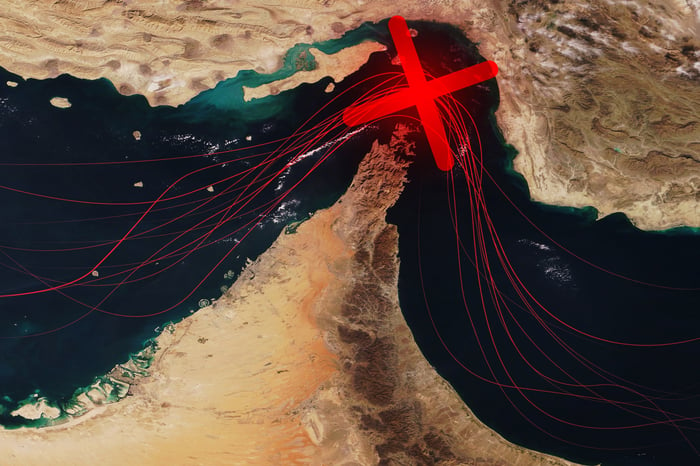
Image source: Getty Images
1. Energy disruption could cause an inflationary spike that weighs on consumers and most stocks
Countries are depleting their petroleum reserves to offset production losses from the closure of the Strait of Hormuz, but that can only last so long. As reserves draw down and demand spikes, the risk of a price shock rises. Energy prices factor heavily into inflation, not just in gasoline for consumers, but also in fuel for operating planes and machinery, and for transporting goods.
As prices soar, it can hit consumers hard, especially those who are already struggling. Consumer spending might plunge, creating a stagflation double whammy: slow spending or even a recession, combined with rising inflation. Some types of stocks, such as oil and gas stocks, may benefit from higher energy prices. However, many, especially those exposed to discretionary consumer spending, would likely feel pain.
This moment somewhat resembles the energy crisis and inflation spike of the 1970s. Unfortunately, those were some brutal years for the broader stock market. That said, the market is far higher today than it was then. The takeaway here is that economic turmoil has come and gone, and these cycles will likely continue. History rhymes, as some say.
2. Look for investments that are inflation-resistant
For those wondering where to put their money, certain inflation-proof investments tend to do well in an inflationary economy. Some examples would be:
- Series I Savings Bonds, also known as I Bonds.
- Real estate investment trusts (REITs).
- Commodities.
Investors looking to buy stocks should focus on companies with pricing power. That means companies that sell products that people buy, even when prices rise. That's usually products and services that people depend on, including utilities, consumer staples, and healthcare. These businesses, and their stocks, should hold up better when people cut back.
Look to buy blue chip stocks with the intention of holding them for at least the next five years. The best companies, those with long track records of profitable growth and healthy balance sheets, have been through tough times before, and are most likely to come out of this in decent shape or better.
Where to invest $1,000 right now
When our analyst team has a stock tip, it can pay to listen. After all, Stock Advisor’s total average return is 983%* — a market-crushing outperformance compared to 210% for the S&P 500.
They just revealed what they believe are the 10 best stocks for investors to buy right now, available when you join Stock Advisor.
See the stocks »
*Stock Advisor returns as of May 28, 2026.
The Motley Fool has a disclosure policy.
Recommended Articles


