


Micron Surges Over 7% Pre-Market. UBS Provides Major Support, Is a Record High Now Inevitable?
TradingKey - UBS analysts have significantly raised Micron's price target, boosting bullish market sentiment and pushing its share price back above the $800 mark.
During the pre-market session on May 26, influenced by the UBS rating, Micron Technology ( MU) shares jumped over 7%, once again breaking through the $800 level and approaching the all-time high set in mid-May. As of press time, Micron was trading at $803.76, and whether its share price can set a new record has become a key focus for the market.
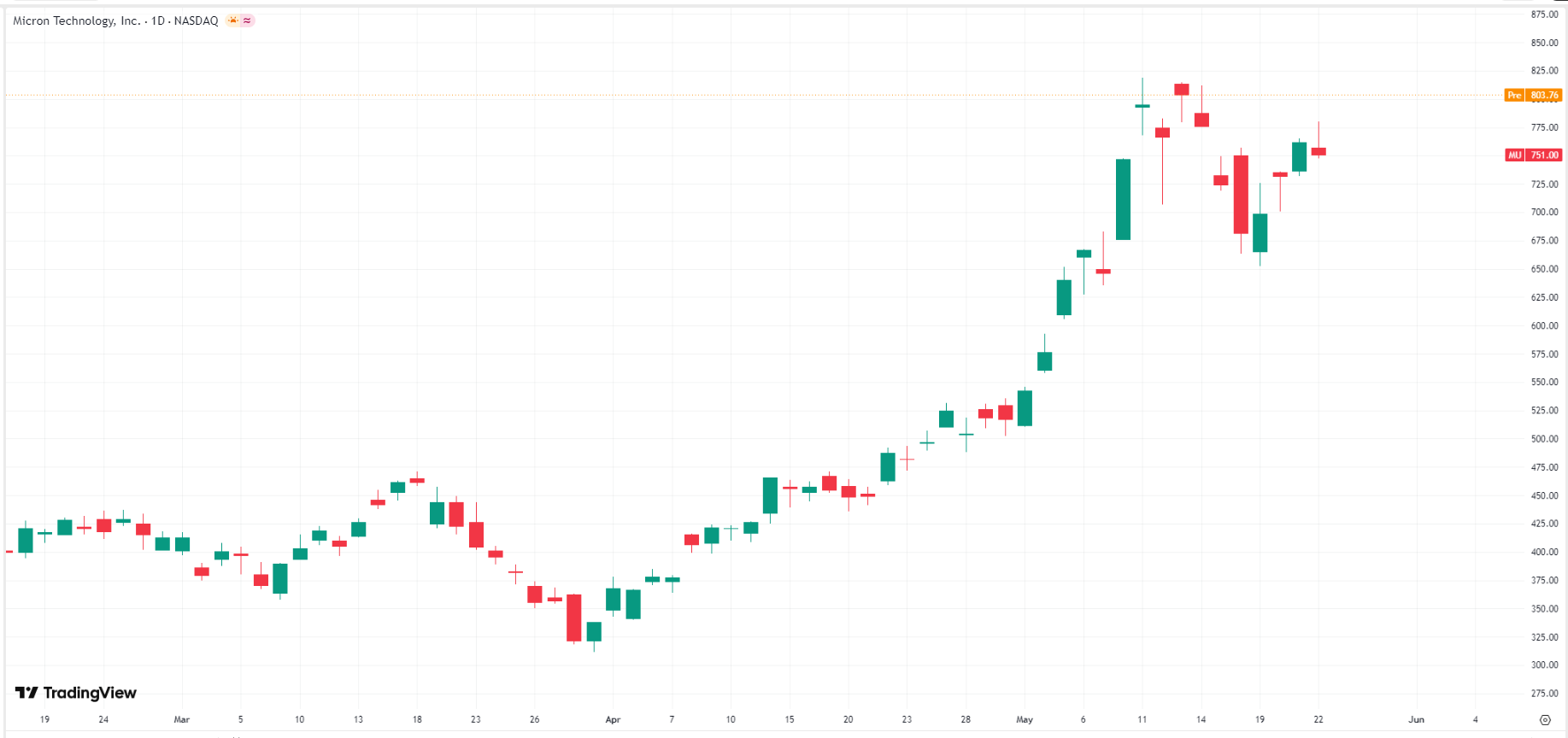
Micron stock price chart, Source: TradingView
UBS ( UBS) analyst Timothy Arcuri has not only reshaped Micron's valuation model, upgrading it from a traditional memory manufacturer to an "AI-native infrastructure giant," but has also aggressively raised the target price by over 200%, from $535 to $1,625. Even at current prices, Micron Technology still has the potential to more than double.
However, can Micron's stock price really reach UBS's target? In UBS's view, the rigid demand for high-performance memory from AI servers is extremely strong, and Micron should not be viewed through the lens of traditional boom-and-bust cyclical logic. Furthermore, from a P/E perspective, the gap between Micron and Nvidia ( NVDA) is not substantial.
UBS's report relies heavily on three premises: 1. Sustained high AI capital expenditure by tech giants, ensuring no risk of customer renegotiations for Micron's long-term contracts; 2. No overcapacity in memory to maintain Micron's high premiums; 3. Market acceptance of a 15x P/E valuation, otherwise the price will struggle to break the $1,000 threshold.
Compared to UBS's forecast for Micron, Bank of America ( BAC )'s $950 price target is more conservative and achievable, aligning better with the current macro market outlook. BofA analysts believe Micron will benefit from HBM3E capacity driven by Nvidia chip demand over the next two years, and they have applied a P/E of only 9.5x for their projections, based on Micron's estimated 2027 EPS.
From a technical perspective, Micron faces the $1,000 psychological level, where selling pressure will be significantly higher than after a breakout. BofA's target price of under $1,000 is more likely to be achieved, potentially even in the second quarter. However, once the stock price nears this milestone, profit-taking is inevitable, hindering further upside.
Recommended Articles


