


The SpaceX IPO Has an Unusual Lockup Policy for Insiders. Here's What Investors Need to Know.
Key Points
Lockup provisions are common in IPOs and typically last 180 days.
However, insiders at SpaceX will be able to sell some of their previously acquired stakes earlier than usual.
The company has set a rolling schedule for certain tranches of shares.
- These 10 stocks could mint the next wave of millionaires ›
Whenever retail investors are considering investing in an initial public offering (IPO) or a stock shortly after it goes public, they should check the lockup provisions in the company's prospectus or registration statement.
Lockups dictate when company insiders who acquired a stake in a company before it goes public can sell those shares. Company insiders typically are executives or board members with shares, or anyone with at least a 10% stake in voting shares.
Will AI create the world's first trillionaire? Our team just released a report on the one little-known company, called an "Indispensable Monopoly" providing the critical technology Nvidia and Intel both need. Continue »
Additionally, employees with smaller stakes can also be considered insiders because many possess nonpublic material information.
Insider sales can have a big impact on a stock price, which is why investors need to be aware of any company's specific lockup provisions. As it happens, SpaceX has an unusual lockup policy. Here's what investors need to know.
SpaceX insiders will be able to sell shares earlier than usual
Lockups typically bar insiders from selling their shares for at least 180 days, or roughly six months, after a company goes public.
This is important because, typically, as the end of a lockup period approaches, a stock will experience pressure as the market prepares for insiders to flood the market with shares.
A sell-off is not always indicative of bearish sentiment. Many insiders have held their stakes for years, waiting for an exit. After all, many will want to take advantage and claim large gains without risking a company's stock declining, even if they would be better off holding on.
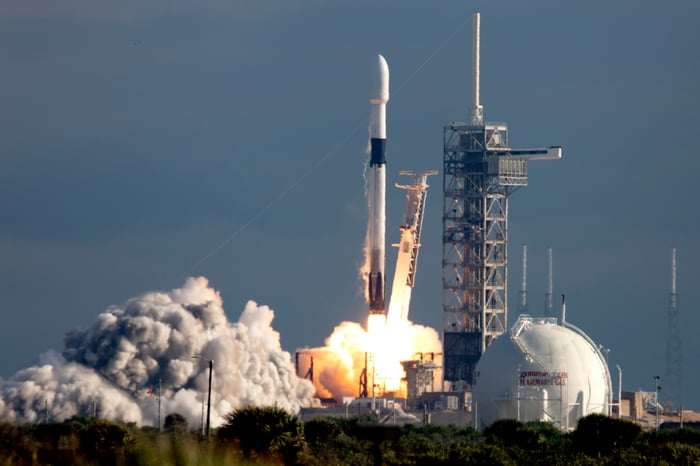
Image source: Getty Images.
Although 180 days may be the norm for lockup provisions, SpaceX's is likely to be the largest IPO ever, and it is far from your average company.
In its registration statement, SpaceX said that certain insider shares may be sold sooner than 180 days after the IPO.
The first tranche of these shares can be sold immediately after SpaceX releases its earnings for the quarter ending June 30. People subject to the lockup will be able to sell 20% of their shares at this time.
If the company's Class A common shares are up at least 30% from the IPO price for at least five of the next 10 trading days, insiders can sell an additional 10% of their shares.
Then insiders can sell an additional 7% of their shares 70, 90, 105, 120, and 135 days after the IPO. After SpaceX reports earnings for the three months ending Sept. 30, insiders can sell an additional 28% of their pre-IPO shares. All shares will be eligible for sale 180 days after the IPO.
Interestingly, the registration statement notes that founder Elon Musk will not be subject to any of these early release provisions. Musk owns 12.3% of Class A shares.
How the lockup provisions could affect the stock
Sometimes a company goes public and sees its stock soar out of the gate as fear of missing out pushes investors to buy right away. This has happened a lot with IPOs in recent years, particularly extremely hyped ones.
During the next six months, the stock then struggles as more people can assess a company's financials and as insiders sell stock, increasing the number of shares available for public trading while also dulling demand.
SpaceX insiders own more than 20% of Class A shares. Not all will sell, but a significant number of shares could come to market three to 12 months after the IPO.
The early lockup provisions will certainly take some pressure off the 180-day expiration, when all the lockup provisions expire. However, it could make the stock more volatile earlier in SpaceX's public life.
Due to policy changes in the Nasdaq 100, SpaceX could be eligible to join the index just 15 days after going public. That would force any fund tracking the index to buy the stock right away, which could actually offset selling pressure almost at the outset.
All of this is going to make SpaceX stock incredibly volatile and hard to predict during its first six months of trading. That's why I don't think there's any need to rush into the stock.
Investors should remain patient and let all lockup provisions expire and index inclusions occur before buying the stock. I think there will be better entry points down the line.
Where to invest $1,000 right now
When our analyst team has a stock tip, it can pay to listen. After all, Stock Advisor’s total average return is 986%* — a market-crushing outperformance compared to 208% for the S&P 500.
They just revealed what they believe are the 10 best stocks for investors to buy right now, available when you join Stock Advisor.
See the stocks »
*Stock Advisor returns as of May 26, 2026.
The Motley Fool has a disclosure policy.
Recommended Articles


