


Netflix Is Raising Subscription Prices Yet Again. Is the Stock a Buy?
Key Points
Netflix's lowest tier, which is ad-supported, will increase by $1 per month.
The streamer's standard and premium subscriptions will each increase by $2 per month.
It plans to spend an ambitious $20 billion on content spending this year, and just walked away from an attempted acquisition of certain Warner Bros. assets.
- 10 stocks we like better than Netflix ›
Netflix (NASDAQ: NFLX) has raised subscription prices across all of its paid tiers. The streaming company last raised prices in January 2025.
The move comes after it pulled out of a two-horse race earlier this year to acquire certain film and television assets from Warner Bros. Still, there are concerns about the cost of living and inflation: Will this latest move by Netflix be well received? Is the stock a buy?
Will AI create the world's first trillionaire? Our team just released a report on the one little-known company, called an "Indispensable Monopoly" providing the critical technology Nvidia and Intel both need. Continue »
Netflix is returning to its previous organic strategy
High subscription prices are nothing new for Netflix; it already had some of the highest monthly pricing in the sector, particularly across its standard and premium tiers.
The company raised its ad-supported plan by $1 per month to $8.99 and its standard and premium plans by $2 per month to $19.99 and $26.99, respectively. And it increased the cost to add extra members to an existing subscription. Ad-supported plans now cost $6.99 for each extra non-household user, up by $1, and ad-free add-ons now cost $9.99, also up $1.
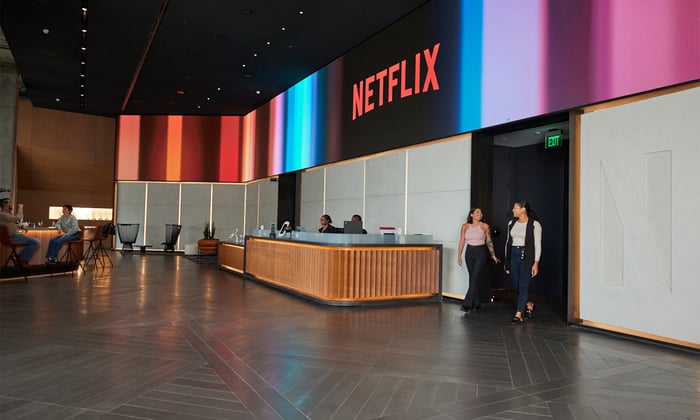
Image source: Netflix.
Management has previously defended the price hikes as a way to generate more content for consumers, who have a ravenous appetite for new shows and movies. It has also expanded into live events and podcasts and launched a fast-growing advertising business in 2022.
The price of the ad-supported plan is largely in line with competitors. But the premium option of $26.99 per month remains the highest in the sector.
It's hard to argue with the results, though. At the end of 2025, Netflix had grown its global subscriber base to 325 million, up from about 300 million the year before.
New subscription prices will likely boost its outlook
Wall Street analysts aren't surprised to see the increases, and they still expect them to benefit the top line, at least marginally. Oppenheimer analyst Jason Helfstein recently released a research note, suggesting the subscription increases will help Netflix achieve its $20 billion content budget for the year.
"[Netflix's] ability to retain consumers drives its industry-low churn and builds its competitive content moat," Helfstein wrote. "We only see more opportunity for [Netflix] to lean into content [after the Warner Bros. and Paramount merger.]"
Analysts at Citigroup also expect the new price hikes to result in management raising its 2026 outlook, while analysts at JPMorgan Chase see the increases leading to an extra $1.7 billion of annual revenue, although JPMorgan also said that it believes much of these increases are already factored into the company's current 2026 guidance.
After the streamer announced its acquisition of Warner Bros. assets last year, the stock got crushed. Netflix is not a proven acquirer, and investors didn't like the idea of abandoning its established strategy for organic growth to take on a ton of debt to complete the acquisition.
While the stock has bounced back somewhat after walking away from the Warner Bros. deal amid a bidding war, it's still down significantly from the highs achieved last year. Yet one could argue that the company is in a better position than before. Following Paramount Skydance's acquisition of Warner Bros., Netflix received a $2.8 billion termination fee. Furthermore, Paramount has taken on significant debt for the Warner Bros. acquisition.
This presents Netflix with the opportunity to go on the offensive and put out more content that can attract more users and market share. That's why it's leaning into content. The stock remains a buy in my opinion, given its better positioning within the sector following the drama with Warner Bros.
Should you buy stock in Netflix right now?
Before you buy stock in Netflix, consider this:
The Motley Fool Stock Advisor analyst team just identified what they believe are the 10 best stocks for investors to buy now… and Netflix wasn’t one of them. The 10 stocks that made the cut could produce monster returns in the coming years.
Consider when Netflix made this list on December 17, 2004... if you invested $1,000 at the time of our recommendation, you’d have $515,294!* Or when Nvidia made this list on April 15, 2005... if you invested $1,000 at the time of our recommendation, you’d have $1,077,442!*
Now, it’s worth noting Stock Advisor’s total average return is 917% — a market-crushing outperformance compared to 185% for the S&P 500. Don't miss the latest top 10 list, available with Stock Advisor, and join an investing community built by individual investors for individual investors.
See the 10 stocks »
*Stock Advisor returns as of April 2, 2026.
Citigroup is an advertising partner of Motley Fool Money. JPMorgan Chase is an advertising partner of Motley Fool Money. Bram Berkowitz has no position in any of the stocks mentioned. The Motley Fool has positions in and recommends JPMorgan Chase, Netflix, and Warner Bros. Discovery. The Motley Fool has a disclosure policy.
Recommended Articles


