


Joby Aviation Just Launched Its Most Crucial Aircraft Yet. Here's What That Means for the Stock.
Key Points
Joby's Type Inspection Authorization aircraft just took flight -- an important milestone.
It's the first of a test fleet of eVTOLs that will determine whether it receives FAA authorization.
The stock has tumbled in the days since the announcement, and it could be an opportunity.
- 10 stocks we like better than Joby Aviation ›
The code N547JX may not mean anything to you. But it means everything to Joby Aviation (NYSE: JOBY). That's because the N547JX is the first aircraft in a fleet that will determine whether Joby's U.S. air taxi business will take flight, or be grounded forever by the Federal Aviation Administration (FAA). And it just successfully took to the skies.
Here's why this aircraft is so crucial for the company and what it means for its stock.
Will AI create the world's first trillionaire? Our team just released a report on the one little-known company, called an "Indispensable Monopoly" providing the critical technology Nvidia and Intel both need. Continue »
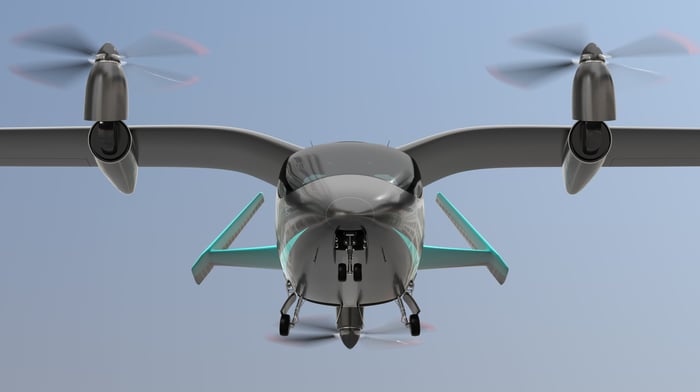
Image source: Getty Images.
Four out of five
In order for the company to begin operating its air taxi service in the U.S., its electric vertical takeoff and landing (eVTOL) aircraft has to be approved for commercial use by the FAA. This approval process comes in five phases and is particularly complex for new classes of aircraft, like Joby's eVTOLs.
The company completed phase 3, the Design Assessment, in February 2024. At that point, it needed to build prototype eVTOLs from the approved design, conduct internal testing, and finally produce test aircraft outfitted with specialty sensors to collect data for FAA inspectors to evaluate during Phase 4 testing, called Type Inspection Authorization (TIA).
TIA is the most rigorous and important phase of FAA testing, because phase 5 is simply the issuance of a carrier certificate once the phase 4 tests are complete. These official "for credit" tests allow FAA pilots and inspectors to examine each individual aircraft system and component separately, as well as assess the entire aircraft's performance as a whole.
The N547JX aircraft is the first one Joby has produced to participate in the TIA tests, which should begin later this year. In November, it successfully underwent "power on" testing on the ground -- which, just like it sounds, means that Joby was able to turn on all of its electrical systems. Now it has shown it can actually take to the skies.
Miles to go
You might think this important milestone would boost the stock, especially after the company's major wins from the Department of Transportation's eVTOL Integration Pilot Program. But instead, the stock has actually tumbled some 17% since the announcement. Why isn't it soaring?
Well, FAA approval is a lengthy, rigorous process (thank goodness!), and any design flaws or production defects it uncovers can cause years of delays. For example, the Boeing 777-9 flew its first test flight in January 2020, but after experiencing a number of design and operational issues, it was only approved to resume phase 4 testing last week (yes, more than six years later). If something similar happened to Joby, its stock would probably drop like a stone and might never recover.
Even though it would likely be a lot easier to fix design or production issues in a small eVTOL than in a huge 777 jumbo jet, TIA testing is the biggest hurdle the company has to overcome, and there's no way to know if it will come out unscathed. That's what is keeping the stock so volatile and why it should be considered a speculative investment that only those who are extremely risk-tolerant should consider.
That said, Joby's shares are now trading below their initial 2021 price, and 58% off their 2025 highs, so pro-eVTOL investors who can stomach the risk may want to buy in now.
Should you buy stock in Joby Aviation right now?
Before you buy stock in Joby Aviation, consider this:
The Motley Fool Stock Advisor analyst team just identified what they believe are the 10 best stocks for investors to buy now… and Joby Aviation wasn’t one of them. The 10 stocks that made the cut could produce monster returns in the coming years.
Consider when Netflix made this list on December 17, 2004... if you invested $1,000 at the time of our recommendation, you’d have $503,861!* Or when Nvidia made this list on April 15, 2005... if you invested $1,000 at the time of our recommendation, you’d have $1,026,987!*
Now, it’s worth noting Stock Advisor’s total average return is 884% — a market-crushing outperformance compared to 179% for the S&P 500. Don't miss the latest top 10 list, available with Stock Advisor, and join an investing community built by individual investors for individual investors.
See the 10 stocks »
*Stock Advisor returns as of March 30, 2026.
John Bromels has no position in any of the stocks mentioned. The Motley Fool has positions in and recommends Boeing. The Motley Fool has a disclosure policy.
Recommended Articles


