


Is Nvidia Still a Millionaire-Maker Stock in 2026?
Key Points
Analysts expect AI data center spending to continue soaring over the coming years.
Can Nvidia capitalize on the AI trend to reinvigorate its gaming segment?
- 10 stocks we like better than Nvidia ›
Few companies have created as much shareholder wealth as Nvidia (NASDAQ: NVDA). The industry-leading chipmaker has dominated the generative artificial intelligence (AI) hardware market with its cutting-edge products, high volumes, and popular programming platform, CUDA.
To put Nvidia's growth in perspective, an investment of $10,000 made years ago would now be worth an eye-popping $2.21 million. That's a return of over 22,000% compared to the S&P 500's gain of 292% over the same time frame. But does the stock still have what it takes to deliver life-changing returns for long-term investors?
Will AI create the world's first trillionaire? Our team just released a report on the one little-known company, called an "Indispensable Monopoly" providing the critical technology Nvidia and Intel both need. Continue »
AI spending shows no signs of slowing
Despite being the largest company in the world with a market cap of about $4.4 trillion, Nvidia is still growing at a massive clip. Fiscal fourth-quarter revenue soared 73% year over year to $68.1 billion, driven primarily by the data center segment, where customers continue to scramble for the company's cutting-edge AI training and inference chips, like Blackwell.
There are plenty of signs that suggest Nvidia's momentum can continue over the next few quarters. The company is now in full production of its Vera Rubin platform, which includes seven new chips designed to tackle different aspects of the AI ecosystem. Perhaps more importantly, Nvidia's clients have plenty of money to spend on the company's latest products.
Big tech is expected to spend a whopping $700 billion on AI data center hardware this year, creating a massive total addressable market.
Can AI boost the gaming segment?
Before generative AI and the data center segment stole the show, Nvidia was primarily a video gaming chipmaker. It's GPUs featured in the first-generation Microsoft Xbox in 2001, and its RTX line of computer graphics cards remains a staple for gamers who build their own PCs. That said, with fourth-quarter sales of $3.7 billion, this business represented just 5% of Nvidia's top line compared to 91% for the data center segment.
That lack of diversification means Nvidia is extremely overexposed to any potential slowdown in AI spending or rising competition on that front, including from its key customers, many of which are developing their own custom AI chips. So it will be crucial for Nvidia to further develop its other revenue streams.
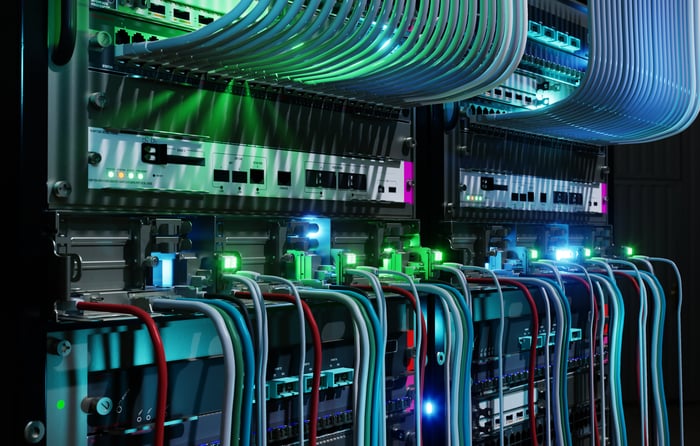
Image source: Getty Images.
This month, Nvidia unveiled DLSS 5, an AI-based technology designed to enhance video games in real time through neural networks and real-time frame generation. While similar software has typically been limited to improving things like frame rate and latency, DLSS 5 aims to take things a step further by actually using AI to dramatically change the image quality and graphics of the game itself.
But while DLSS 5 sounds game-changing in theory, the consumer and industry response has been lackluster. Popular video gaming magazine IGN called it a "slap in the face" to the art of video game design, and many argued that the enhanced rendering with more photo-realistic effects detracts from the source material.
Is Nvidia still a millionaire maker?
The backlash against Nvidia's DLSS 5 looks like a symptom of a deeper problem for the generative AI industry. The market for chips and other types of AI hardware is far outshining the technology's usefulness in consumer-facing applications. And this isn't just an Nvidia problem.
Other consumer-facing AI platforms like OpenAI's ChatGPT are also struggling to create profitable business models. This trend could challenge the industry's long-term sustainability, and it raises the stakes for Nvidia as it seeks to find new growth drivers that could diversify its revenue beyond data center AI hardware.
The good news is that Nvidia still looks capable of beating the market because its clients are still willing to spend big on its industry-leading chips. But the level of uncertainty is rising, and the stock doesn't look likely to be a millionaire maker from here unless there are some breakthroughs.
Should you buy stock in Nvidia right now?
Before you buy stock in Nvidia, consider this:
The Motley Fool Stock Advisor analyst team just identified what they believe are the 10 best stocks for investors to buy now… and Nvidia wasn’t one of them. The 10 stocks that made the cut could produce monster returns in the coming years.
Consider when Netflix made this list on December 17, 2004... if you invested $1,000 at the time of our recommendation, you’d have $495,179!* Or when Nvidia made this list on April 15, 2005... if you invested $1,000 at the time of our recommendation, you’d have $1,058,743!*
Now, it’s worth noting Stock Advisor’s total average return is 898% — a market-crushing outperformance compared to 183% for the S&P 500. Don't miss the latest top 10 list, available with Stock Advisor, and join an investing community built by individual investors for individual investors.
See the 10 stocks »
*Stock Advisor returns as of March 23, 2026.
Will Ebiefung has no position in any of the stocks mentioned. The Motley Fool has positions in and recommends Microsoft and Nvidia. The Motley Fool has a disclosure policy.
Recommended Articles


