


Are We Headed for $5 Gas? This 1 Thing Determines How Much You Pay at the Pump (No, It's Not Iran).
Key Points
U.S. gasoline prices look like they may be headed for $5 a gallon or more.
Global oil prices are directly responsible for the increase, despite the U.S. being a net petroleum exporter.
There's no viable way to decouple U.S. gas prices from global oil prices.
- These 10 stocks could mint the next wave of millionaires ›
Gas prices have soared more than 30% over the last month alone. The national average price for a gallon of regular gasoline is $3.88, up from $2.93 just a month ago.
As the war in Iran continues to affect global oil prices, $4-a-gallon gas seems almost inevitable, and $5-a-gallon gas is already a reality in some states. Even the White House's announcement that it would release 172 million barrels from the nation's strategic reserves has had little impact on prices at the pump.
Will AI create the world's first trillionaire? Our team just released a report on the one little-known company, called an "Indispensable Monopoly" providing the critical technology Nvidia and Intel both need. Continue »
Is there any chance we'll avoid $5 gas? Despite what anyone says, there's really only one thing that matters when it comes to gas prices, and no, it's not what happens in Iran.
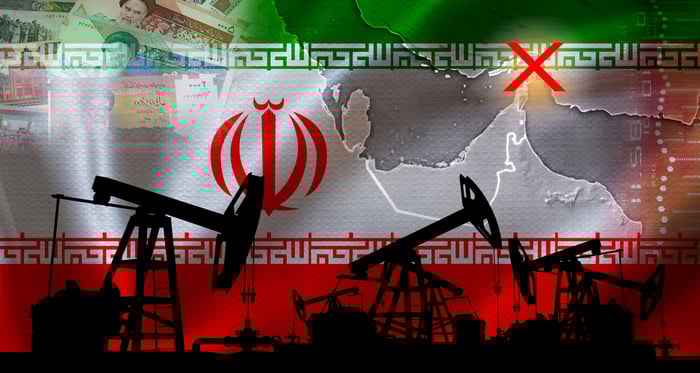
Image source: Getty Images.
Gas prices are largely out of our hands
Aside from very rare situations, like Hurricane Katrina's damaging U.S. refinery capacity in 2005, the one thing that primarily determines the price of gas in your neighborhood is the global price of crude oil, which is determined by global supply and demand. Right now, global supply is disrupted by the war in Iran, so global crude oil prices are up. That means you're paying more for the gasoline that's made from that oil.
Now, you may have heard that the U.S. is a net petroleum exporter. If we're producing so much oil, relatively cheaply, right here at home, why should it matter how much it costs anywhere else in the world?
Well, the U.S. wasn't a net petroleum exporter until relatively recently. For decades, it was a net importer of oil, mostly from the Middle East, Canada's oil sands, Venezuela, and the Gulf of Mexico. All of these regions produce a thick, sulfuric type of oil called heavy, sour crude, so that's what most U.S. gasoline refineries were built to process. They can't handle the light sweet crude that U.S. shale drillers like ConocoPhillips (NYSE: COP) have been producing.
Instead, ConocoPhillips and other domestic drillers export their light sweet crude oil. Meanwhile, U.S. refineries continue to import heavy sour crude oil from global markets. All of these companies have long-term contractual obligations to provide or accept crude oil, so they can't just suddenly stop trading internationally when oil prices go up. Nor would they want to: Higher crude oil prices directly translate to higher revenue for oil producers.

Image source: Getty Images.
No alternative
The only way to lower U.S. gasoline prices in the face of rising global oil prices would be to decouple the U.S. from global energy markets. That would involve a decades-long process of major infrastructure changes and politically controversial government regulations and industry controls. It's extremely unlikely to ever happen, and in fact, the Trump administration recently said it wouldn't consider restricting U.S. crude exports.
That means we're all just stuck at the mercy of global oil prices when we fill up our gas tanks. That may not be good news for commuters when prices are high, but at least oil company shareholders are benefiting (for now).
Where to invest $1,000 right now
When our analyst team has a stock tip, it can pay to listen. After all, Stock Advisor’s total average return is 898%* — a market-crushing outperformance compared to 183% for the S&P 500.
They just revealed what they believe are the 10 best stocks for investors to buy right now, available when you join Stock Advisor.
See the stocks »
*Stock Advisor returns as of March 22, 2026.
John Bromels has no position in any of the stocks mentioned. The Motley Fool recommends ConocoPhillips. The Motley Fool has a disclosure policy.
Recommended Articles


