


President Trump Plans to Roll Back Tariffs on Steel and Aluminum. 2 Stocks That Could Pop as a Result.
Key Points
Coca-Cola’s margins should improve if aluminum tariffs decline.
Constellation’s beer margins will stabilize, making its stock more appealing.
- 10 stocks we like better than Coca-Cola ›
President Trump could soon roll back some tariffs on imported steel and aluminum products, according to The Financial Times. Those tariffs, which were raised from 25% to 50% last June, were imposed under Section 232 of the Trade Expansion Act of 1962. That means they won't be affected by the Supreme Court's recent ruling against Trump's country-specific tariffs, which were imposed under the International Emergency Economic Powers Act (IEEPA).
President Trump is reportedly mulling lower tariffs for aluminum cans, steel appliances like ovens, and other consumer-oriented products. Two blue chip consumer staples stocks could benefit from those reductions: Coca-Cola (NYSE: KO) and Constellation Brands (NYSE: STZ).
Where to invest $1,000 right now? Our analyst team just revealed what they believe are the 10 best stocks to buy right now, when you join Stock Advisor. See the stocks »
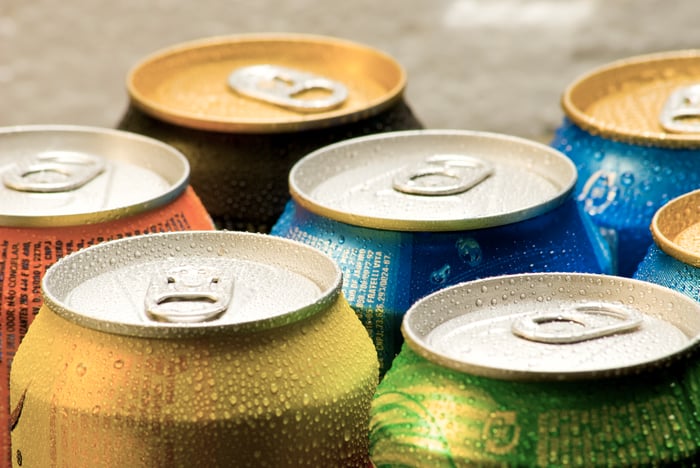
Image source: Getty Images.
How would lower tariffs help Coca-Cola?
Coca-Cola, the world's largest beverage maker, only sells concentrates and syrups for its flagship sodas and other drinks. It relies on a global network of independent bottlers to actually produce, distribute, and sell the finished products. That capital-light model enables it to maintain high gross margins and generate ample cash for dividends.
Coca-Cola isn't directly exposed to aluminum tariffs, but its bottling partners need to absorb those higher costs. As regional bottlers face higher costs, they'll likely raise wholesale prices, reduce promotions, and invest less in marketing and distribution. They could also push Coca-Cola to reduce its concentrate prices.
In other words, Coca-Cola's global sales will slow if those tariffs remain in place, and its margins could decline. That's why it recently said it would push its bottlers to sell more of its drinks in PET bottles if the aluminum tariffs aren't rolled back. However, abruptly ramping up PET bottle production would also likely crimp bottlers' near-term margins and generate additional headwinds. Therefore, reduced aluminum tariffs would benefit both Coca-Cola and its independent bottling partners.
How would lower tariffs help Constellation Brands?
Constellation Brands, one of the world's largest producers of beers, spirits, and wines, generates most of its revenue in the United States. It also imports its top beer brands -- including Corona, Modelo, and Pacifico -- from Mexico.
Nearly 40% of Constellation's beer shipments from Mexico come in aluminum cans. To offset those higher tariffs, it needs to raise its prices -- but it doesn't have much pricing power as it grapples with declining beer consumption (especially among younger consumers) across America. The recent economic and immigration-related pressures for Hispanic consumers, who account for about half of its beer sales, are exacerbating that pressure. Constellation faces other challenges, including declining sales of wines and spirits. Still, a reduction in aluminum tariffs would resolve one of its biggest challenges and make its stock more attractive again.
Should you buy stock in Coca-Cola right now?
Before you buy stock in Coca-Cola, consider this:
The Motley Fool Stock Advisor analyst team just identified what they believe are the 10 best stocks for investors to buy now… and Coca-Cola wasn’t one of them. The 10 stocks that made the cut could produce monster returns in the coming years.
Consider when Netflix made this list on December 17, 2004... if you invested $1,000 at the time of our recommendation, you’d have $409,970!* Or when Nvidia made this list on April 15, 2005... if you invested $1,000 at the time of our recommendation, you’d have $1,174,241!*
Now, it’s worth noting Stock Advisor’s total average return is 889% — a market-crushing outperformance compared to 192% for the S&P 500. Don't miss the latest top 10 list, available with Stock Advisor, and join an investing community built by individual investors for individual investors.
See the 10 stocks »
*Stock Advisor returns as of February 24, 2026.
Leo Sun has positions in Coca-Cola. The Motley Fool recommends Constellation Brands. The Motley Fool has a disclosure policy.
Recommended Articles


