


XRP Just Hit 3 Milestones Traders Haven’t Priced In, Bitrue Research Finds
Bitrue Research Labs has identified three major XRP developments that trader sentiment and price action have not yet reflected, with the asset trading 61% below its late-2025 peak.
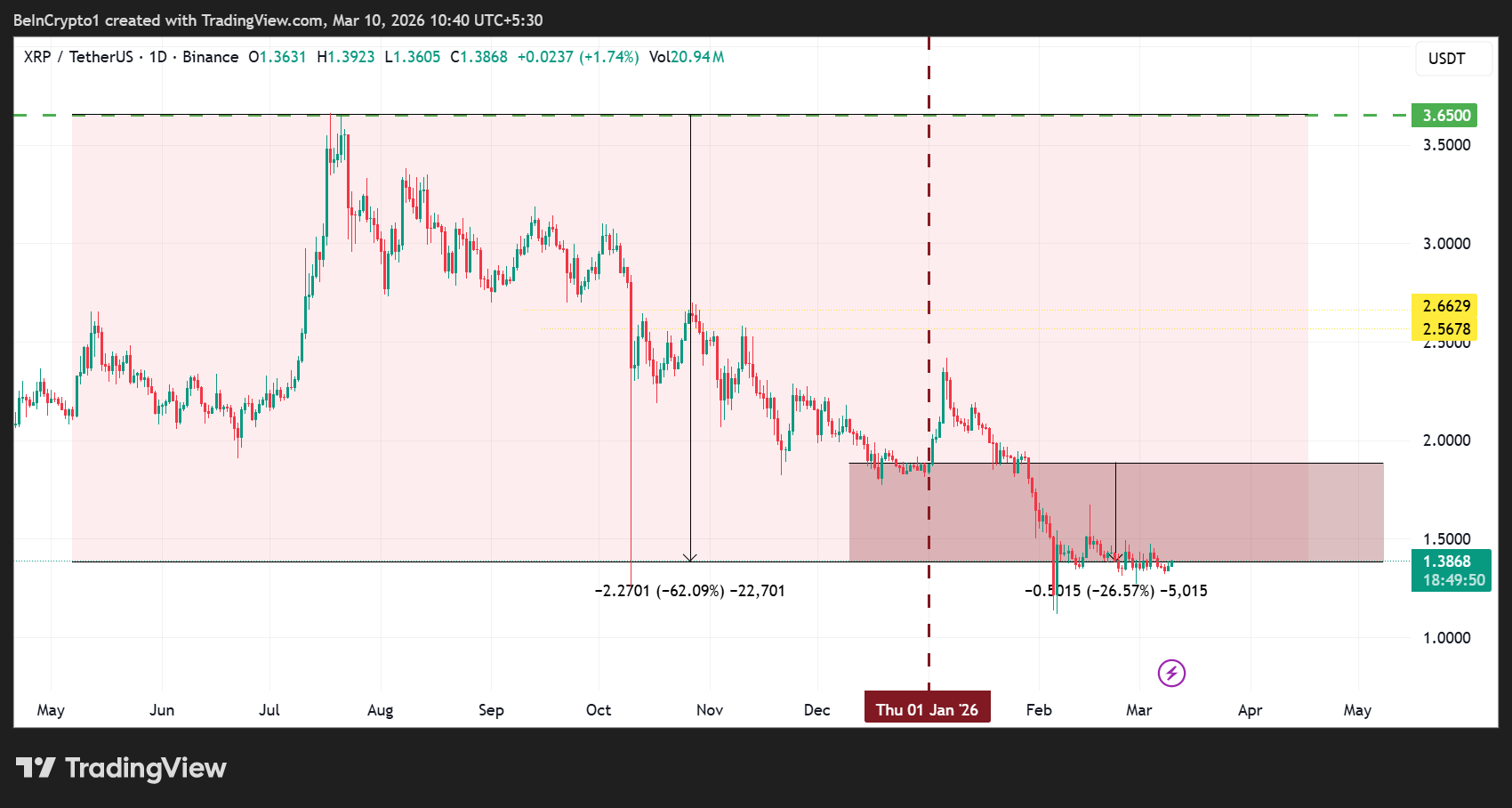
XRP sits around $1.38, down 26% year-to-date from its 2026 opening price, extending a bearish trend from its all-time high of $3.65 set in late 2025.
Milestone 1: Regulatory Wins Are Stacking Up Fast
Ripple has secured two regulatory milestones in quick succession that most retail traders have yet to factor into their positioning.
The company obtained a Dubai Financial Services Authority (DFSA) license, becoming the first firm to do so in that jurisdiction.
Shortly after, Ripple Labs received a banking charter from the OCC (Office of the Comptroller of the Currency) in the United States. This designation puts it on par with TradFi institutions for certain activities.
A Permissioned Decentralized Exchange (DEX) also went live on the XRP Ledger in February 2026. That development enables institutional players to trade on-chain compliantly for the first time.
This opens XRPL to a class of capital that was previously locked out by regulatory constraints.
Together, these three regulatory events represent a shift in how governments and financial regulators are treating Ripple. At first, it was a company under legal pressure, but now it is actively receiving formal institutional recognition.
 XRP Price Performance. Source: TradingView
Yet, despite the regulatory milestones, the XRP price is down 62% from its 2025 peak, and 26% lower year-to-date.
Milestone 2: XRP ETF Inflows Have Been Positive Every Single Week
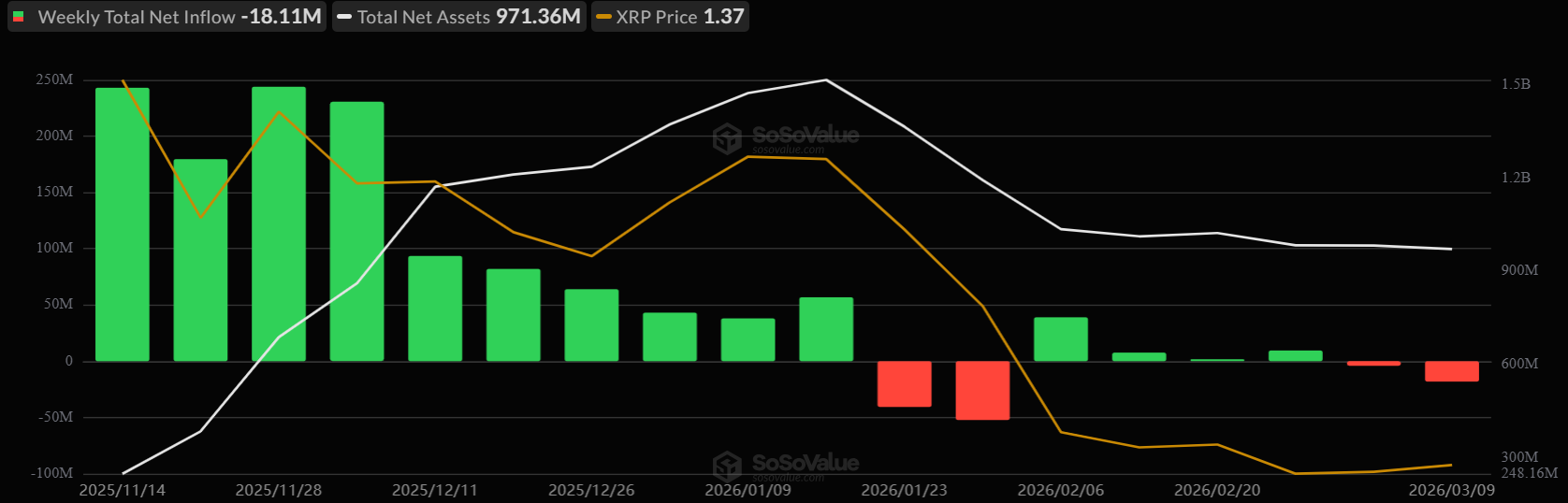
XRP ETFs (exchange-traded funds) launched in November 2025 and have recorded net positive inflows every week since. That consistency is a signal most retail traders are overlooking while focused on the spot price.
 XRP ETF Flows. Source: SoSoValue
Sustained weekly inflows indicate that institutional and retail investors are buying XRP exposure through regulated products even as the spot price declines.
That kind of persistent demand accumulation has historically preceded price re-ratings in other assets that went through similar ETF launch phases.
Centralized exchange trading volumes have also risen more than 3x during the same period. Based on the Bitrue research, this is another indicator that activity is building beneath the surface of a depressed price.
“XRP is a truly complex asset that many struggle to understand, partially because its price is so strongly derived from its real-world use-cases, which are intertwined with arcane regulatory issues from world governments,” read an excerpt in the report, citing Adam O’Neill, CMO at Bitrue
Milestone 3: XRPL’s On-Chain Activity Just Hit a 12-Month High
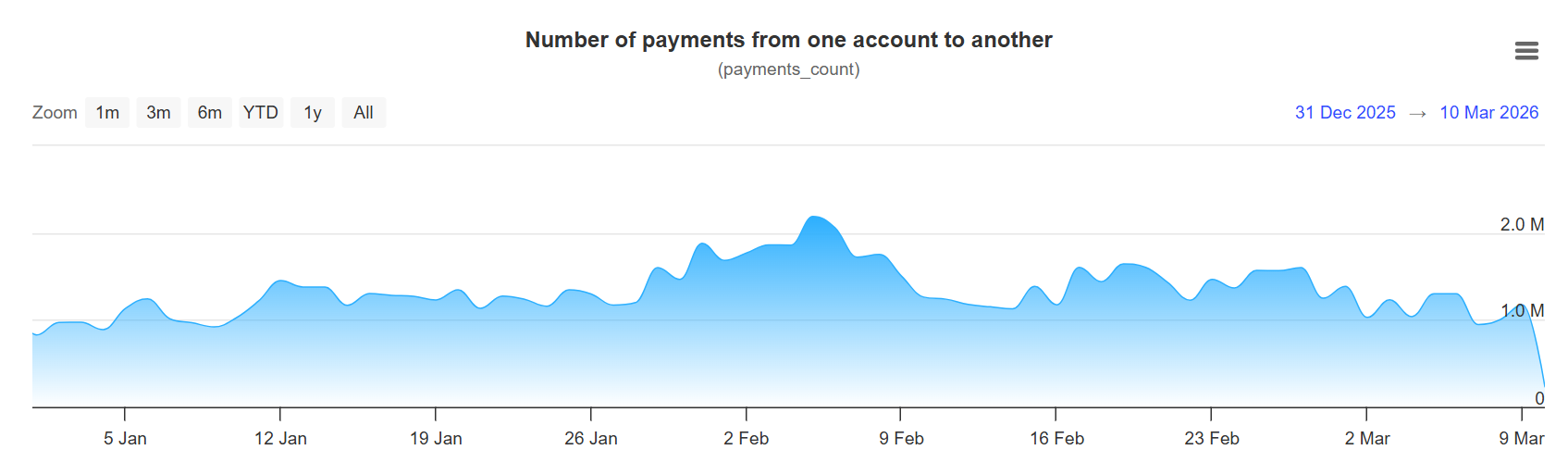
The third milestone is entirely on-chain and the most data-rich of the three. Daily successful payments on the XRP Ledger recently surged to over 2.7 million confirmed transactions, up from approximately 1 million in late 2025, according to XRPSCAN. That is a 170% increase in roughly three months.
 Daily Successful Payments on XRP Ledger. Source: XRPScan
The Automated Market Maker (AMM) ecosystem has expanded to approximately 27,000 active liquidity pools supporting over 16,000 unique tokens.
Around 12 million XRP is currently pooled across those positions, up sharply following the Permissioned Domains protocol upgrade.
Real-World Asset (RWA) tokenization tells an equally striking story. Data on RWA.xyz shows that distributed RWA value on XRPL reached $461 million, up 35% in 30 days.
Meanwhile, the 30-day RWA transfer volume surged 1,382% to nearly $150 million. In certain RWA categories, XRPL is outpacing competing Layer 1 blockchains.
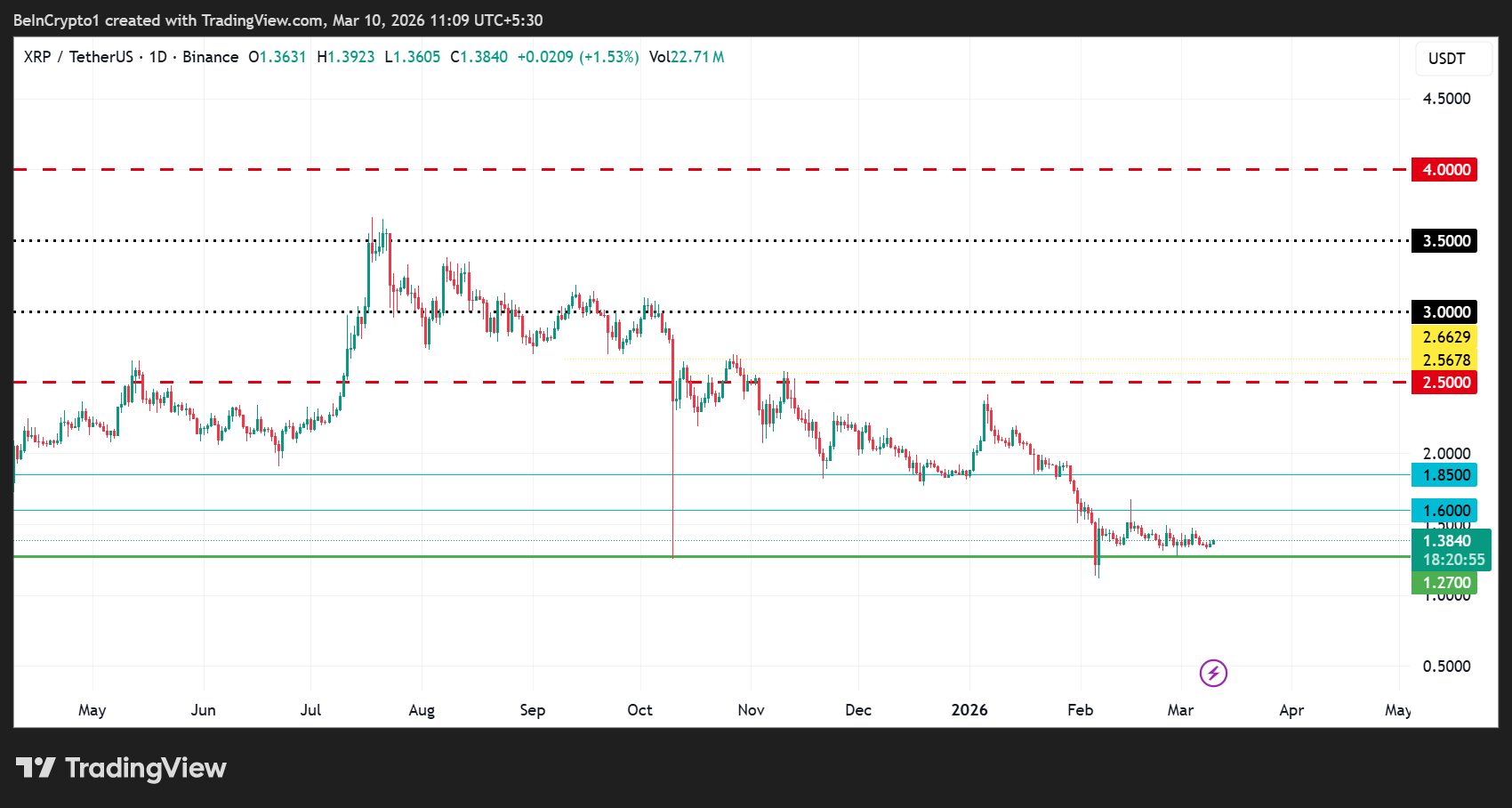
“Within 2026 the most reasonable price expectation for XRP lands in the $2.50–$4.00 range, with a midpoint around $3.00–$3.50 based on current data,” said Andri Fauzan Adziima, Research Lead at Bitrue.
The $1.27 support level remains the line to watch in the near term. A hold there, combined with continued on-chain growth and macro stabilization, is the condition Bitrue’s report sets for a move toward $1.60–$1.85 by end of March.
 XRP Price Targets. Source: Bitrue Research
However, the full 2026 bull case, ranging from $3 to $8 or higher, requires regulatory clarity legislation, ETF inflows between $4 billion and $10 billion, and broader On-Demand Liquidity (ODL) and RLUSD expansion to materialize.
The Bitrue report argues that the gap between network activity and token price is the story, and that historically, price has eventually followed utility.
Recommended Articles


