


Why Trump Postponed China Visit?
TradingKey - Donald Trump suddenly announced on March 16 that his planned visit to China at the end of March might be postponed. The reason? Sustained rising oil prices mean Trump's campaign promises to voters could fall through, and he wants China to help cool down the overheating crude oil market.
A week earlier, Trump had stated at the White House that he expected to complete his China visit in April. However, on March 16, his team shifted its rhetoric, citing escalating Middle East tensions as the reason the president needs to remain stateside to coordinate a response. Since domestic arrangements for presidential travel are typically planned well in advance, this explanation has fueled significant market speculation.
The core variable is the recent sharp volatility in the crude oil market. Brent crude rose to $103.3 this week, while WTI futures hit a high of $99.8. Obstructions in the Strait of Hormuz directly affect approximately 20% of global seaborne oil trade, putting 18 million barrels per day at risk of disruption. U.S. retail gasoline prices have hit a five-month high, directly impacting the outlook for the 2026 midterm elections.
U.S. officials later clarified the China trip adjustment was not directly linked to the Strait of Hormuz, but such remarks reinforced market speculation of a connection, driving the crude oil rally further. WTI crude futures gained up to 5% yesterday, hitting an intraday high of $97.57, while Brent crude reached $101.78. Technical indicators show WTI's 4-hour moving averages remain in a bullish alignment, suggesting a continued upward trend as prices look to test the $100 psychological level.
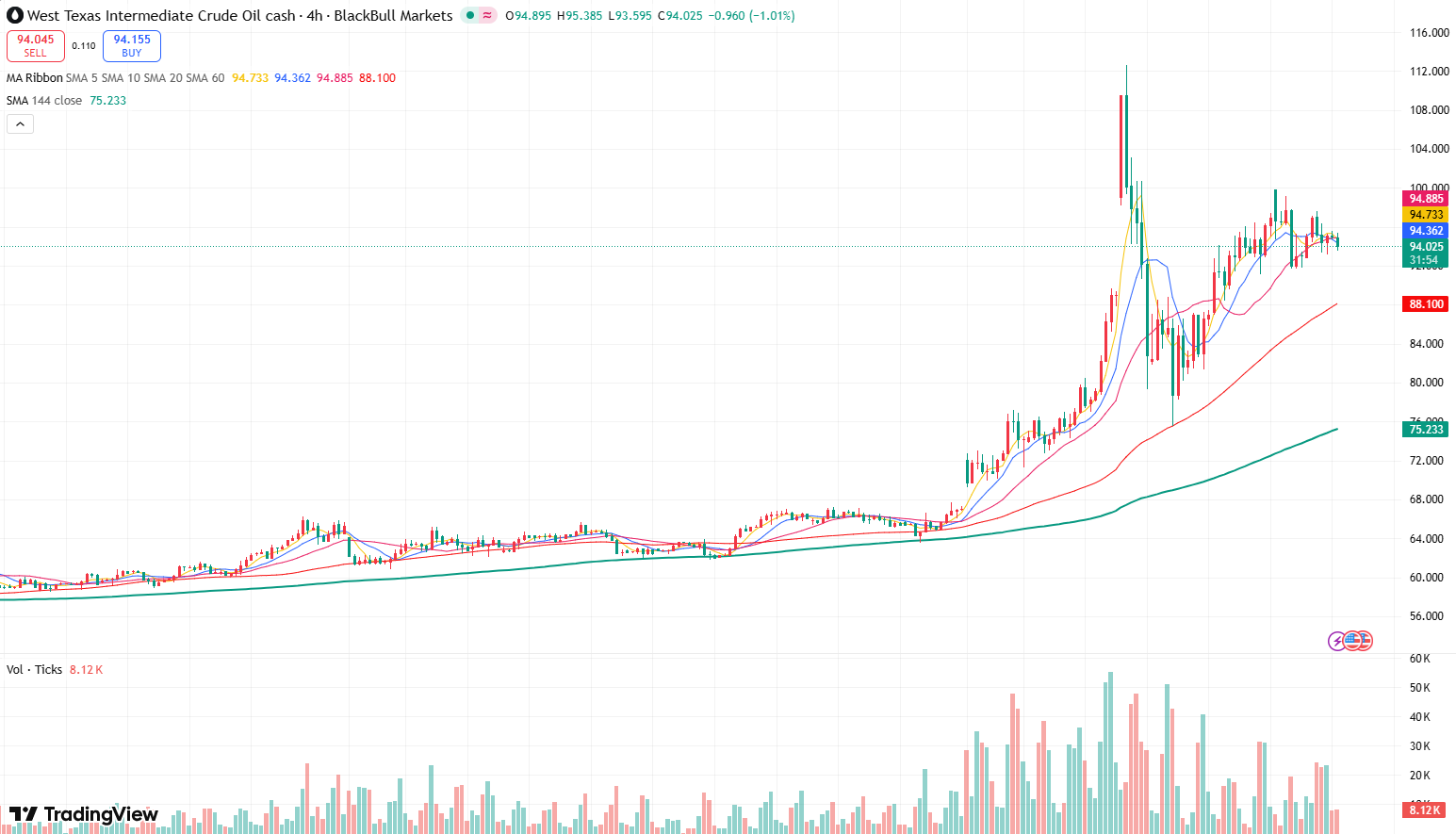 Source: TradingView
Recommended Articles


