


Crude Oil Soars Nearly 30%, Approaching $120 a Barrel
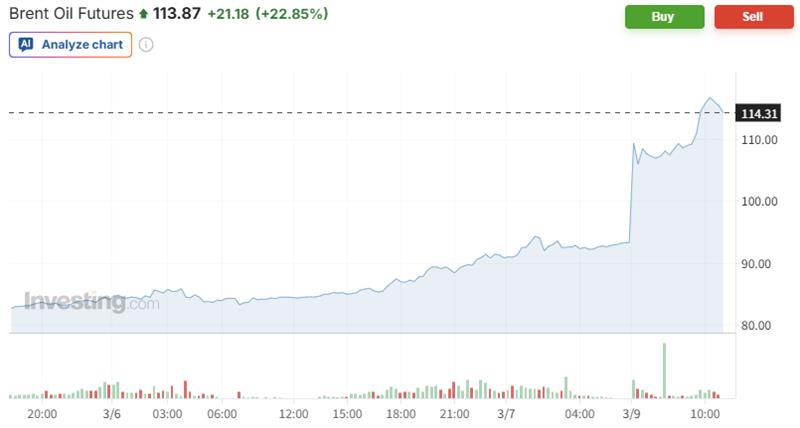
TradingKey - Oil prices surged early on March 9 Beijing time (late March 8 GMT), swinging sharply at elevated levels. Brent crude fluctuated between $106 and $117 a barrel, extending the previous day’s rally with heavy trading volume and reaching its highest range since 2022.
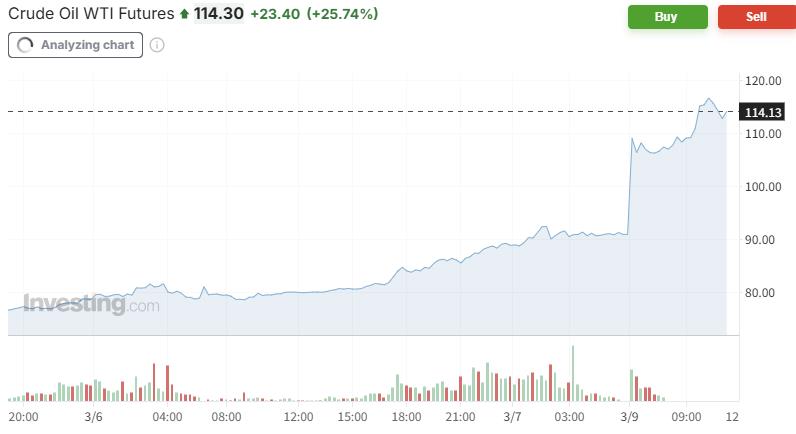
The WTI benchmark contract briefly touched $117 a barrel, up about 30%, marking a two-and-a-half-year high.
Escalating conflict involving Iran, and a joint U.S.–Israeli strike on the country, have upended global energy supply. Shipments through the Strait of Hormuz—a key maritime chokepoint—have plunged by roughly 70%, forcing major Middle Eastern producers such as Kuwait, the UAE, and Iraq to cut output or shut down parts of their fields. About 20% of the world’s oil and gas trade routes are being disrupted, creating a severe “supply-side constraint” that has propelled crude prices from around $70 to well above $100 within just a few weeks.
Markets are now focused on two key questions: how long the Hormuz disruption will last, and whether the United States will move to ramp up shale output or release more barrels from its Strategic Petroleum Reserve to offset the shortage. Until there is clarity on either front, traders expect crude to remain highly volatile above the $100 mark.
Recommended Articles


