




Apple CEO Tim Cook Just Gave Great News to Micron Investors
Key Points
Memory chip supply was a major topic during Apple's fiscal 2026 Q1 earnings call.
Apple's memory constraints translate to great news for Micron.
Micron is a dirt-cheap AI stock that could keep its momentum going this year.
- These 10 stocks could mint the next wave of millionaires ›
When Apple (NASDAQ: AAPL) provides quarterly updates, it only makes sense that everyone focuses on how the latest news impacts Apple itself. Sometimes, though, the information provided by Apple's management team has ramifications for other companies.
That was the case with the iPhone maker's fiscal year 2026 first-quarter earnings call last week. Apple CEO Tim Cook just gave great news for Micron Technology (NASDAQ: MU) investors.
Where to invest $1,000 right now? Our analyst team just revealed what they believe are the 10 best stocks to buy right now, when you join Stock Advisor. See the stocks »
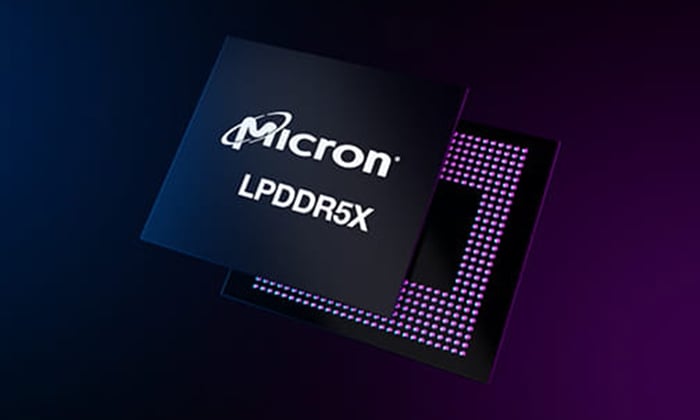
Image source: Micron Technology.
Apple's memorable earnings call
If I counted correctly, the word "memory" was mentioned 16 times during Apple's Q1 earnings call. And the references weren't about fond recollections of Apple's history. Both analysts and Apple's management discussed the ongoing supply demand imbalance in memory chips extensively.
Cook said on the call that the robust demand for iPhones put Apple in "a supply chase mode" for memory. He added, "We are currently constrained, and at this point, it is difficult to predict when supply and demand will balance."
How have the supply constraints impacted Apple financially? Not very much, at least so far. Cook said that "memory had a minimal impact" on gross margins in Q1. However, he expects a greater impact in the second quarter.
Anyone familiar with the law of supply and demand knows that prices rise when supply is limited and demand is strong. Unsurprisingly, Cook acknowledged that Apple expects memory prices to increase "significantly" beyond Q2.
Why Cook's cautionary words are great news for Micron
To be clear, Cook never mentioned Micron during Apple's Q1 earnings call. Neither did anyone else. However, Cook's cautionary words about supply constraints for memory translate into great news for Micron.
Samsung remains Apple's primary supplier of memory chips. SK Hynix is another top source for memory. But Citigroup (NYSE: C) estimates that Micron is supplying roughly 30% of DRAM and NAND chips for Apple's iPhone 17. This share isn't far behind the estimated 37% and 33% for Samsung and SK Hynix, respectively.
The Korea Economic Daily reported last month that Apple has dispatched members of its purchasing team to hotels near Samsung's and SK Hynix's Korean manufacturing facilities to secure long-term memory contracts. If that sounds desperate, it is.
However, Cook said something in the Q1 earnings call that shouldn't be overlooked. He mentioned that Apple has "different levers that we can push" to respond to the memory supply constraints. It doesn't require much reading between the lines to infer that one of those levers could be striking a deal that richly rewards Micron.
If nothing else, Apple's predicament underscores just how severe the memory shortage is for the tech industry. When the world's second-largest tech company is having issues getting the memory chips it needs, imagine what the challenges are for smaller companies. That puts Micron in a great position, especially given that it's also selling all the high-bandwidth memory (HBM) it can make for use in GPUs and artificial intelligence (AI) accelerators.
Can this dirt cheap AI stock soar even more?
You might think that an AI stock that's in the catbird seat as much as Micron is would trade at a steep premium. But that isn't the case at all.
Micron's forward price-to-earnings ratio is only 13.1. The stock's price-to-earnings-to-growth (PEG) ratio, which incorporates analysts' five-year earnings growth projections, is a low 0.73.
The tech stock has skyrocketed roughly 380% over the last 12 months. If you believe Wall Street, Micron's momentum could evaporate. The consensus price target is 15% below the current share price. However, I believe Tim Cook more than I do Wall Street. The dynamics in the global memory market should continue to work in Micron's favor. I predict this dirt cheap AI stock will soar even more in 2026.
Where to invest $1,000 right now
When our analyst team has a stock tip, it can pay to listen. After all, Stock Advisor’s total average return is 942%* — a market-crushing outperformance compared to 196% for the S&P 500.
They just revealed what they believe are the 10 best stocks for investors to buy right now, available when you join Stock Advisor.
See the stocks »
*Stock Advisor returns as of February 3, 2026.
Citigroup is an advertising partner of Motley Fool Money. Keith Speights has positions in Apple. The Motley Fool has positions in and recommends Apple and Micron Technology. The Motley Fool has a disclosure policy.
Recommended Articles


