




Fewer Babies, Higher Sales: P&G's Contrarian Bet in China Is Working
Key Points
With birth rates tumbling in China, the baby care market is an unlikely source of growth for Procter & Gamble.
The company has moved upmarket with premium products, a strategy that's working wonders.
This success offers a blueprint for the company's other businesses as it looks to reinvent itself.
- 10 stocks we like better than Procter & Gamble ›
China's birth rate was 5.6 births per 1,000 people in 2025, down nearly 13% from 2023. With just 7.9 million babies born last year, China's fertility crisis is only getting worse. For comparison, the U.S. birth rate was 10.7 babies per 1,000 people in 2023.
For consumer goods giant Procter & Gamble (NYSE: PG), the Chinese baby care market doesn't appear to be a great growth opportunity at first glance. However, the company has found a way to grow its China baby care business by a double-digit percentage over the past 18 months while increasing its market despite a collapsing birth rate. The secret? Premium products that mesh with thousands of years of Chinese culture.
Where to invest $1,000 right now? Our analyst team just revealed what they believe are the 10 best stocks to buy right now, when you join Stock Advisor. See the stocks »
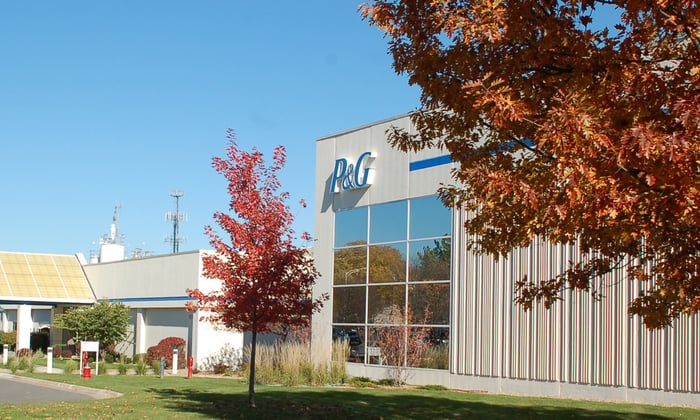
Image source: Procter & Gamble.
Premium materials drive surprising growth
According to Procter & Gamble CEO Shailesh Jejurikar during the earnings call on Thursday, "Chinese parents want only the best for their baby. Softness and comfort in addition to dryness."
Procter & Gamble turned to silk, a material with a luxurious reputation and a multi-thousand-year history as a status symbol, to craft its Pampers Prestige line of premium diapers. The company claims that Pampers Prestige is the only leading brand that uses real silky ingredients.
Premium disposable diapers account for 35% of the Chinese diaper market, according to Alibaba, and sales are growing at nearly quadruple the rate of standard disposable diapers. The overall Chinese diaper market is expected to grow by 5.7% annually through 2032, but the premium segment is almost certain to grow faster. Alibaba also found that Chinese parents are generally willing to pay 15% to 20% more for diapers that feature hypoallergenic materials.
Instead of going after volume, Pampers Prestige is an example of Procter & Gamble shifting gears to pursue the best growth opportunity in an otherwise sluggish market. Jejurikar pointed to Pampers Prestige as a template for how the company is leaning into innovation to boost sales.
The beginning of a reinvention
Jejurikar said that Procter & Gamble is beginning a long-term reinvention, with innovation set to play a starring role. The company will use productivity gains to fund innovation and demand creation, while doing its best to mitigate cost headwinds from tariffs and inflation. Procter & Gamble will also leverage its trove of consumer data to drive the business in the right direction.
Organic sales were flat in the second quarter of fiscal 2026, and overall volume declined by 1%. The baby, feminine, and family care segment suffered a 5% volume decline and a 4% organic sales decline, while beauty was the only category that registered positive volume growth.
Procter & Gamble's success in the Chinese baby care market gives the company a playbook that it can apply to markets where its sales are in decline. The reinvention will take time, but Procter & Gamble stock could be a good bet for investors with a little patience.
Should you buy stock in Procter & Gamble right now?
Before you buy stock in Procter & Gamble, consider this:
The Motley Fool Stock Advisor analyst team just identified what they believe are the 10 best stocks for investors to buy now… and Procter & Gamble wasn’t one of them. The 10 stocks that made the cut could produce monster returns in the coming years.
Consider when Netflix made this list on December 17, 2004... if you invested $1,000 at the time of our recommendation, you’d have $464,439!* Or when Nvidia made this list on April 15, 2005... if you invested $1,000 at the time of our recommendation, you’d have $1,150,455!*
Now, it’s worth noting Stock Advisor’s total average return is 949% — a market-crushing outperformance compared to 195% for the S&P 500. Don't miss the latest top 10 list, available with Stock Advisor, and join an investing community built by individual investors for individual investors.
See the 10 stocks »
*Stock Advisor returns as of January 26, 2026.
Timothy Green has no position in any of the stocks mentioned. The Motley Fool has no position in any of the stocks mentioned. The Motley Fool has a disclosure policy.
Recommended Articles


