

Top 10 AI Events of 2025: Scrutinizing NVIDIA and OpenAI, Reevaluating Google and Tesla
TradingKey - The U.S. stock market in 2025 stands at a crossroads of significant policy shifts, technological deepening, and macroeconomic competition. It would be no exaggeration to describe the situation as a "revaluation" across various domains, including the U.S. political and economic landscape, the Federal Reserve's policy trajectory, and artificial intelligence (AI).
Over the three-year AI-driven U.S. stock market bull run, the AI narrative has evolved from speculative imagination and a race for hardware to performance realization and differentiation. The AI arena in 2025 is decidedly different from what it once was.
Looking back at the U.S. stock market in 2025, the broader market rebounded to new highs after tariff impacts, while AI companies stumbled amidst order excitement and skepticism about performance delivery. The persistent surge in AI chip demand once propelled Nvidia its market capitalization to over $5 trillion. However, while maintaining optimism for the "shovel sellers," the capital market recognized both the accumulating risks within the "OpenAI chain" and the external " Google chain's" encirclement.
This article will briefly review the top ten AI events of 2025, revisiting the significant AI moments that swayed market trends throughout the year, and identifying potential indicators that could influence the U.S. stock market in 2026.
1. DeepSeek's Shock
In January 2025, China's DeepSeek-R1 model emerged, which was not only open-source and free but also demonstrated a technical pathway to achieve ChatGPT-comparable performance with minimal chips and very low costs.
DeepSeek achieved significant results with minimal resources through algorithmic optimization, shattering investors' two-year-old entrenched perceptions of AI model development as "capital-intensive" and "compute is truth." This effectively deconstructed "compute hegemony" with an "algorithmic revolution."
Deutsche Bank characterized DeepSeek's launch as AI's Sputnik moment. The market began to question whether the valuation of AI chip monopolist Nvidia could still be justified if AI models required millions, rather than hundreds of billions, of dollars in hardware investment. Furthermore, the positions of Silicon Valley tech giants, whose moats were built on financial barriers, seemed precarious.
Nvidia's stock price once plummeted 17% in a single day, its largest drop in five years, wiping out nearly $600 billion in market value, and setting a record for the largest single-day market capitalization evaporation in U.S. stock market history at the time. This served as the clearest evidence of profound investor concerns.
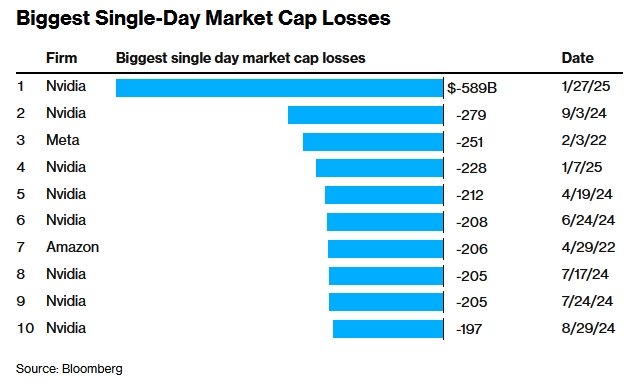
U.S. Stock Market Single-Day Market Cap Evaporation Record, Source: Bloomberg
2. Nvidia's Market Cap Reaches Five Trillion
Before the reversal of Trump's tariff policies in early April, headwinds such as the DeepSeek shadow caused Nvidia's stock price to fall by about 30% year-to-date. Nevertheless, major cloud providers' plans to expand data centers kept Nvidia chips in short supply. Nvidia decisively countered skeptics with consistently better-than-expected earnings, and its market capitalization soared.
In late October, Nvidia's market capitalization briefly touched $5 trillion for the first time in its history, just three months after surpassing $4 trillion. This $5 trillion market cap is greater than the combined market values of TSMC , AMD , Arm , ASML , Broadcom , Intel , Lam Research and Qualcomm combined. The company's value alone was equivalent to the combined market capitalization of the German, French, and Italian stock indices.
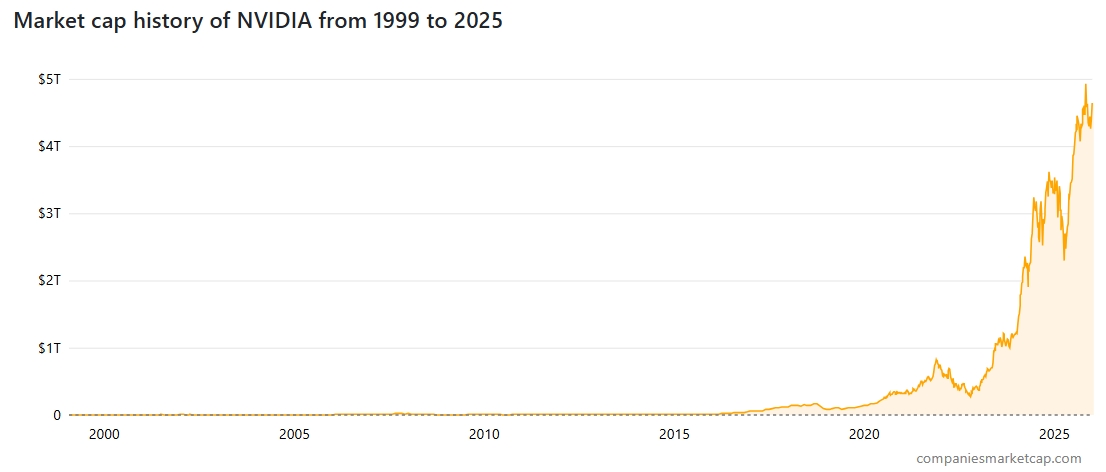
Nvidia Market Capitalization, Source: Companiesmarketcap
As an enterprise of such immense scale, after achieving triple-digit percentage growth for five consecutive quarters, Nvidia has continued to maintain a growth rate of over 55% for another five consecutive quarters.
Nvidia CEO Jensen Huang revealed that the company has secured $500 billion in chip orders for 2025 and 2026, while the CFO stated that this figure is expected to expand further in the future.
3. Accelerating AI Capital Expenditure Race
Capital expenditures by U.S. tech giants are no longer merely a financial metric; they are also the engine of AI growth and a ballast for the U.S. stock market. These giants continued to bet big in 2025.
Although investors consistently questioned the return on investment for AI, CEOs believed that "the risk of underinvestment outweighs the risk of overinvestment." They are not only vying for AI hardware and computing power, but also for electricity.
CreditSights reported that the capital expenditures for the top five hyperscalers, including Microsoft, Google, Amazon and Meta are projected to increase from $256 billion in 2024 to $443 billion in 2025, with the annual growth rate climbing from 63% to 73%.
Goldman Sachs noted that the four largest cloud giants spent $485 billion on capital expenditures between 2022 and 2024, and this figure is expected to triple to approximately $1.4 trillion from 2025 to 2027.
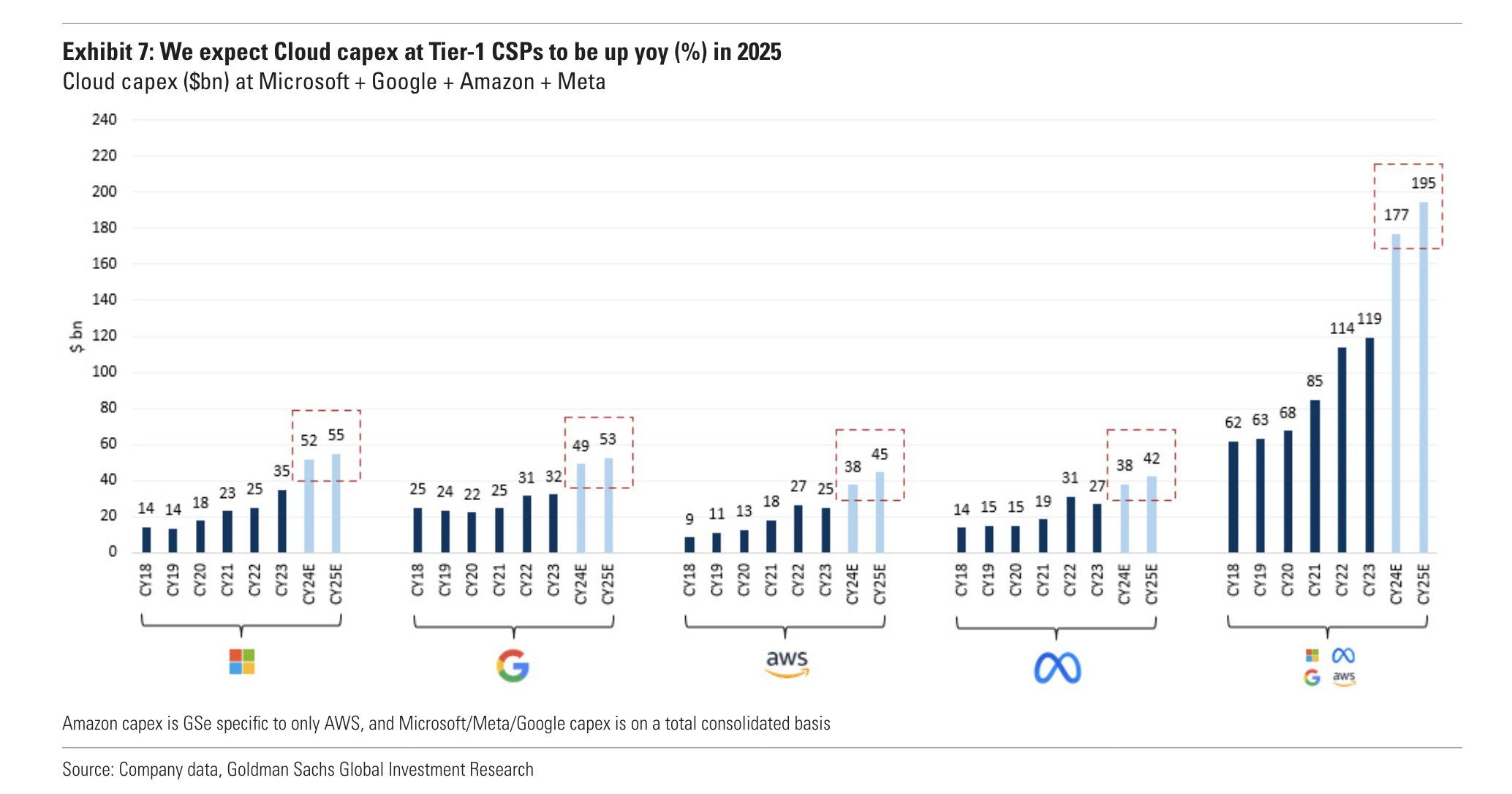
Source: Goldman Sachs
Morgan Stanley estimated that in 2027 alone, the four major cloud giants, along with Oracle and Coreweave, these six U.S. companies would incur $700 billion in capital expenditures.
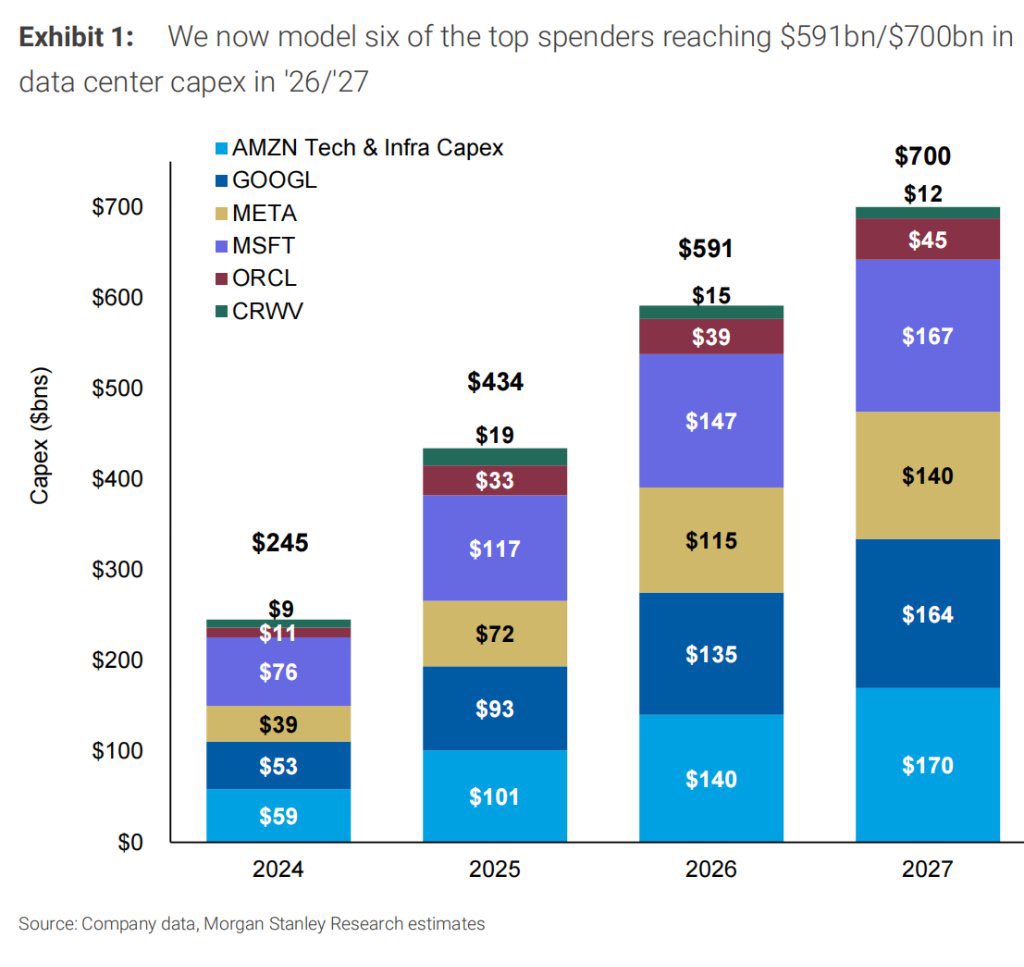
Source: Morgan Stanley
4. OpenAI Chain Turns From Joy to Sorrow, Oracle's Fleeting Moment
Starting in late September, a novel and exciting "AI circular" scheme garnered attention. This arrangement initially manifested as "Nvidia invests in OpenAI + OpenAI purchases Oracle cloud services + Oracle buys Nvidia GPUs," binding hardware providers, large model developers, and cloud infrastructure providers through business, financial, or equity ties, thereby creating a chain of giant investments, compute power recirculation, and a performance closed-loop.
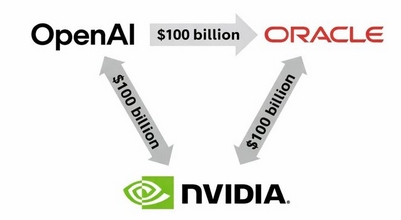
While investors were still weighing whether this model was a result of genuine demand explosion in the AI industry chain or if it would trigger risks similar to the vendor financing model of the 2000 dot-com bubble, it rapidly formed a vast AI economic chain encompassing companies like Microsoft, AMD, and CoreWeave. Various institutions also depicted different versions of the "OpenAI chain."
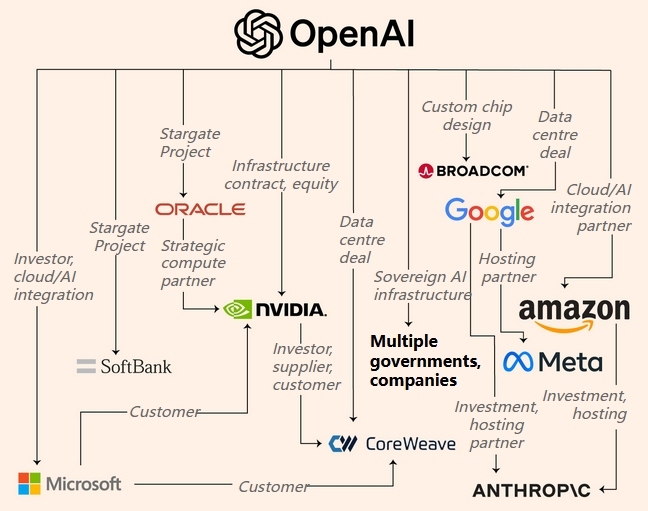
OpenAI Chain, Source: Financial Times
The developer of ChatGPT is at the core of the OpenAI chain, and its revenue outlook is the primary risk for this chain. Everyone is asking, "Where does OpenAI's money come from?"
OpenAI itself is still "unprecedentedly" burning cash and exploring commercialization paths, with an estimated annualized revenue of $20 billion this year. However, it has already committed $1.4 trillion to data center investments. OpenAI executives hinted in early November that they might require government backing.
Deutsche Bank projected that OpenAI would generate $345 billion in revenue between 2024 and 2029, but its expenditures during the same period would amount to $488 billion, meaning it would remain in the red for the next four years.
According to HSBC's estimation model, OpenAI's free cash flow will remain negative until 2030. This model already assumes that OpenAI's user base will quadruple from the current 800 million to 3 billion by then, which is comparable to Facebook, the world's largest social platform (3.07 billion monthly active users).
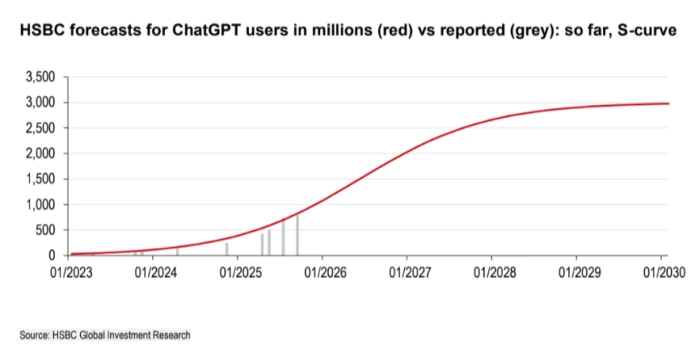
Source: HSBC
With Oracle facing concerns over its cash flow, accumulating massive debt, and taking on large-scale but potentially extremely low-margin OpenAI orders, Oracle became the storm center of the OpenAI chain's worries.
Oracle's stock price tumbled about 30% in the fourth quarter, potentially marking its largest quarterly decline since the dot-com bubble burst in 2001. This also marked Oracle CEO Larry Ellison's fleeting moment as the world's richest person.
5. Google Chain Reshapes AI Landscape, ASICs Emerge Victorious
While the OpenAI chain faced persistent scrutiny, the launch of the Gemini 3 model propelled the Google-centric "Google chain" into a new U.S. stock market trend. This flagship model surpassed GPT-5.1 in multiple benchmarks, with Goldman Sachs hailing it as a disruptive model that is reshaping the entire AI investment ecosystem.
On one hand, GPT models encountered setbacks, with users complaining they were utterly boring. On the other hand, the Gemini 3 model achieved breakthroughs in reasoning capabilities, multimodal understanding, and agent development. A wave of OpenAI unsubscribes emerged on social media.
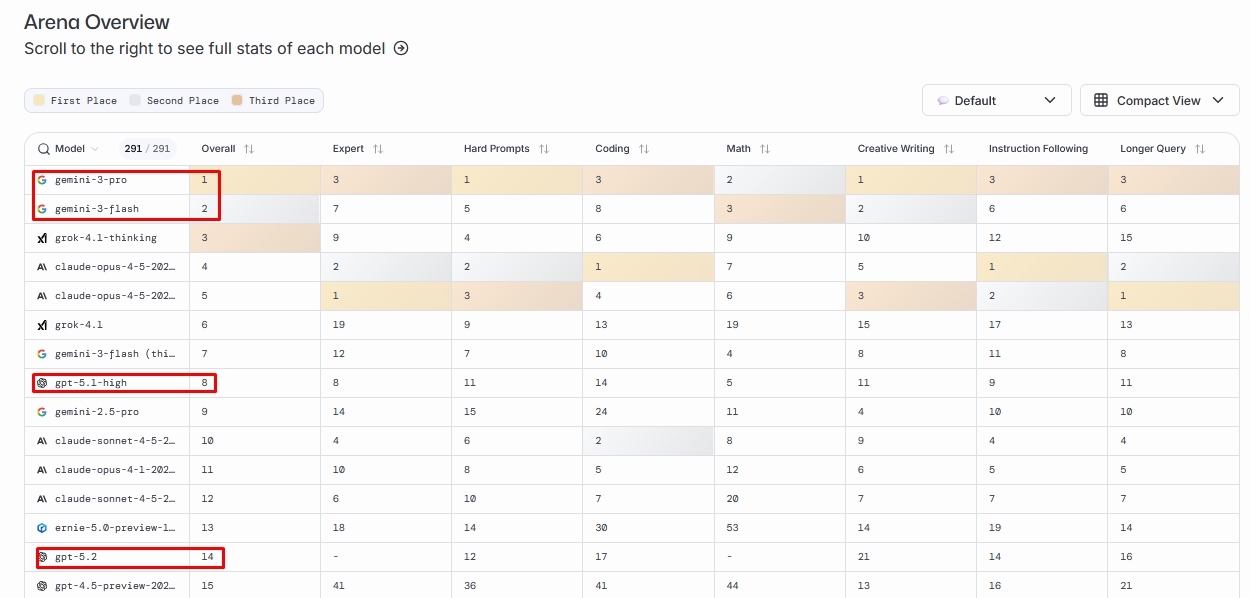
Comprehensive Ranking of Major AI Models, Source: LMarena.ai
TD Cowen analysts discovered that Gemini's user growth showed signs of accelerating even before the launch of its third-generation model, with its monthly active user penetration rate surpassing ChatGPT's growth from July to October. Gemini currently has 650 million users, closely trailing OpenAI's 800 million, directly compelling OpenAI to initiate an internal "red alert."
Crucially, Google, driven by its large language model Gemini and self-developed TPU chips, has established a comprehensive layout across chips, cluster architecture, large models, and applications, making it the only company globally with full-stack AI capabilities.
Google TPUs will no longer be limited to internal use but will be actively sold externally to companies such as Anthropic and Meta. This is expected to capture 20% of the AI chip market and generate $900 billion in incremental revenue within the next few years.
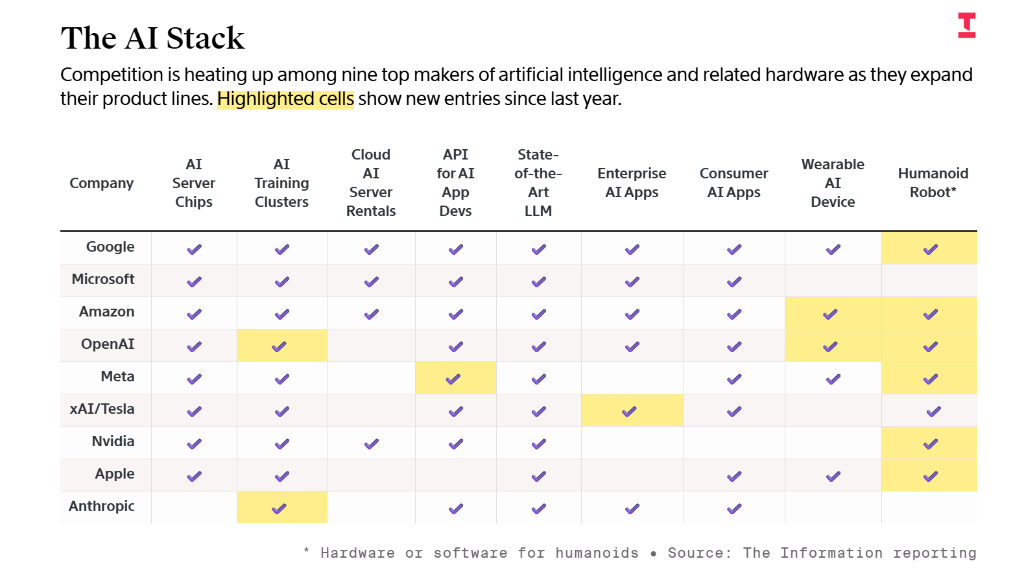
Source: The Information
Goldman Sachs noted that the Google chain, centered around Google and Broadcom, is demonstrating a strong substitution trend against the OpenAI chain, represented by Microsoft and Oracle. Asset management firm Deepwater predicted that Google would become a top member of the Magnificent Seven U.S. stocks in 2026.
Broadcom is a key partner in Google's TPU design, and is considered one of the biggest beneficiaries of the Google chain. Wedbush pointed out that the market is rediscovering the immense potential of the ASIC chip market.
Jefferies, which named Broadcom as a top pick, stated that the ASIC market is reaching an inflection point as Google's demand for custom chips continues to grow. Furthermore, in their 2026 chip stock outlook, JPMorgan, Morgan Stanley, Bank of America, and Goldman Sachs all listed Broadcom as a top pick, while Nvidia received top pick endorsement from only three of these four investment banks.
6. AI Bubble and Financial Credit Risk
The path of AI development is not without its challenges, and there is a strong desire to see when massive expenditures will translate into productivity gains and actual returns. Concerns about an AI bubble became particularly prominent in the second half of the year.
A MIT report revealed the fact that 95% of AI players fail to achieve positive returns, and Goldman Sachs observed that the growth rate of AI adoption had already slowed.
Although AI application representative Palantir boasted about exceeding 100 on the "Rule of 40," its peak P/E ratio of over 600 times was daunting. Michael Burry, the prominent short-seller who predicted the subprime mortgage crisis, drew attention by shorting Palantir.
Beyond the common concerns of high valuations and Ponzi-like circular funding, new troubles emerged for major vendors in the fourth quarter. Goldman Sachs contended that the AI bubble was not in giants like Nvidia, but in the private markets.
Data center construction is like a "gold-swallowing beast." OpenAI hoped for government guarantees to back its financing. Oracle, expanding through debt, was denied further investment by its largest partner, Blue Owl. Companies like Meta and xAI were stirring up the private credit market with off-balance-sheet financing that obscured actual risks.
The AI bubble and financial credit are becoming increasingly intertwined, and institutions fear that the bursting of the AI asset bubble could lead to economic losses similar to those seen after the 2008 financial crisis.
7. Tesla's Galaxy Mind Trinity
Throughout 2025, Tesla trading primarily revolved around CEO Elon Musk's political and business actions, Tesla's EV delivery volumes and financial reports, as well as the valuation prospects for Robotaxi and humanoid robots. However, the current Tesla trade is no longer confined to Tesla's automotive business but encompasses Musk's personal vision and the outlook for his sprawling business empire.
With the rise of the large language model Grok developed by xAI and SpaceX's IPO confirmed for 2026, Musk's concept of "Galaxy Mind" might be more suitable to describe the "Tesla trade" for 2025 and even 2026.
In December, he proposed the "Galaxy Mind" concept, envisioning the integration of SpaceX, Tesla, and xAI to support space data centers. Specifically, SpaceX would be responsible for launching AI satellites into orbit, Tesla's solar and battery technologies would provide energy solutions, and xAI would develop AI models.
Earlier in the year, Musk integrated AI company xAI with social media platform X, and the Grok model's performance has long ranked among the top on various testing platforms. Similarweb data showed that Gemini surpassed ChatGPT in average visit duration in September, while Grok exceeded Gemini in October, topping the list.
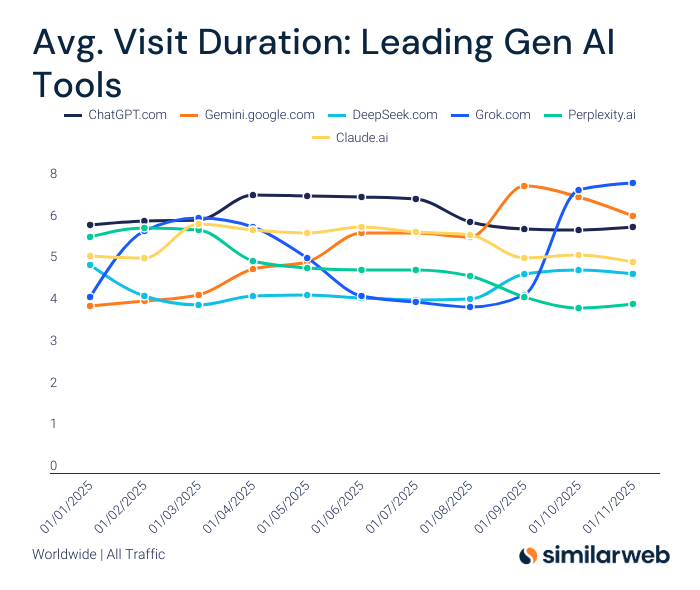
Average Visit Duration for Major Large Model Websites, Source: X@Similarweb
If Tesla's valuation in 2025 was propelled by Musk's forceful inclusion of the Optimus robot, then with SpaceX's IPO next year, Tesla will become a component of space compute power. Tesla is therefore poised to achieve a broader valuation spectrum, as imagined by the capital markets themselves.
8. The AI Era Fosters a Super Storage Cycle
The most successful AI concept stocks in 2025 were not Nvidia, Palantir, nor even the surging Google, but rather storage stocks. Among the S&P 500 components, SanDisk , Western Digital , Micron Technology and Seagate Technology were the four best-performing stocks, rising approximately 600%, 300%, 250%, and 230% respectively year-to-date.
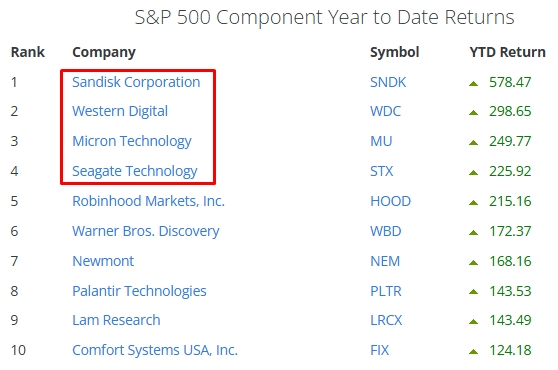
Major Storage Stock Gains in 2025, Source: Slickcharts
The development of AI technology has ushered in a "super cycle" for the storage industry. This has imposed higher demands on the performance and capacity of storage chips, particularly driving an explosion in demand for High Bandwidth Memory (HBM) and server DRAM, leading to a prominent state of supply-demand imbalance.
Nomura Securities analyzed that the global AI data center construction process is accelerating beyond expectations, leading to a surge in demand for enterprise-grade high-performance server DRAM, HBM storage systems, and high-performance data center SSDs. Consequently, the upward trajectory of DRAM and NAND storage chip prices has steepened.
The bank predicted that the main investment theme for storage in 2026 would be "storage chip price-profit-valuation." The storage industry's super cycle is expected to last until at least 2027, with meaningful supply increases not appearing until 2028 at the earliest.
Micron Technology, which positions itself as an "indispensable enabler of AI," is the sole U.S. DRAM supplier. The company's Executive Vice President of Operations stated that this is the most significant supply-demand mismatch they have witnessed in their 25-year career.
Morgan Stanley noted that Micron Technology's performance reflects potentially the best revenue upside in the history of the U.S. semiconductor industry, citing net profit guidance that was 75% higher than market expectations.
9. Opportunities in the "GPU as a Service" Model
In a market still dominated by the cloud Big Three, a new player emerged in the global cloud services market in 2025: new cloud service providers. The "compute power drought" created a significant niche for specialized AI cloud service providers like CoreWeave and Nebius .
These companies specialize in providing GPU workload services, or "GPU as a Service" (GPUaaS), which are central to AI computing. By eliminating the extensive operational and maintenance costs incurred by traditional cloud companies, they offer on-demand compute leasing services to businesses that require GPU compute power but are unwilling to spend heavily on deployment.
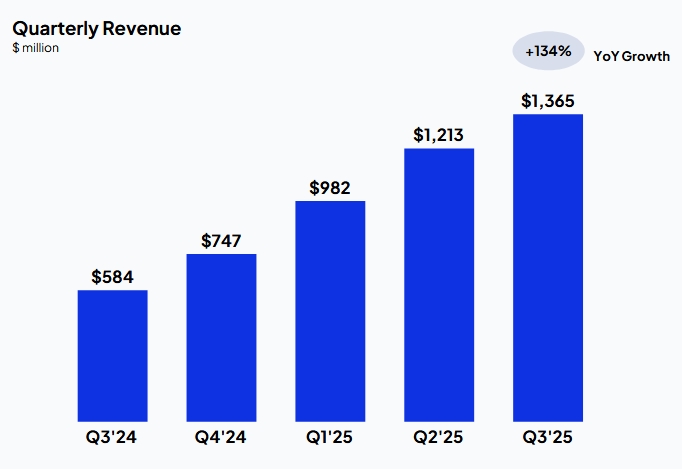
Coreweave Revenue, Source: Coreweave
CoreWeave saw its stock price surge over 300% within three months of its IPO this year. Its priority access to Nvidia's supply makes it the most cost-effective choice for enterprises deploying Nvidia GPUs. Even Microsoft, with its mature cloud infrastructure, needed CoreWeave to alleviate compute power scarcity.
This year, Microsoft signed compute procurement agreements with both CoreWeave and Nebius. It also announced new cloud partnerships worth tens of billions of dollars with companies such as Nscale, Iren, and Lambda Labs. Giants like OpenAI and Nvidia also showed investment or cooperation interest in cloud infrastructure companies like Nscale.
However, given the question of whether new cloud companies like CoreWeave can safely navigate the GPU technology iteration and depreciation cycles, as well as their inherent high-leverage operating strategies, the sustainability of new cloud providers' business models remains to be proven.
10. Intel Becomes the Comeback King
After its stock price plunged approximately 60% in 2024, Intel, the former semiconductor giant continuously rumored to be "splitting its assets," experienced a stock price rebound of over 80% in 2025. Its third-quarter earnings report, which showed a return to profitability, further confirmed its status as the year's genuine "comeback king."
Under the leadership of Pat Gelsinger, who took over as CEO in March, Intel initiated aggressive reforms. It also witnessed critical turning points such as U.S. government investment, Nvidia's strategic investment, and the technological breakthrough of its first 18A process chip architecture.
Intel achieved its first positive revenue growth in a year and a half in the third quarter, ending six consecutive quarters of losses, which also marked the company's longest losing streak in 35 years.
The Trump administration's investment in Intel, making it the largest shareholder, ushered in a new era of American state capitalism. This underscored Intel's pivotal role in the U.S. onshoring chip manufacturing strategy.
However, some voices pointed out that despite receiving financial infusions from the government, SoftBank, and Nvidia, the lack of significant, high-profile external customer orders announced to date remains a long-term concern.
Recommended Articles


