

Could This 1 New Catalyst Send Bitcoin to All-Time Highs?
Key Points
Vanguard just decided to allow its investors to buy crypto ETFs.
That means they can buy Bitcoin ETFs and get exposure to Bitcoin directly for the first time.
Vanguard manages a gargantuan amount of money, so this is a big deal.
- 10 stocks we like better than Bitcoin ›
After years of saying no to crypto in any form, Vanguard, one of the biggest retirement platform providers, is now letting its brokerage clients buy funds that hold Bitcoin (CRYPTO: BTC) and other digital assets, including the iShares Bitcoin Trust ETF (NASDAQ: IBIT). That shift lands just as Bitcoin is clawing its way back into the low $90,000s after a brutal multi-month sell-off.
Will Vanguard's customers funnel billions into Bitcoin and send it right back up to its all-time highs? Let's take a look.
Where to invest $1,000 right now? Our analyst team just revealed what they believe are the 10 best stocks to buy right now, when you join Stock Advisor. See the stocks »
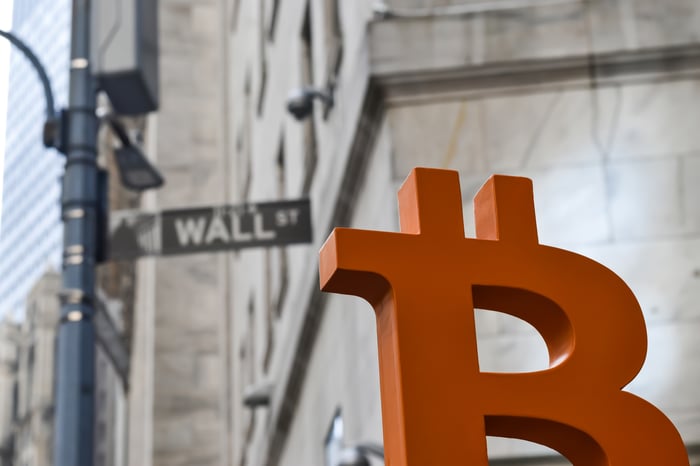
Image source: Getty Images.
The floodgates are open
Until now, Vanguard refused to allow any exchange-traded fund (ETF) or mutual fund whose primary exposure was to cryptocurrencies to trade on its platform. The company repeatedly cited concerns about volatility and speculation to justify that position, much to the chagrin of its crypto-hungry investors. But starting Dec. 2, Vanguard began allowing clients to buy third-party crypto ETFs and mutual funds tied to assets like Bitcoin and other crypto majors like Ethereum and Solana.
The scale of that door opening is enormous. Vanguard has assets under management (AUM) of roughly $11 trillion, and it serves more than 50 million investors, most of whom use the platform for tax-advantaged retirement accounts and broad index funds. Giving that group the option to allocate even a small fraction of their portfolios to spot Bitcoin ETFs introduces a huge new pipeline of potential demand that simply did not exist before. And it's very likely that Vanguard wouldn't have changed its policies if it didn't think the investor base would be eager to invest in these assets.
Another key piece of context here is that ETF flows have been a major driver of Bitcoin's price since U.S. spot Bitcoin products launched in early 2024. After a spectacular run of net inflows, November brought about $4.3 billion of net outflows from Bitcoin ETFs. Vanguard arriving now does not erase that, but it gives those products access to one of the last big pockets of traditional investors who were effectively barred from buying them.
Could this decision send Bitcoin to all-time highs?
Right now, Bitcoin trades in roughly the $90,000 range, a long way below its October peak near $126,000. Its market cap is close to $1.8 trillion.
If even a modest share of Vanguard investors add a sliver of Bitcoin exposure via IBIT or competing funds, the impact is likely to be meaningful. It took only a few months of strong net inflows across the new spot ETFs in 2024 and early 2025 to help push Bitcoin skyward, as asset issuers were steadily accumulating more coins than miners were issuing, creating a supply imbalance that heavily favored holders. Vanguard's change of heart means that dynamic has good odds of reappearing after its recent period of fatigue.
However, it is important to be realistic here. Vanguard is not suddenly telling its clients to rush into crypto, and, if pressed, it might actually say the opposite. Its public statements still generally frame digital assets as highly speculative investments and state that it will not create its own Bitcoin ETFs in the same manner as it does with many other assets. For many of its longtime index investors, having crypto available to buy is a new convenience, but not one that they will likely make heavy use of, at least not immediately.
Beyond that, Bitcoin is still dealing with a risk-off macro backdrop, poor sentiment, a significant drawdown from the recent peak, and shifting narratives about its role relative to other assets, such as gold. Vanguard's platform change can mitigate some of the dreariness if it causes actual capital inflows, but it won't magically override the other factors.
Could this single catalyst propel Bitcoin to all-time highs by itself? Stranger things have happened in the crypto sector, including recently, but it probably does not make sense to bet on that outcome.
What it does do is tilt the odds a bit further in favor of the long-term bull thesis by widening the funnel for everyday retirement investors to participate when broader conditions become more supportive again. That's bullish, and it could be very constructive over time, but there's no silver bullet here.
Should you invest $1,000 in Bitcoin right now?
Before you buy stock in Bitcoin, consider this:
The Motley Fool Stock Advisor analyst team just identified what they believe are the 10 best stocks for investors to buy now… and Bitcoin wasn’t one of them. The 10 stocks that made the cut could produce monster returns in the coming years.
Consider when Netflix made this list on December 17, 2004... if you invested $1,000 at the time of our recommendation, you’d have $556,658!* Or when Nvidia made this list on April 15, 2005... if you invested $1,000 at the time of our recommendation, you’d have $1,124,157!*
Now, it’s worth noting Stock Advisor’s total average return is 1,001% — a market-crushing outperformance compared to 194% for the S&P 500. Don’t miss out on the latest top 10 list, available when you join Stock Advisor.
See the 10 stocks »
*Stock Advisor returns as of December 1, 2025
Alex Carchidi has positions in Bitcoin, Ethereum, Solana, and iShares Bitcoin Trust. The Motley Fool has positions in and recommends Bitcoin, Ethereum, Solana, and iShares Bitcoin Trust. The Motley Fool has a disclosure policy.
Recommended Articles


