

Prediction: This Will Be the Next Quantum Computing Stock That Berkshire Hathaway Buys
Key Points
Berkshire's largest technology positions are Apple, Alphabet, and Amazon.
Each of these stocks provides Berkshire with diversified exposure to the artificial intelligence (AI) revolution.
While AI, and by extension, quantum computing, may play a role in Berkshire's thesis, the firm's tech positions share a lot of other important things in common as well.
- 10 stocks we like better than Nvidia ›
Over the last 60 years, Warren Buffett has built Berkshire Hathaway into one of the most successful investment firms in history. Berkshire's long-term compound annual gain of 20% is nearly double that of the S&P 500 (SNPINDEX: ^GSPC) -- underscoring the brilliance of Buffett's approach to portfolio management.
Let's explore the types of stocks Buffett tends to buy. From there, I'll reveal which quantum computing stock I think the Oracle of Omaha might be eyeing for Berkshire's next big splash.
Where to invest $1,000 right now? Our analyst team just revealed what they believe are the 10 best stocks to buy right now, when you join Stock Advisor. See the stocks »
What kind of stocks does Warren Buffett like to buy?
Warren Buffett has an estimated net worth of over $100 billion. While this level of wealth might suggest the acclaimed investor is a stock-picking genius, Buffett's investment philosophy is simple, straightforward, and can be implemented by anyone.
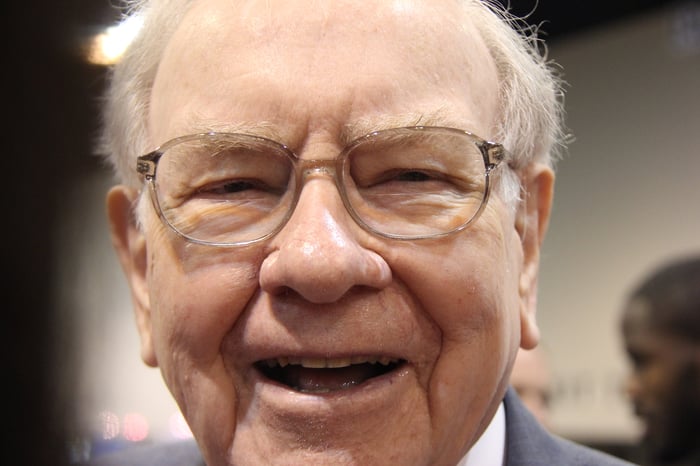
Image source: The Motley Fool.
First and foremost, Buffett is a contrarian. The Oracle has never been one to follow the crowd or blindly buy into hype narratives. In his eyes, these dynamics often create overstretched valuations -- leaving unsuspecting investors holding the bag after the euphoria inevitably cools off.
Some of Berkshire's largest positions include Apple, American Express, Bank of America, Coca-Cola, and Chevron. The first takeaway from this sub-set of holdings is that Buffett is diversified -- covering consumer electronics, financial services, consumer goods, and energy. The bigger takeaway, however, is that each of these companies has built strong brand appeal in their respective industries.
In addition, all of these companies produce goods and services that are in demand during any economic cycle -- adding a layer of business resiliency and relative predictability during more turbulent economic periods.
Against this backdrop, these blue chip giants consistently generate heaps of cash flow which are then reinvested back into the business or paid out to shareholders in the form of dividends or stock buybacks.
For technology stocks, there is an undeniable theme in Berkshire's portfolio
One industry that is somewhat muted in Berkshire's portfolio is technology. Broadly speaking, technology stocks command higher valuation multiples compared to businesses in other sectors. Moreover, given how quickly technology changes, it's difficult to confidently project which industry leaders today will remain prominent and relevant decades into the future.
With that said, Berkshire has allocated some capital toward technology stocks -- in particular, artificial intelligence (AI). Beyond, Apple, Berkshire's most direct exposure to AI is from its positions in Amazon and Alphabet.
The common theme among these members of the "Magnificent Seven" is that each has built a formidable ecosystem.
Apple has achieved an unparalleled level of customer lock in through its combination of hardware and services -- making switching to competing platforms, like Android, virtually unthinkable.
Over the last 20 years, Amazon has evolved into the de facto marketplace for online shopping. The company has used its success from e-commerce to enter new domains including cloud infrastructure, advertising, logistics, groceries, and even AI robotics.
In a similar fashion, Alphabet was first known for its affiliation with internet search. Given the stickiness of Google and YouTube, Alphabet has been able to use its product expertise to create new services -- many of which are now pertinent to the company's AI efforts.
It's not surprising that each of these tech behemoths generate steady cash flow, which has been used to reward shareholders, as well as ignite innovation roadmaps.

Image source: Getty Images.
Why Nvidia checks off many of Berkshire's boxes
My prediction is that Berkshire is going to acquire a stake in Nvidia (NASDAQ: NVDA) in the near future.
Like Buffett's other tech positions, Nvidia has a brand moat for semiconductors and AI infrastructure. Moreover, the company pays a modest dividend is also using its record profits to buy back stock.
Furthermore, Nvidia also has a ecosystem -- just like Apple, Alphabet, and Amazon. Nvidia builds the backbone for generative AI development, provides critical data center networking equipment, and is playing an important role in hybrid classical-quantum computing environments.
Taken together, Nvidia's diversification positions the company as an established, durable leader set up for further growth as the AI storyline evolves from hardware, software, and the next trillion-dollar wave of quantum AI.
Right now, Nvidia trades at a forward price-to-earnings (P/E) multiple of 24. While this may be considered a bit of a premium for Berkshire's standards, it's the cheapest Nvidia stock has been in over a year. That's an important nuance to understand given Nvidia's revenue and profits continue to accelerate, all while the company's addressable market continues to expand.
It's important for investors to realize that AI and accompanying exposure to quantum computing is likely only part of the reason Berkshire would consider a position in Nvidia. Nevertheless, I think Nvidia checks off many of Berkshire's investment criteria and see the stock as a no-brainer opportunity to buy and hold as the AI narrative continues to unfold.
Should you invest $1,000 in Nvidia right now?
Before you buy stock in Nvidia, consider this:
The Motley Fool Stock Advisor analyst team just identified what they believe are the 10 best stocks for investors to buy now… and Nvidia wasn’t one of them. The 10 stocks that made the cut could produce monster returns in the coming years.
Consider when Netflix made this list on December 17, 2004... if you invested $1,000 at the time of our recommendation, you’d have $580,171!* Or when Nvidia made this list on April 15, 2005... if you invested $1,000 at the time of our recommendation, you’d have $1,084,986!*
Now, it’s worth noting Stock Advisor’s total average return is 1,004% — a market-crushing outperformance compared to 194% for the S&P 500. Don’t miss out on the latest top 10 list, available when you join Stock Advisor.
See the 10 stocks »
*Stock Advisor returns as of November 24, 2025
American Express is an advertising partner of Motley Fool Money. Bank of America is an advertising partner of Motley Fool Money. Adam Spatacco has positions in Alphabet, Amazon, Apple, and Nvidia. The Motley Fool has positions in and recommends Alphabet, Amazon, Apple, Berkshire Hathaway, Chevron, and Nvidia. The Motley Fool has a disclosure policy.
Recommended Articles


