


Warren Buffett Calls This Investment "the Right Thing for Most People." 1 Vanguard ETF Makes His Case Perfectly.
Key Points
Buffett says most people would be well-served by a portfolio of 90% S&P 500 ETFs and 10% Treasury bills.
The Treasury bill portion can provide an income component and keep cash ready to put to work.
This Treasury ETF from Vanguard would likely get the Warren Buffett seal of approval.
- 10 stocks we like better than Vanguard Institutional Index Funds - Vanguard 0-3 Month Treasury Bill ETF ›
Ever since the Federal Reserve's aggressive rate-hiking cycle in 2022 resulted in the worst performance for long-term Treasuries in decades, investors have mostly ignored fixed income in their portfolios. That's been especially true given the artificial intelligence (AI) boom, which has produced huge returns for tech, semiconductor, and growth stocks.
Overweighting these stocks in a raging bull market isn't really Warren Buffett's style, nor is ignoring fixed income in a diversified portfolio. His value-tilted approach hasn't done particularly well in the past few years, but it's been undeniably successful over the decades that he's been investing.
Will AI create the world's first trillionaire? Our team just released a report on the one little-known company, called an "Indispensable Monopoly" providing the critical technology Nvidia and Intel both need. Continue »
For most investors, he advocates for a simple approach that involves the majority of a portfolio being invested in the S&P 500 but also a modest allocation going to Treasury bills. For this purpose, Buffett would likely endorse an investment in the Vanguard 0-3 Month Treasury Bill ETF (NASDAQ: VBIL).
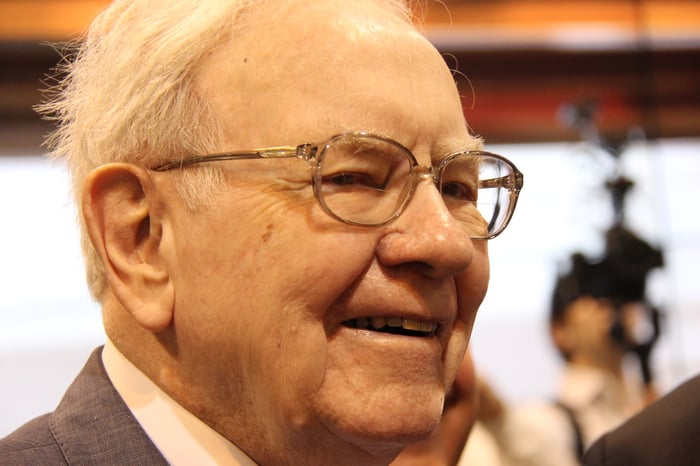
Image source: The Motley Fool.
Key takeaways
- VBIL launched in February 2025 and is designed to track a portfolio of short-term Treasury bills with remaining maturities of 90 days or less.
- Treasury bills can be used to provide income and portfolio volatility management.
- They can also be used as a parking spot for cash waiting to be deployed into longer-term holdings.
- Buffett recommends holding at least a small allocation of Treasury bills for both of these purposes.
Why holding Treasury bills makes sense in a portfolio
In bull markets, most investors want to be 100% invested in stocks. Unfortunately, bull markets don't last forever, and conditions can turn south quickly, leaving all-equity portfolios vulnerable to steep losses. We saw this as recently as March.
Keeping a cash position in your portfolio serves two primary purposes. First, it can provide a real income component that helps mitigate overall portfolio volatility. Back during the majority of the 2010s and as recently as the post-COVID pandemic years, cash provided virtually no income as the Fed sought to keep rates as low as possible. That's changed. Today, Treasury bills routinely offer yields of 3%-4%, making them an intriguing risk/reward alternative to equities.
Second, it allows investors a parking spot for cash ready to be put to work. Warren Buffett likes to take advantage of value opportunities if the underlying stock falls far enough. Environments where volatility ticks higher and stock prices pull back can be ideal short-term entry points to capture a potential bounceback. Having cash ready instead of needing to liquidate other long positions is the better approach.
VBIL: Performance & key metrics
| Metric | Data |
|---|---|
| Expense ratio | 0.06% |
| Assets under management | $6.7 billion |
| Dividend yield | 3.6% |
| Year-to-date total return | 1.3% |
| 1-year total return | 4% |
Data source: Vanguard.
Based on some of his past letters to Berkshire Hathaway shareholders, we know Buffett is a fan of Vanguard. Therefore, it makes sense that he would approve of the Vanguard 0-3 Month Treasury Bill ETF as the vehicle for owning cash in a portfolio. The current high-yield environment actually makes it profitable to store your portfolio cash there in the meantime.
Should you buy stock in Vanguard Institutional Index Funds - Vanguard 0-3 Month Treasury Bill ETF right now?
Before you buy stock in Vanguard Institutional Index Funds - Vanguard 0-3 Month Treasury Bill ETF, consider this:
The Motley Fool Stock Advisor analyst team just identified what they believe are the 10 best stocks for investors to buy now… and Vanguard Institutional Index Funds - Vanguard 0-3 Month Treasury Bill ETF wasn’t one of them. The 10 stocks that made the cut could produce monster returns in the coming years.
Consider when Netflix made this list on December 17, 2004... if you invested $1,000 at the time of our recommendation, you’d have $469,293!* Or when Nvidia made this list on April 15, 2005... if you invested $1,000 at the time of our recommendation, you’d have $1,381,332!*
Now, it’s worth noting Stock Advisor’s total average return is 993% — a market-crushing outperformance compared to 207% for the S&P 500. Don't miss the latest top 10 list, available with Stock Advisor, and join an investing community built by individual investors for individual investors.
See the 10 stocks »
*Stock Advisor returns as of May 16, 2026.
David Dierking has no position in any of the stocks mentioned. The Motley Fool has no position in any of the stocks mentioned. The Motley Fool has a disclosure policy.
Recommended Articles


