


S&P 500 and Nasdaq Retreat as Treasury Yields Hit Multi-Month Highs
Key Points
The S&P 500, Nasdaq-100, and Dow all retreated Friday after hitting record highs on Thursday.
Jerome Powell's tenure as Fed Chair ends Friday, with Kevin Warsh set to take over.
Beijing blocked Nvidia's newly approved China chip sales for a trade policy review.
- 10 stocks we like better than S&P 500 Index ›
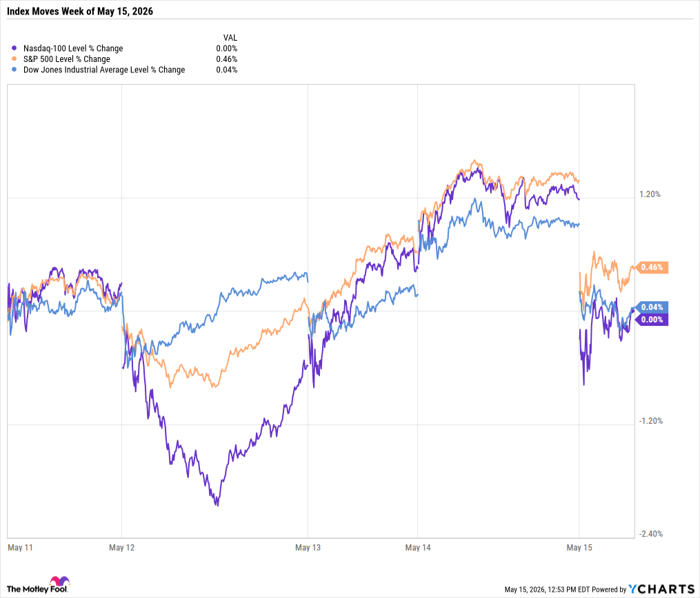
Stocks retreated Friday morning, pulling back from record highs. After the Dow Jones Industrial Average (DJINDICES: ^DJI) cracked 50,000 and the S&P 500 (SNPINDEX: ^GSPC) eclipsed 7,500 for the first time on Thursday, Wall Street decided Friday morning was a good time for a breather. The tech-heavy Nasdaq-100 index reversed course just before reaching the 30,000 milestone.
As of 1 p.m. ET, the Nasdaq-100 was down 1.2%, the S&P 500 had slipped 0.9%, and the Dow was off by 0.8%.
Will AI create the world's first trillionaire? Our team just released a report on the one little-known company, called an "Indispensable Monopoly" providing the critical technology Nvidia and Intel both need. Continue »
^NDX data by YCharts
On the upside, this week looks pretty calm if you zoom out a bit. All three indexes are basically flat over the past five trading days. They dipped on Tuesday, bounced back, hit records Thursday, and are now giving some of that back. Standard stuff, but for dramatic reasons.
Yields, oil, and a disappointing summit
Let's start with bonds, because that's where the trouble is brewing. The 10-year Treasury yield jumped to 4.6%, its highest level in months. The 30-year topped 5.1%. When yields rise, growth stocks tend to suffer, and that's exactly what happened this morning.
Investors don't like turmoil at the Federal Reserve, where longtime Chairman Jerome Powell is handing the reins to Kevin Warsh. At the same time, President Trump is returning from a low-impact state visit to China. The Street was hoping for fireworks. The American squad involved more than a dozen high-powered business leaders, hoping (mostly in vain) for new opportunities in China.
Oil prices added to inflationary concerns. Several oil types rose about 3% today, while average gas prices held steady around $4.53 per gallon. Only six ships passed through in the past 24 hours, down from a daily average of 120 three months ago.
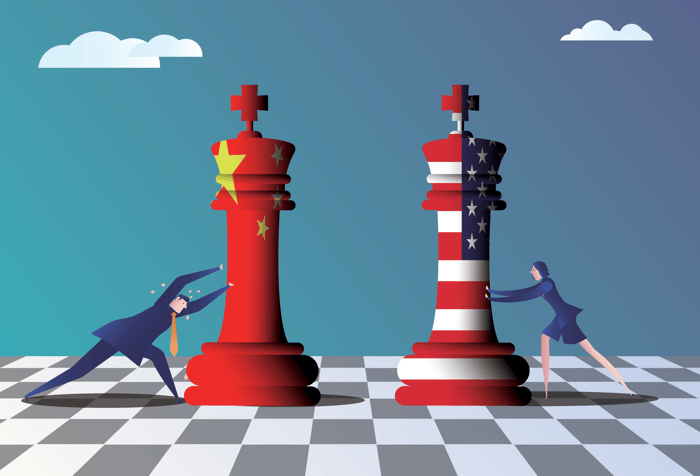
Image source: Getty Images.
Only a handful of heavyweight stocks moved the needle on the major indexes. Nvidia (NASDAQ: NVDA) led the S&P 500 and Nasdaq-100 retreats with a 3% price drop. Earlier this week, American regulators greenlighted the company's plan to sell some older AI accelerator chips in the Chinese market. Today, the Chinese government is blocking that potential trade for a trade policy review. Beijing may prefer powering Chinese AI systems with Chinese chip designs.
Microsoft (NASDAQ: MSFT) bucked the trend, rising 3.6% after Bill Ackman revealed Pershing Square had taken a stake. Caterpillar fell 3.7%, making it the Dow's biggest loser on tariff concerns.
Stepping back from the noise
One week (or a single day) of market noise doesn't define Wall Street's long-term prospects, of course. The indexes are still close to records, arguably for good reason. The AI boom has added trillions of dollars of extra value to the cap-weighted indexes in recent years. The political tension and macroeconomic stress won't last forever. All told, the gains should continue -- perhaps with a few potholes and speed bumps along the road.
For long-term investors, days like Friday are noise within a broader trend. The question is whether that trend can continue with oil above $100, 10-year yields approaching 4.6%, and the Strait of Hormuz effectively closed.
Only time will tell. Stay tuned for further updates.
Should you buy stock in S&P 500 Index right now?
Before you buy stock in S&P 500 Index, consider this:
The Motley Fool Stock Advisor analyst team just identified what they believe are the 10 best stocks for investors to buy now… and S&P 500 Index wasn’t one of them. The 10 stocks that made the cut could produce monster returns in the coming years.
Consider when Netflix made this list on December 17, 2004... if you invested $1,000 at the time of our recommendation, you’d have $468,861!* Or when Nvidia made this list on April 15, 2005... if you invested $1,000 at the time of our recommendation, you’d have $1,445,212!*
Now, it’s worth noting Stock Advisor’s total average return is 1,013% — a market-crushing outperformance compared to 210% for the S&P 500. Don't miss the latest top 10 list, available with Stock Advisor, and join an investing community built by individual investors for individual investors.
See the 10 stocks »
*Stock Advisor returns as of May 15, 2026.
Anders Bylund has positions in Nvidia. The Motley Fool has positions in and recommends Microsoft and Nvidia. The Motley Fool has a disclosure policy.
Recommended Articles


