

Up 50% in 2025, Should You Buy ASML Stock Right Now?
Key Points
ASML has monopolized a crucial technology in chipmaking.
It will benefit from the rapid expansion of the cloud and AI markets.
Its stock isn’t cheap, but it deserves a premium valuation.
- 10 stocks we like better than ASML ›
ASML's (NASDAQ: ASML) stock closed at a record high of $1,140.92 per share on Dec. 3. It's pulled back slightly over the past two weeks, but it's still up nearly 50% for the year. It also easily outperformed the Nasdaq Composite's year-to-date gain of about 20%.
The Dutch semiconductor equipment maker has become a hot investment again as bulls rush toward artificial intelligence (AI) stocks. But should you still buy this high-flying stock right now?
Where to invest $1,000 right now? Our analyst team just revealed what they believe are the 10 best stocks to buy right now. Continue »
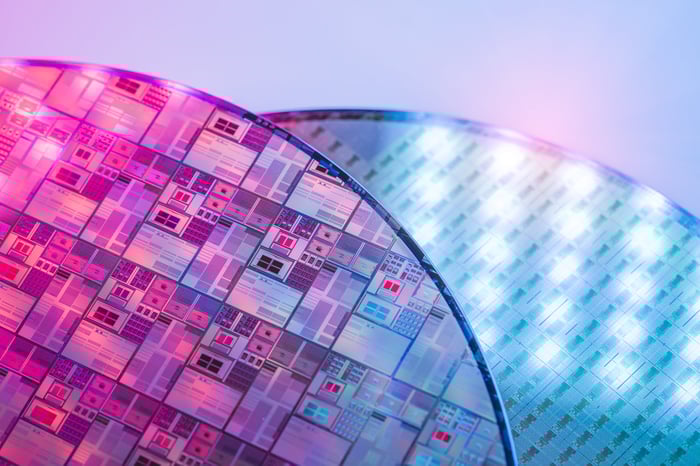
Image source: Getty Images.
What does ASML do?
ASML is the world's largest producer of lithography systems, which are used to optically etch circuit patterns onto silicon wafers. It's also the only producer of extreme ultraviolet (EUV) lithography systems, which are used to manufacture the world's smallest and densest chips.
These massive systems cost $200-$400 million and require multiple planes to ship. All of the world's top foundries -- including TSMC (NYSE: TSM), Samsung, and Intel (NASDAQ: INTC) -- use ASML's EUV systems to produce their most advanced chips. Chipmakers that manufacture larger and less advanced chips use ASML's older deep ultraviolet (DUV) systems.
ASML's monopolization of this crucial technology makes it a linchpin of the semiconductor market, but it also puts it in the crossfire of the tech war between the U.S. and China. It's already been barred from selling its EUV systems to Chinese chipmakers since 2019, and it now faces additional pressure to curb its sales of advanced DUV systems in China.
That pressure throttled its growth in China, which accounted for 41% of its net system sales in 2024. However, the rapid expansion of the AI market largely offset that slowdown by driving its non-Chinese customers to ramp up their orders of new EUV systems.
ASML is currently making the transition from its older "low-NA" EUV systems (which cost about $200 million) to its newest "high-NA" EUV systems (which cost over $400 million). TSMC currently uses ASML's low-NA EUV systems to produce its smallest 2nm chips, but it will need to use high-NA EUV systems to mass-produce even tinier and denser chips. Those sweeping upgrades should significantly boost its revenues and margins over the next few years.
What happened to ASML over the past year?
In 2023, ASML's sales increased by 30%, its gross margin expanded, and its earnings per share (EPS) rose by 41%. That growth was driven by the rapid expansion of the high-performance computing (HPC), cloud, data center, and AI markets.
In 2024, ASML's net sales grew by only 3%, its gross margin remained flat, and its EPS decreased by 3%. It lost its momentum as it lapped the AI market's initial growth spurt, sales of non-AI chips slipped, and it faced tighter export curbs on its DUV systems in China. Its top customers also bought fewer new systems and postponed the pricey leap from low-NA to high-NA EUV systems.
However, most of that slowdown occurred in the first half of 2024. For most of the past year, its revenue rose by the double digits again, its gross margins expanded, and its EPS surged. That acceleration was largely driven by the DRAM memory chip market's AI-driven growth.
|
Metric |
Q3 2024 |
Q4 2024 |
Q1 2025 |
Q2 2025 |
Q3 2025 |
|---|---|---|---|---|---|
|
Net Sales Growth (YOY) |
11.9% |
28% |
46.4% |
23.2% |
0.7% |
|
Gross Margin |
50.8% |
51.7% |
54% |
53.7% |
51.6% |
|
EPS Growth (YOY) |
9.8% |
31.5% |
92.9% |
47.1% |
4% |
Data source: ASML. In euros. YOY = Year-over-year.
In the third quarter of 2025, ASML's top-line growth nearly flatlined as a 6% year-over-year decline in its new system shipments almost offset its rising service revenues. That quarterly lumpiness in its system shipments wasn't unusual, but its sales in China continued to decline.
For the full year, ASML still expects its revenue to rise about 15%. Analysts expect its revenue and EPS to increase 15% and 28%, respectively. However, for 2026, they expect its revenue and EPS to grow by only 6% and 5%, respectively. Once again, ASML attributes that slowdown to its cooling sales in China -- which should continue to offset some of its AI-driven gains in other markets.
Is ASML the right stock to buy right now?
During its investor day last November, ASML predicted its annual revenue would reach €44 billion ($51.6 billion) to €60 billion ($70.3 billion) by 2030, based on its modest to bullish projections for the broader semiconductor market. That would represent a six-year CAGR of 7.6% to 13.3% from its €28.3 billion ($33.2 billion) in revenue in 2024.
From 2024 to 2027, analysts expect ASML's revenue and EPS to grow 11% and 18%, respectively. That outlook likely assumes the expanding cloud and AI markets will generate steady tailwinds for its lithography business, even as its sales in China gradually decline.
ASML's stock isn't a bargain at 34 times next year's earnings, but it remains a worthwhile investment as a long-term play on the expanding semiconductor market. It dominates a crucial technology, has significant pricing power, and faces no meaningful competitors. Its valuations might limit its near-term growth, but it still has plenty of upside potential for long-term investors.
Should you buy stock in ASML right now?
Before you buy stock in ASML, consider this:
The Motley Fool Stock Advisor analyst team just identified what they believe are the 10 best stocks for investors to buy now… and ASML wasn’t one of them. The 10 stocks that made the cut could produce monster returns in the coming years.
Consider when Netflix made this list on December 17, 2004... if you invested $1,000 at the time of our recommendation, you’d have $506,935!* Or when Nvidia made this list on April 15, 2005... if you invested $1,000 at the time of our recommendation, you’d have $1,067,514!*
Now, it’s worth noting Stock Advisor’s total average return is 958% — a market-crushing outperformance compared to 192% for the S&P 500. Don't miss the latest top 10 list, available with Stock Advisor, and join an investing community built by individual investors for individual investors.
See the 10 stocks »
*Stock Advisor returns as of December 19, 2025.
Leo Sun has positions in ASML. The Motley Fool has positions in and recommends ASML, Intel, and Taiwan Semiconductor Manufacturing. The Motley Fool has a disclosure policy.
Recommended Articles


