


Ignoring Strategy Reduction Warning, Bitcoin Nears $82,000, Hitting Highest Price Since February
TradingKey - Bitcoin prices continue to surge toward $82,000; however, will MicroStrategy's sell signal trigger a Bitcoin price crash?
On May 6, although the largest Bitcoin holder, MicroStrategy ( MSTR) hinted at a possible sale of Bitcoin ( BTC ), it still failed to hinder the rally. This morning, Bitcoin prices rose approximately 1.3%, approaching $82,000 and reaching a high of $81,709, the highest level since February this year.
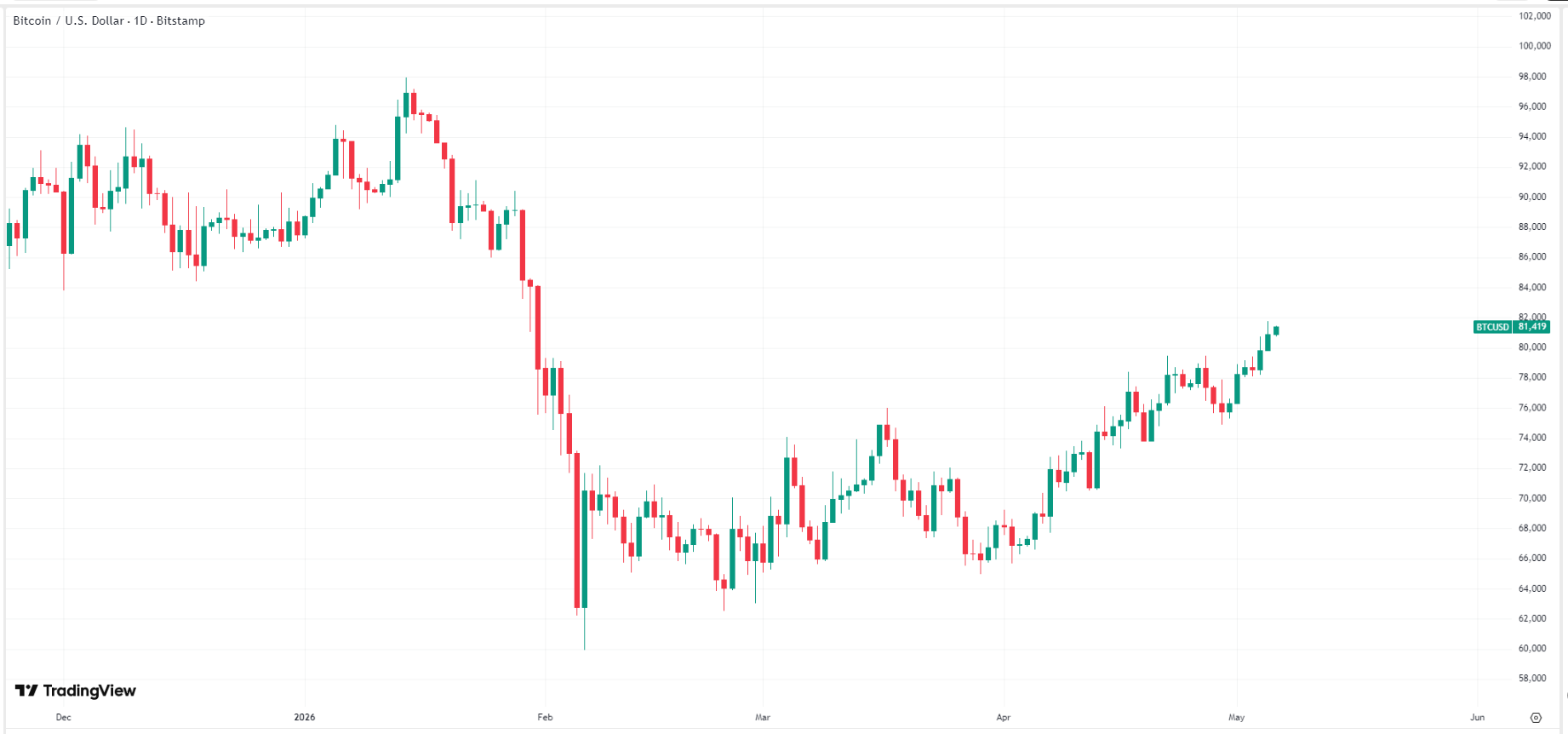 Bitcoin price chart, source: TradingView
According to CoinDesk reporting on May 6, MicroStrategy may sell Bitcoin to pay dividends. MicroStrategy Executive Chairman Michael Saylor stated during the Q1 2026 earnings call, "We may sell some Bitcoin to pay dividends to soothe the market and show that we have taken action." Following the news, Bitcoin prices briefly fell below $81,000, but have since recovered those losses, currently trading at $81,419.
Since April, Bitcoin prices have generally trended upward, rebounding strongly from a low of $65,000 with a cumulative gain of approximately 24%. This rally has been driven by multiple factors, the most significant being macroeconomic conditions and the easing of tensions between the U.S. and Iran.
On April 8, the U.S. and Iran reached a two-week temporary ceasefire agreement, marking a turning point as the Middle East situation shifted from "all-out war" to a "diplomatic standoff." On April 11-12, the U.S. and Iran held negotiations, establishing a framework for a subsequent long-term ceasefire. On April 21, U.S. President Trump announced an extension of the ceasefire. On the evening of May 5, U.S. Secretary of State Marco Rubio claimed that the U.S. military's "offensive phase" against Iran had concluded.
Although the Federal Reserve (Fed) did not cut interest rates in the first half of the year—with the consensus being to maintain current benchmark rates—market expectations are shifting toward anticipation of the Fed's rate-cut strategy in the second half. Currently, easing Middle East tensions are suppressing the rise in crude oil prices and reducing global inflationary pressures, which in turn leads the market to expect more flexibility for the Fed to cut rates later this year.
The gradual de-escalation of the U.S.-Iran conflict and expectations of Fed rate cuts in the second half of the year are driving safe-haven capital back into Bitcoin. According to CoinShares data, Bitcoin-related funds have recorded net inflows for five consecutive weeks, with year-to-date net inflows reaching $4.2 billion. Additionally, Coinglass data shows that U.S. spot Bitcoin markets saw overall net inflows throughout the month of April.
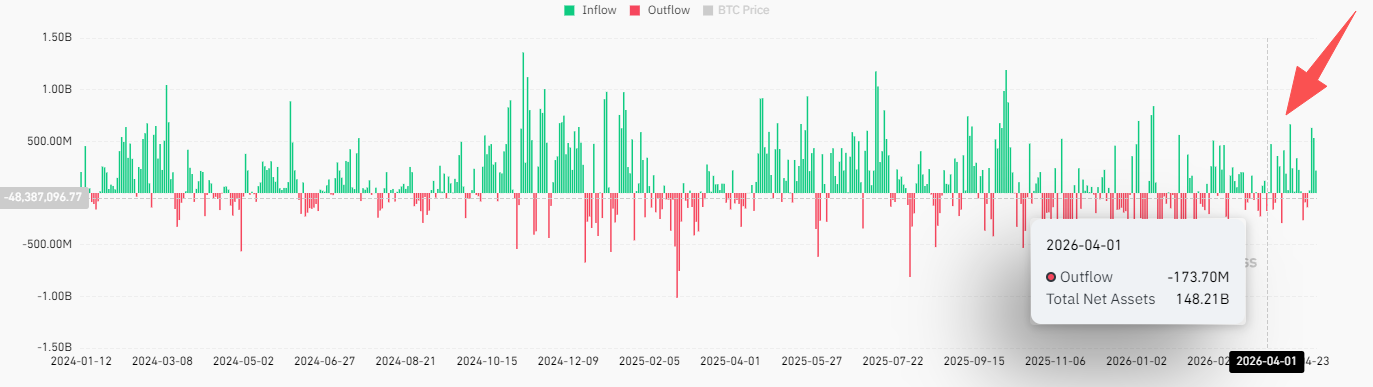 Spot Bitcoin ETF fund flows, source: CoinGlass
While MicroStrategy's signal has caused some concern regarding Bitcoin's future price, mainstream capital is clearly more optimistic about the macroeconomic environment in the second half of 2026, providing support for the cryptocurrency's price. From a technical analysis perspective, if Bitcoin can firmly hold $80,000, the next psychological barrier will be $90,000.
Recommended Articles


