


June Fed Rate Decision Preview: Next Step Toward a Hawkish Hike?
TradingKey - On May 22, Eastern Time, Kevin Warsh officially took office as the 17th Chair of the Federal Reserve, and he is scheduled to chair his first FOMC policy meeting on June 17. However, while the market widely expected the Trump-nominated chair to push for rate cuts, a hawkish camp within the Fed has already begun taking sides even before he officially assumed his duties.
April FOMC Minutes Release More Hawkish Signals
The previous April FOMC meeting revealed a historically rare divide, as an 8-4 vote cooled market expectations for rate cuts. Three dissenting votes came from members who opposed maintaining the easing bias in the statement, arguing that the Fed should stop signaling that the next move would more likely be a rate cut.
Meanwhile, many participants favored removing the easing bias; most officials believed that interest rate hikes would be appropriate if inflation persisted above 2%, while the vast majority thought it would take longer than previously expected for inflation to return to the 2% target.
Before Warsh had even chaired a policy meeting, the Committee's stance had already undergone a systematic hawkish shift. This implies that regardless of the Trump camp's expectations for an easing path, the choice facing the Federal Reserve in June was no longer whether to cut rates, but whether to maintain the status quo or pivot toward rate hikes.
Internal stance has shifted.
Nick Timiraos, the "Fed whisperer," noted in a lengthy article following the release of the minutes that officials have largely sidelined discussions on rate cuts and have instead begun seriously weighing the possibility of rate hikes.
From a market pricing perspective, the bond market's movements appear extremely straightforward.
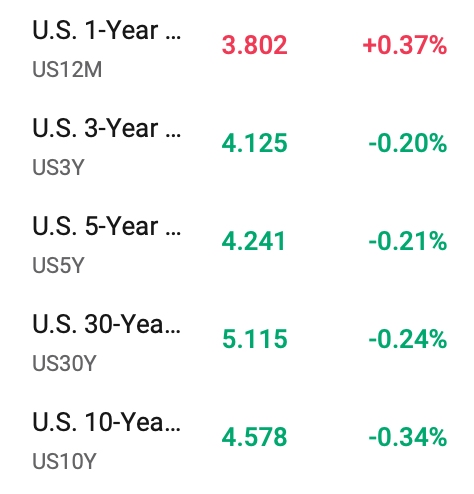
The 30-year Treasury yield broke through 5%, reaching its highest level since 2007, while the 10-year yield climbed steadily toward 4.6%. The 2-year yield rose above 4%, significantly exceeding the federal funds rate target range of 3.5% to 3.75%.
The yield curve inversion signal suggests the bond market believes the Fed's current policy rate is insufficient to curb inflation, and the next move is more likely to be a rate hike rather than a cut.
Within the Federal Reserve, a consensus supporting rate hikes has already formed, though it has not yet been reflected in formal voting.
Macquarie Group strategists explicitly warned that the Fed must send a clear hawkish signal to the market before the June meeting to quell inflation expectations and the persistent rise in long-end yields. This is the dilemma facing Warsh, who is set to take over an increasingly hawkish central bank team, marking the first major test of his tenure.
Inflation data continues to exceed expectations.
In April, the CPI surged to 3.8% year-on-year, hitting a new high since May 2023; core CPI rose to 2.8% year-on-year; and PPI jumped to 6% year-on-year, its largest gain since December 2022. The energy price index rose 17.9% year-on-year, contributing over 40% to the overall CPI increase. The food sub-index rose 0.5% month-on-month, with major categories such as meat, poultry, fish, and eggs rising in tandem; energy costs are being fully transmitted to agricultural products through channels such as fertilizer and logistics.
The labor market is also endorsing a hawkish stance. Non-farm payrolls increased by 115,000 in April, far exceeding the market expectation of 62,000, and the unemployment rate remained steady at a low 4.3% for the third consecutive month. Average hourly earnings rose 3.6% year-on-year, maintaining a moderate pace of growth.
Former Federal Reserve Vice Chairman Roger Ferguson stated clearly after the data release: "The performance of the labor market means the Fed will focus more attention on controlling high inflation."
Unlike in the past, the Federal Reserve is no longer caught in the dilemma of whether to "fight inflation" or "support employment," but is instead focused on how to contain surging inflation.
Rate hikes have already been priced in by the market.
CME FedWatch data shows that the probability of the Federal Reserve maintaining interest rates at its June meeting is as high as 99%, with the probability of rates remaining unchanged in July at 84.4%, while the probability of a rate hike at the December meeting has risen to 54.1%.
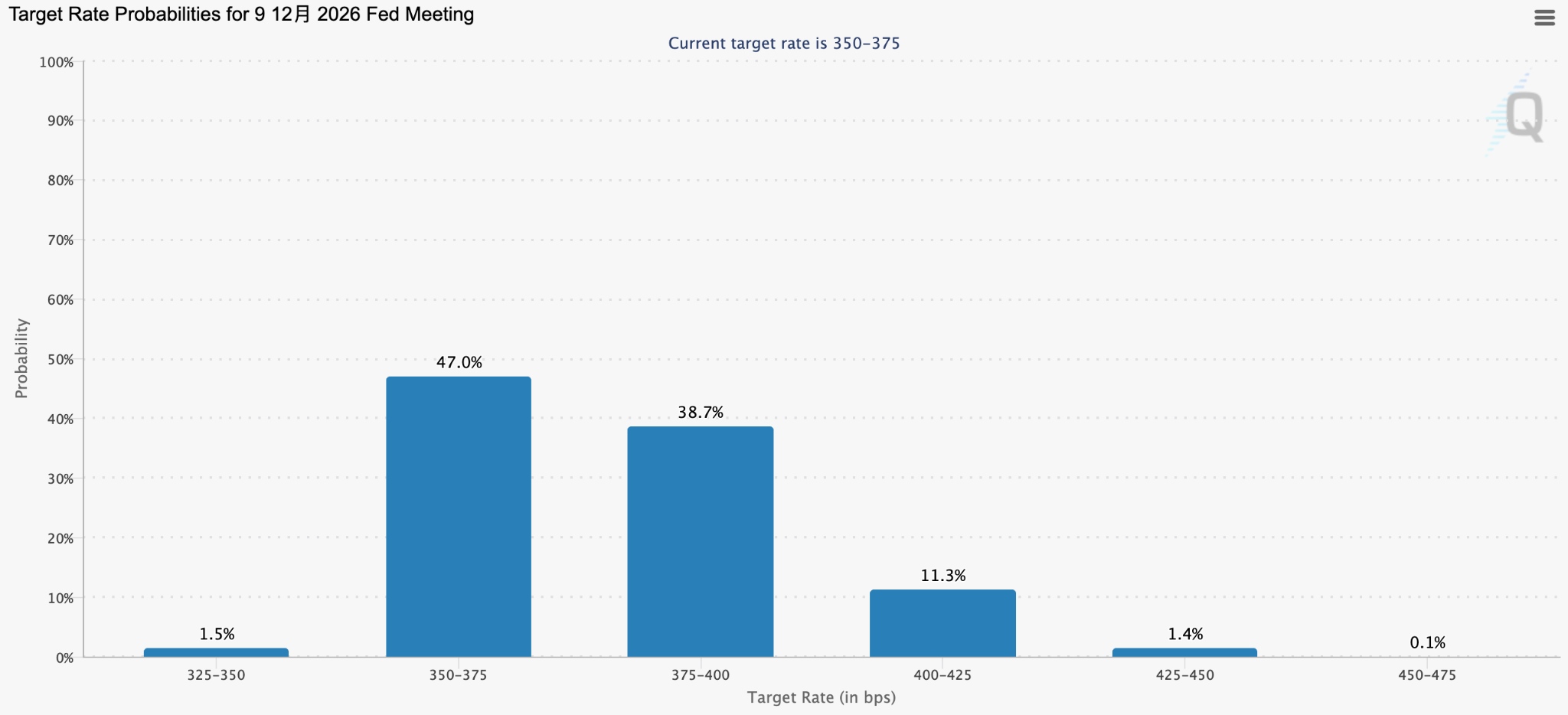
[Market pricing for the probability of a December 2026 rate hike has exceeded 50%; Source: CME FedWatch]
Kalshi data shows that traders believe there is a 63% probability of a rate hike before July 2027, while the probability of a 2026 rate hike on Polymarket is approximately 35%.
Veteran Wall Street strategist Ed Yardeni provided a significant judgment: If the Federal Reserve does not abandon its accommodative stance at the June meeting, the market will conclude that the central bank is "behind the curve" on inflation, thereby demanding a higher inflation risk premium and ultimately causing the Fed to lose complete control over borrowing costs.
BNP Paribas also warned that although the probability of a direct rate hike in June is extremely low, it is now a tail risk that cannot be ignored. This suggests that the market's wait-and-see period has reached a tipping point; if the June meeting does not provide a sufficiently hawkish signal, spontaneous tightening in the bond market may precede the central bank's policy actions.
Accept the Hawkish Reality or Challenge Market Expectations
Among the Fed's 12 voting members, some already exhibit a clear hawkish lean; even if Warsh himself favors easing, building a consensus for a rate cut in the short term remains difficult. With four dissenting votes already cast in the April meeting, the opposition would only widen if Warsh attempts to push for a cut.
In addition, President Trump's previous rhetoric regarding rate cuts has softened. When asked whether Warsh would still lower rates despite the market consensus that a hike is more likely, Trump remarked that he would let Warsh follow his own judgment.
In this context, the primary force constraining the market has shifted to the data itself. Following this logic, the most probable outcome for the June meeting is to hold rates steady while officially striking the easing bias from its language, delivering a definitive hawkish signal. The policy trajectory is now clearly aimed at a rate hike, with the only uncertainty being the timing of the window.
Recommended Articles


