




Chip Stocks Lead KOSPI Index Surge of 8%, Jensen Huang Calls for Discount Buying, Samsung Rises Over 8%, SK Hynix Jumps Over 15%
TradingKey - During the Asian trading session on June 9, South Korean stocks saw a strong rebound after two consecutive trading days of heavy selling. Memory chipmakers became the primary force behind the gains, driving the KOSPI index to surge 8% intraday and successfully reclaim the 8,000-point mark. As of press time, the KOSPI index was up 8.28%.
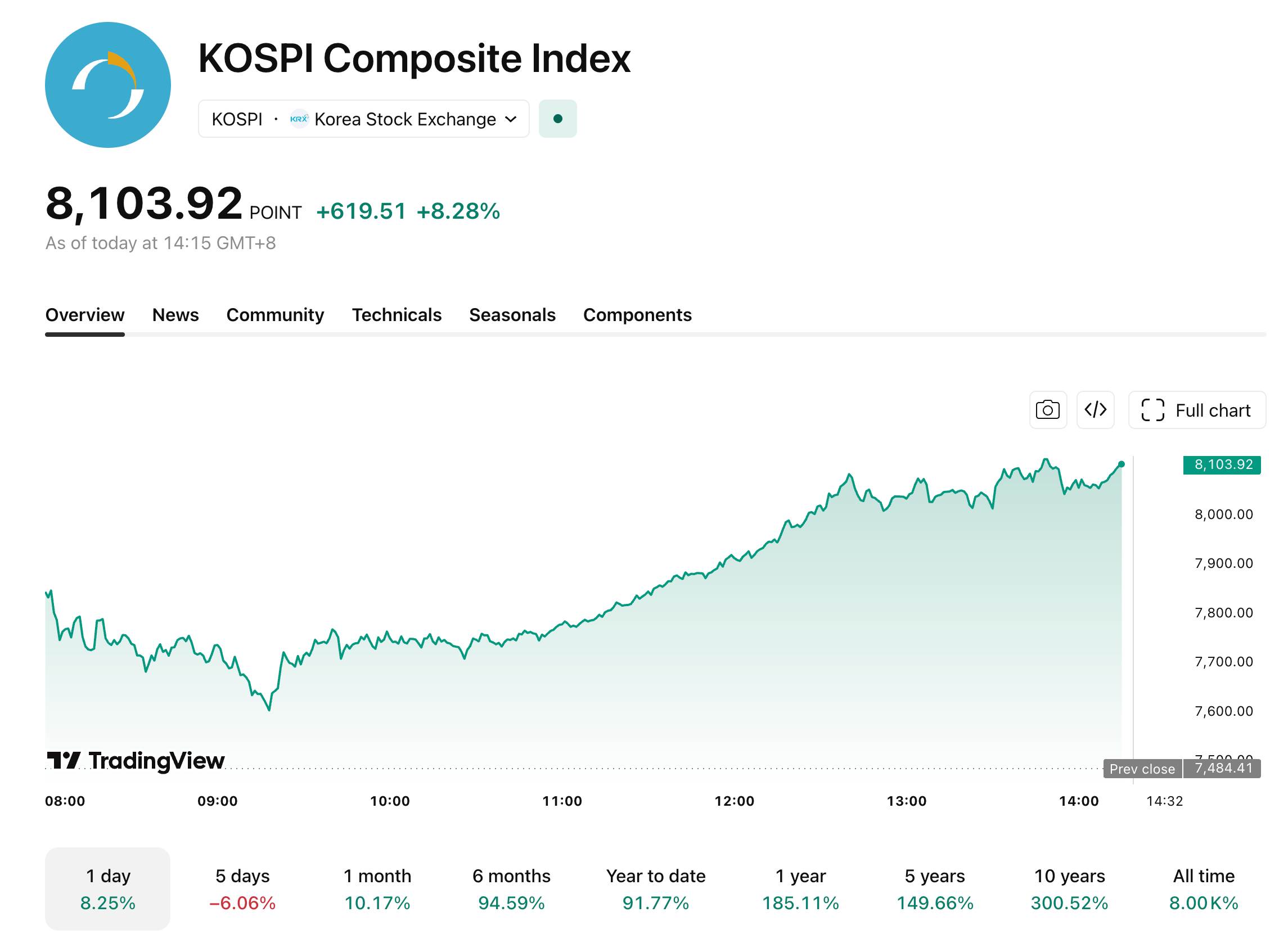
[Source: TradingView]
Regarding heavyweight stocks, as of press time, Samsung Electronics rose by more than 8%, while fellow chip giant SK Hynix surged over 15% to 2.2 million won. This sharp reversal indicates that despite the recent severe market volatility, investors have not completely abandoned their long-term bets on the AI boom; the broad rebound in U.S. chip stocks overnight also provided a boost to Korean shares.
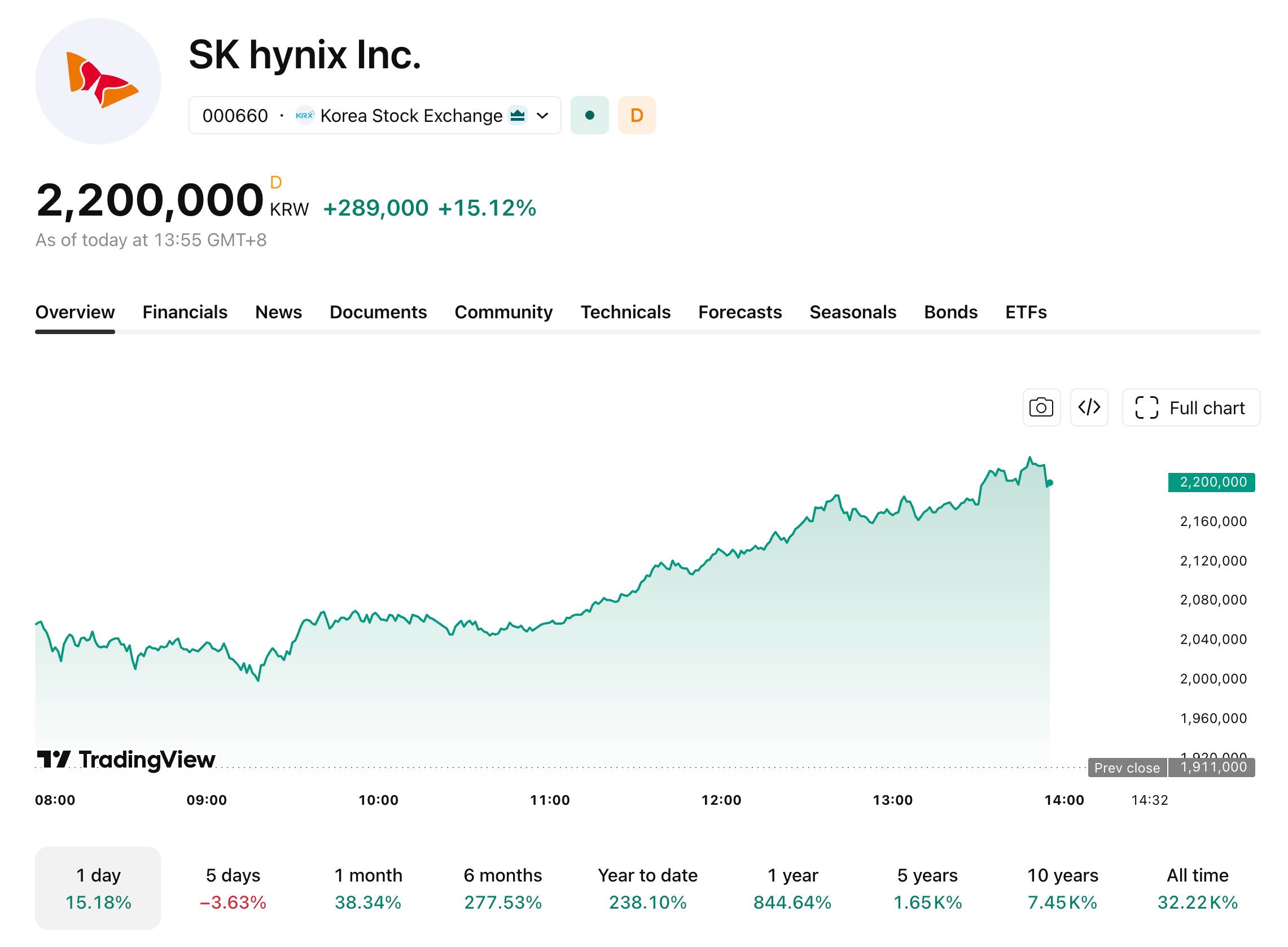
[Source: TradingView]
Previously, the AI-driven rally had pushed the year-to-date gains of the South Korean KOSPI index past 100% at one point. However, this frenzy quickly unraveled on "Black Monday." Hit by the sell-off in AI concept stocks, the index plummeted more than 8% within approximately three minutes of the opening, triggering a Level 1 circuit breaker. Market participants pointed out that leveraged ETFs amplified the volatility of the underlying securities, further intensifying the severity of the decline.
As panic spread, Nvidia ( NVDA) CEO Jensen Huang spoke out publicly. During a press conference on Monday, when asked about the sharp drop in AI stocks, he responded clearly: "We are at the starting point. No matter what has happened in the stock market, you should be very happy because you can now buy at a discount." He added that it is a "certainty" that artificial intelligence will become global infrastructure, and that related construction has only been underway for over a year and will continue to advance for years to come. These remarks were interpreted by the market as a strong endorsement of the long-term prospects of AI.
Samsung Securities analyst Lee Jongwook analyzed from a market structure perspective: "Volatility has become very high, but this is due to changes in market structure rather than a shift in cyclical direction." He suggested that investors maintain their current positions after the sell-off or look for opportunities to increase holdings.
Overall, the collective rebound in chip stocks is both a technical recovery and a reflection of the market's enduring confidence in the long-term demand for AI hardware. Although short-term sentiment and leveraged tools have amplified market fluctuations, the industrial fundamentals have not undergone a fundamental turning point. Whether this strong 8% surge can completely reverse the downward trend remains to be seen, depending on subsequent trading volumes and changes in global risk appetite.
Recommended Articles


