




Explaining President Trump’s Reaction to the Supreme Court Tariff Ban: More Tariffs?
The US Supreme Court recently blocked President Donald Trump from using emergency powers to impose broad global tariffs.
However, Trump quickly responded by announcing new tariffs under a different legal authority. This has created confusion about whether tariffs are actually being reduced—or increased. Here’s what is really happening.
What the Supreme Court Actually Banned
The Supreme Court did not ban tariffs entirely. Instead, it ruled that Trump cannot use the International Emergency Economic Powers Act (IEEPA) to impose tariffs.
IEEPA is a law designed for emergencies. It allows presidents to freeze assets, block transactions, or restrict trade. But the Court said it does not allow tariffs, which are considered a form of tax. Only Congress has clear constitutional authority to impose taxes.
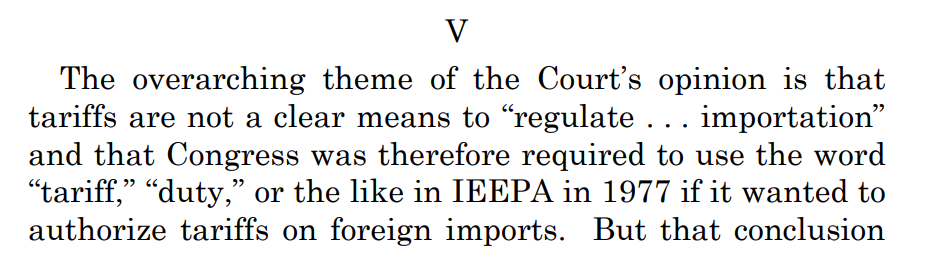 US Supreme Court’s Decision. Source: Learning Resources, Inc. v. Trump
This means the specific tariffs Trump imposed using emergency powers must stop.
However, the ruling did not remove other tariff powers.
Trump’s Reaction: Using Other Laws to Continue Tariffs
In response, Trump said existing tariffs under Section 232 and Section 301 will remain in place. These tariffs target imports based on national security risks or unfair trade practices. The Supreme Court did not block these laws.
More importantly, Trump announced a new 10% global tariff under Section 122 of the Trade Act of 1974. This is a separate law that allows the president to impose temporary tariffs to address trade imbalances.
In simple terms, Trump is replacing the banned tariffs with new ones using different legal authority.
He is also launching investigations that could lead to even more tariffs in the future.
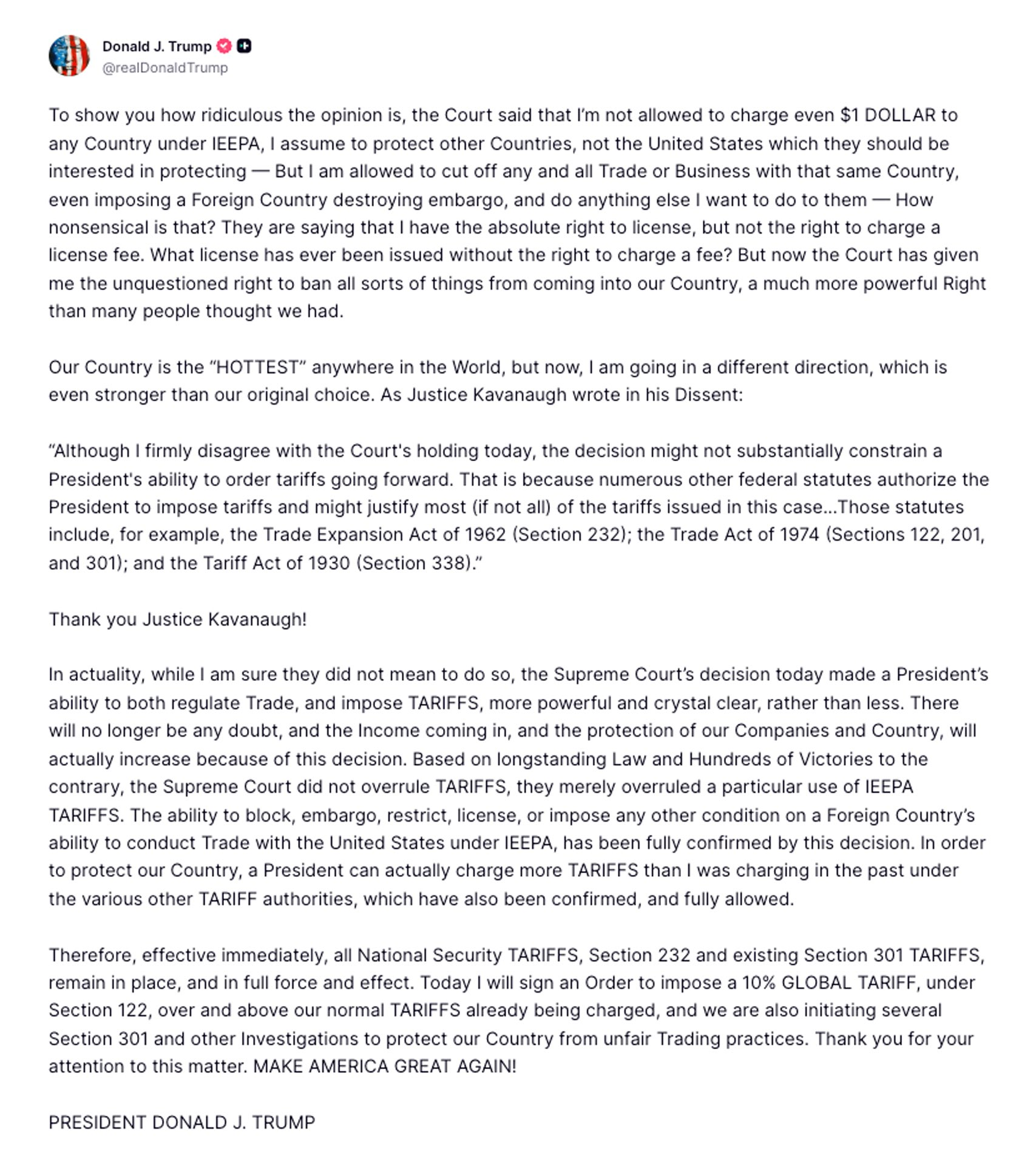 Donald Trump’s Official Response to the Supreme Court’s Decision
Why Trump Says His Power Is Still Strong
Trump argues that the ruling actually clarified his authority rather than weakening it. The Court limited one tool, but confirmed that other tariff powers remain valid.
This means the president can still impose tariffs legally—as long as he uses the correct laws passed by Congress.
The key change is not whether tariffs exist, but how they are imposed.
How Markets Could Be Affected
Markets reacted positively at first because the ruling reduced uncertainty. Investors prefer clear legal rules over unpredictable emergency actions.
Stocks and crypto initially rose because the decision lowered fears of sudden trade disruptions. Bitcoin, which is sensitive to global liquidity and risk sentiment, also showed signs of recovery.
However, Trump’s new tariff announcement could still create inflation pressure and trade tensions. Tariffs increase costs for businesses, which can slow economic growth and reduce investor confidence.
Commodities like gold and silver may benefit if tariffs increase economic uncertainty. These assets often rise during periods of global tension.
For now, tariffs are not disappearing. Instead, they are shifting to a new legal framework—meaning trade tensions and market volatility could continue.
Recommended Articles


