


3 Monster Stocks to Hold for the Next 20 Years
Key Points
Monster stocks are defined by endurance and compounding power, not early-stage discovery, and Amazon, O’Reilly Automotive, and Nike all fit that profile.
Each company is supported by a distinct structural growth engine, from Amazon’s multiplatform ecosystem, to O’Reilly’s benefit from an aging vehicle fleet, to Nike’s global brand strength and pricing power.
The key risk for all three is long-term structural change rather than business failure, including regulation for Amazon, the EV transition for O’Reilly, and margin pressure and competition for Nike.
- 10 stocks we like better than Nike ›
"Monster stock" is usually shorthand for a company that has compounded at exceptional rates for years, and still has plenty of runway left. It's the kind of name you regret for not owning earlier: think Tesla or Nvidia.
Today, three consumer-facing companies fit that mold across very different parts of the wallet, and each one holds up when you project the business 20 years out -- even if you missed the early innings.
Will AI create the world's first trillionaire? Our team just released a report on the one little-known company, called an "Indispensable Monopoly" providing the critical technology Nvidia and Intel both need. Continue »
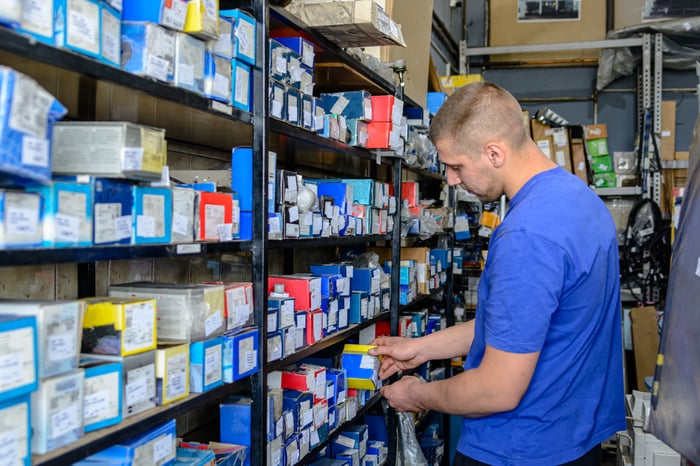
Image source: Getty Images.
1. Amazon
Amazon (NASDAQ: AMZN) is the most obvious of the three and the easiest to underestimate because it has been a market darling for so long that investors assume the growth math no longer works. Its first-quarter 2026 results suggest otherwise. AWS revenue grew 28% year over year to $37.6 billion (the fastest AWS growth in 15 quarters); the chips business surpassed a $20 billion revenue run rate growing in triple digits; advertising trailing-12-month revenue exceeded $70 billion, and stores unit growth hit 15%, the highest since the late stages of pandemic-era demand.
The 20-year case for Amazon is not really about retail or even cloud in isolation. It is about a company that has built four distinct, high-margin growth engines -- Amazon Web Services, advertising, custom silicon, and (more recently) healthcare and media -- on top of a retail base that throws off cash. Each new engine starts small and becomes meaningful, which is the pattern long-term compounders tend to follow.
The risk with Amazon is regulatory. Amazon's scale means that antitrust action is a recurring possibility, and any forced separation of AWS from the retail and advertising businesses would be a significant event.
2. O'Reilly Automotive
O'Reilly Automotive (NASDAQ: ORLY) is the dullest-sounding of these three, which is part of why it works. The company sells auto parts to both do-it-yourself and professional repair customers, and the underlying U.S. car parc (the number and average age of vehicles on the road) is one of the most reliable demand drivers in retail. In the first quarter of 2026, O'Reilly raised full-year 2026 guidance for total revenue of between $18.7 billion and $19 billion, comparable store sales growth of 3% to 5%, and diluted EPS between $3.15 and $3.25.
The 20-year case for me rests on three structural facts. Cars are getting older on average, which increases parts demand. Professional repair shops continue to gain share at the expense of dealer-only service, which favors O'Reilly's dual-market strategy. And the company has been one of the most aggressive and disciplined buyers of its own stock for years, which means earnings per share grow even faster than total earnings.
The risk for me regarding O'Reilly is electric vehicles and self-driving cars. Battery-electric cars have fewer wear-and-tear parts than internal combustion engines, and if the U.S. fleet shifts decisively to electric over the next two decades, the total addressable market for traditional aftermarket parts will eventually compress.
3. Nike
Nike (NYSE: NKE) fits the "monster stock" profile as a global consumer franchise with unparalleled brand equity and distribution, even as it works through a difficult stretch. In fiscal Q3 2026, revenue was roughly flat, while earnings per share fell down 35% year over year as higher tariffs, promotions, and inventory clean‑up weighed on margins.
The long-term case is simpler: Nike remains the largest sneaker brand globally, and it still generates more than $50 billion (in 2024) in annual revenue across footwear, apparel, and equipment. Over a 20-year horizon, a combination of scale, marketing muscle, and product innovation should matter more than the current margin reset.
Why these three work as a combined position
The three names cover different sub-categories of consumer behavior -- discretionary retail and digital services (Amazon), branded footwear (Nike), and necessity-based vehicle maintenance (O'Reilly). The correlation across them is lower than it looks, which makes the combined position more resilient than any one of them alone.
All three also share the characteristics that tend to predict 20-year outperformance: clear category leadership, demonstrated ability to grow at scale, disciplined capital allocation, and management teams that have generally taken the long view on reinvestment.
Should you buy stock in Nike right now?
Before you buy stock in Nike, consider this:
The Motley Fool Stock Advisor analyst team just identified what they believe are the 10 best stocks for investors to buy now… and Nike wasn’t one of them. The 10 stocks that made the cut could produce monster returns in the coming years.
Consider when Netflix made this list on December 17, 2004... if you invested $1,000 at the time of our recommendation, you’d have $477,813!* Or when Nvidia made this list on April 15, 2005... if you invested $1,000 at the time of our recommendation, you’d have $1,320,088!*
Now, it’s worth noting Stock Advisor’s total average return is 986% — a market-crushing outperformance compared to 208% for the S&P 500. Don't miss the latest top 10 list, available with Stock Advisor, and join an investing community built by individual investors for individual investors.
See the 10 stocks »
*Stock Advisor returns as of May 24, 2026.
Micah Zimmerman has no position in any of the stocks mentioned. The Motley Fool has positions in and recommends Amazon, Nike, Nvidia, and Tesla. The Motley Fool has a disclosure policy.
Recommended Articles


